

Indigenous, immigrant experience similar, UN told
Manitoba delegation wants same assistance offered to both groups
Advertisement
Read this article for free:
or
Already have an account? Log in here »
To continue reading, please subscribe:
Monthly Digital Subscription
$1 per week for 24 weeks*
- Enjoy unlimited reading on winnipegfreepress.com
- Read the E-Edition, our digital replica newspaper
- Access News Break, our award-winning app
- Play interactive puzzles
*Billed as $4.00 plus GST every four weeks. After 24 weeks, price increases to the regular rate of $19.95 plus GST every four weeks. Offer available to new and qualified returning subscribers only. Cancel any time.
Monthly Digital Subscription
$4.99/week*
- Enjoy unlimited reading on winnipegfreepress.com
- Read the E-Edition, our digital replica newspaper
- Access News Break, our award-winning app
- Play interactive puzzles
*Billed as $19.95 plus GST every four weeks. Cancel any time.
To continue reading, please subscribe:
Add Free Press access to your Brandon Sun subscription for only an additional
$1 for the first 4 weeks*
*Your next subscription payment will increase by $1.00 and you will be charged $16.99 plus GST for four weeks. After four weeks, your payment will increase to $23.99 plus GST every four weeks.
Read unlimited articles for free today:
or
Already have an account? Log in here »
Hey there, time traveller!
This article was published 13/03/2017 (3311 days ago), so information in it may no longer be current.
A Manitoba delegation is at the United Nations in New York to argue support services could save indigenous women and girls from horrendous rates of exploitation and murder in Canada.
The 16-member delegation, sponsored by the Institute for International Women’s Rights Manitoba, believes indigenous women and girls wouldn’t be such easy prey if Canada gave them the same support automatically extended to immigrants and refugees from everywhere else in the world.
Drawing parallels between immigrants and indigenous experiences in Canada’s cities including Winnipeg may sound strange, but there are a lot of parallels between the two, noted Grand Chief Sheila North Wilson, leader of the Manitoba Keewatinowi Okimakanak and the province’s only female grand chief.
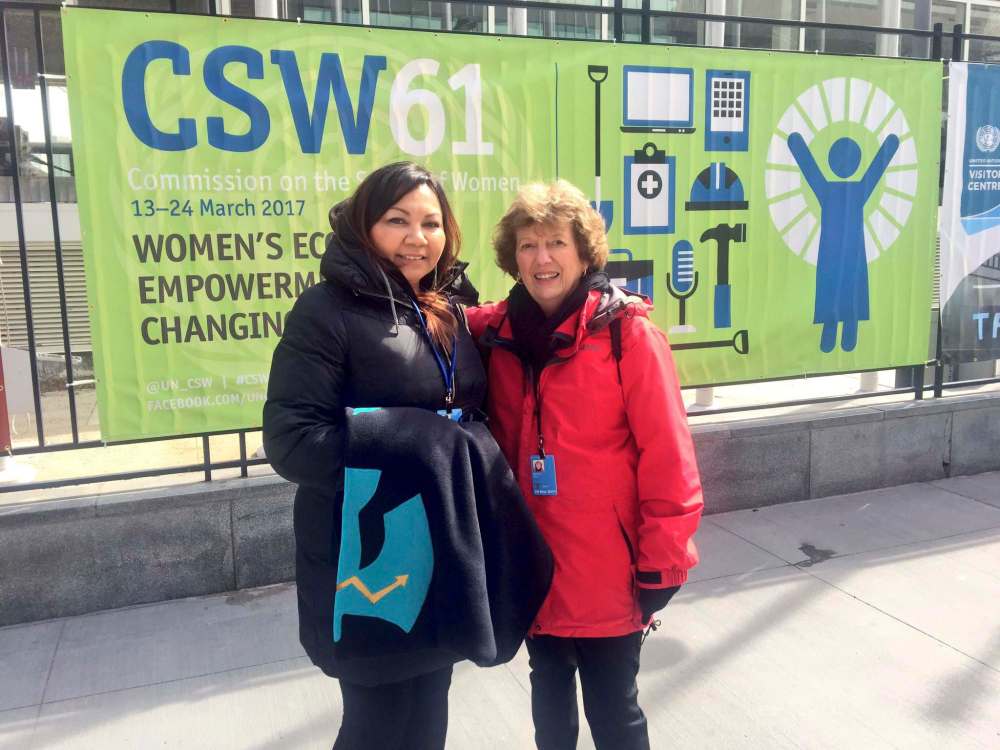
“I have experience with that,” North Wilson said Monday. “I was one of the fortunate ones who had wonderful support but many don’t… and being here in New York reminds me of the time I moved from Bunibonibee First Nation to Winnipeg. I felt like a foreigner and I was completely out of my element.”
The delegation has been recognized with special status as consultants on economic and social issues as part of the proceedings with this year’s UN Commission on the Status of Women.
The emerging theme for the 61st proceedings, which lasts through next week, is empowering indigenous women. The Manitoba delegation is hosting its own event, Risks for Canadian Indigenous Women Transitioning to an Urban Environment. A group of tech-savy university of Winnipeg students travelling with them is putting together a video and digital package of the proceedings.
The group expects to return to Winnipeg in the next day or two and they’re using their time to make connections with other indigenous women’s groups worldwide and to meet with the UN’s permanent forum on indigenous rights, the same group that brought forward the UN Declaration on the Rights of Indigenous Peoples.
North Wilson made the presentation Monday alongside two female chiefs, one from Northwestern Ontario, and another from the western Manitoba, who’s representing the Southern Chiefs Organization, plus representatives from Winnipeg’s indigenous social advocacy groups.
“It’s pretty significant for a small organization from Manitoba,” said Mary Scott, co-founder and board member for the Institute. The institute is the only non-governmental organization in Manitoba to enjoy the UN standing and they sought it out to put the issue of missing and murdered indigenous women and girls on a world stage.
“There’s national organizations, of course, and they do wonderful, wonderful work but I think there was a sense within the local community in Manitoba, that the closer you can get to the ground — the real lives of women — the better and the more authentic the voice will be,” Scott said.
North Wilson said the socio-economic reality for many indigenous newcomers to cities isn’t much different from immigrants and they would benefit from a system of supports to make the transition easier.
‘I’m going to be pushing for transition centres to be a big presence in our cities and in our communities, before people leave, so they can have a way to understand what to expect… doing all the simple things we take for granted, like getting ID, getting a job,” North Wilson said.

“It’s important because what happens when we don’t support them is we have high numbers of missing and murdered indigenous women and girls. They’re the ones who are vulnerable in our cities. They’re the ones who get preyed upon by predators who take advantage of their lack of knowledge and the lack of support that comes with it.”
Winnipeg was the centre of national outrage when the remains of 15-year-old Tina Fontaine were pulled from the Red River in 2014 and the city has remained an epicentre for the issue of missing and murdered indigenous women and girls ever since.
RCMP data show more than 1,000 indigenous women in Canada were slain from 1980 to 2012. Indigenous women account for 16 per cent of homicide victims but only four per cent of the population. More than 120 of the victims are from Manitoba.
A Statistics Canada survey in 2014 found indigenous women are more than three times as likely as non-indigenous women to be victims of violence.
alexandra.paul@freepress.mb.ca
History
Updated on Monday, March 13, 2017 10:38 PM CDT: changes headline