Bradbury fictionalizes historic New Yorkers

Advertisement
Read this article for free:
or
Already have an account? Log in here »
To continue reading, please subscribe:
Digital Subscription
One year of digital access for only $1.44 a week*
- Enjoy unlimited reading on winnipegfreepress.com
- Read the E-Edition, our digital replica newspaper
- Access News Break, our award-winning app
- Play interactive puzzles
*Billed as $5.77 plus GST every four weeks. After 52 weeks, price increases to the regular rate of $19.95 plus GST every four weeks. Offer available to new and qualified returning subscribers only. Cancel any time.
To continue reading, please subscribe:
Add Free Press access to your Brandon Sun subscription for only an additional
$1 for the first 4 weeks*
- Enjoy unlimited reading on winnipegfreepress.com
- Read the E-Edition, our digital replica newspaper
- Access News Break, our award-winning app
- Play interactive puzzles
*Your next Brandon Sun subscription payment will increase by $1.00 and you will be charged $17.95 plus GST for four weeks. After four weeks, your payment will increase to $24.95 plus GST every four weeks.
Read unlimited articles for free today:
or
Already have an account? Log in here »
Hey there, time traveller!
This article was published 18/03/2017 (3504 days ago), so information in it may no longer be current.
When I studied journalism in New York City, one of the mandatory courses of my graduate degree was called Storied New York. The entire semester-long class was dedicated to works that are set in, or are about, the city — Joseph Mitchell’s Up in the Old Hotel, E.B. White’s Here Is New York and Luc Sante’s Low Life were used as examples of the kinds of stunning pieces of writing the metropolis had inspired, and the amazing capacity New York has to act infect a narrative and become a character of its own.
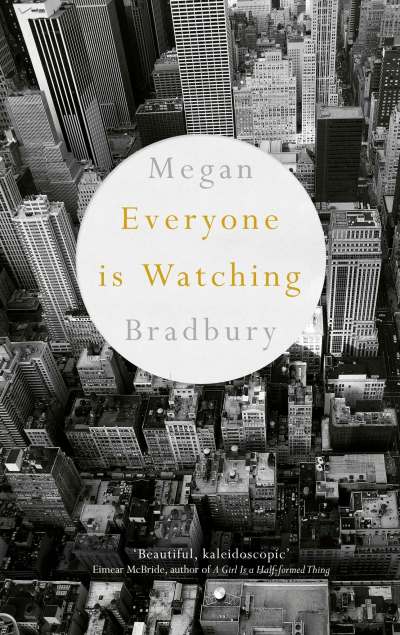
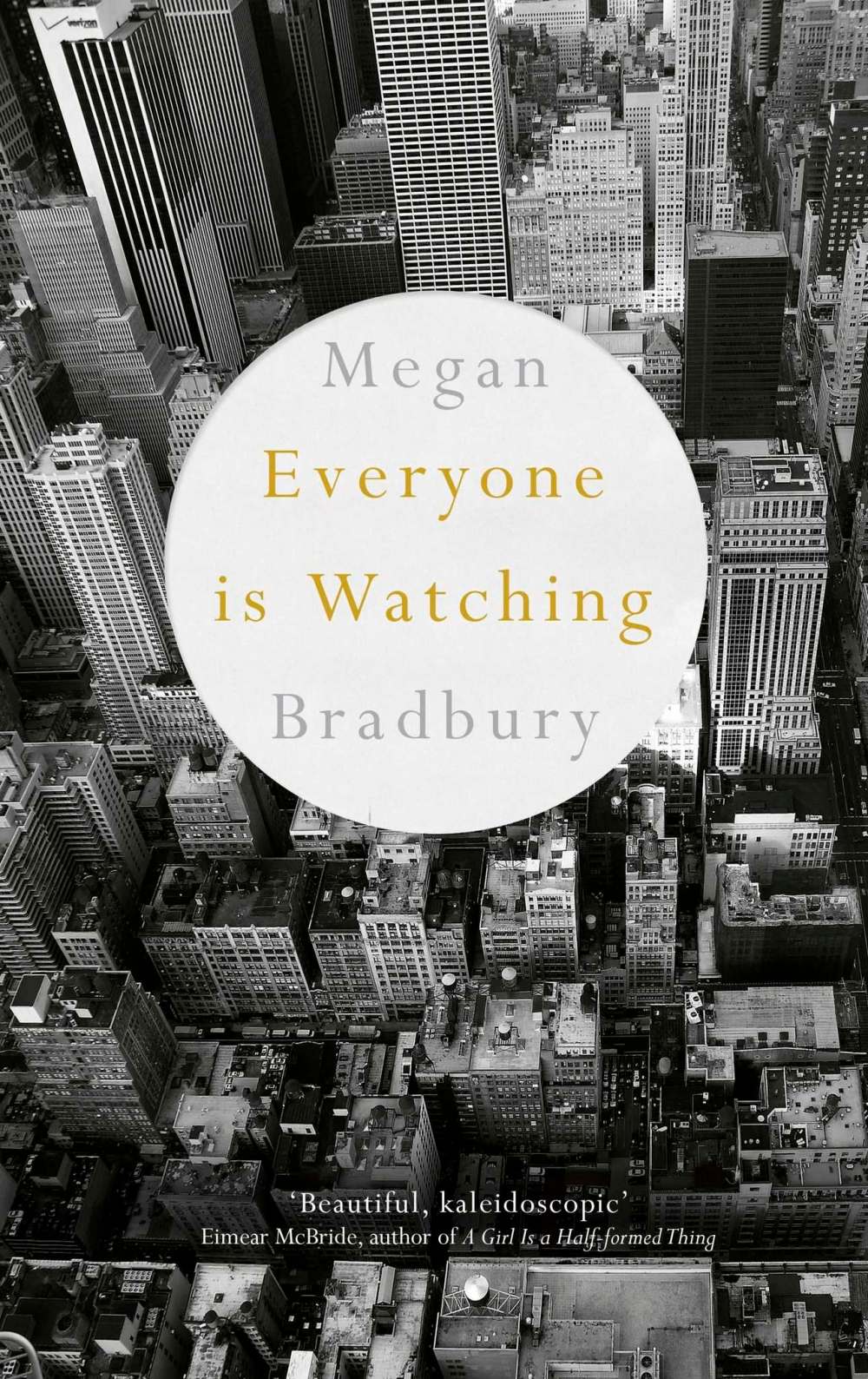
Megan Bradbury’s debut novel, Everyone Is Watching, is the modern iteration of those iconic New York stories, and would stand up comfortably next to them on the same syllabus.
Bradbury, who was born in the U.S. but grew up in Britain, paints a portrait of the city through the eyes of four famous New Yorkers from different generations: writers Walt Whitman and Edmund White, photographer Robert Mapplethorpe and city planner Robert Moses.
White’s story takes places in the modern-day New York in the year 2013, where he spends much of his time lamenting the loss of the hyper-sexual New York of his younger days, describing his visits to public bathrooms and other homoerotic moments of his past: “It was into the grooves of history that he placed his desire,” Bradbury writes.
Taking one small leap back there is Mapplethorpe’s storyline, set in 1970s — also hyper-sexualized (though this time through a bisexual lens), also connected to the city in a largely sensual way. The novel opens with a scene of Mapplethorpe cutting out images of body parts to make a collage, and his story continues to be very focused on the physical, his camera often pointed to isolated parts of a human form — muscles or genitals, for example.
More than a century earlier, in 1891, Whitman is travelling to New York by train with his friend, Robert Bucke, after the Civil War, where he recounts his experiences tending to soldiers. And in the middle of it all is Moses, grappling with the difficulties of being a forward-thinking city planner in the 1950s and ‘60s for one of the largest metropolises in the world while giving little or no regard to the thousands of lives he has to disrupt in the process.

It’s obvious (but should be mentioned nonetheless) that none of Bradbury’s characters are meant to be fully biographical, although there is a small list of sources and credits filling the final pages for some of the more precise references. The personalities Bradbury created, while surely accurate in some ways, have been just that — created.
Because Bradbury’s chapters are extremely short, and there are so many moving pieces at any given time, it can be difficult to keep track of everything — this is not a novel that is meant to be read quickly, but it’s worth the time it takes to fully absorb.
The assumption can be made that those unfamiliar with New York City — and the specific locations, neighbourhoods, streets and attitudes — may not be as drawn to Bradbury’s characters and the stories they tell, but even without that added context, her writing can still be easily appreciated for its poetic, clever, beautiful and intense qualities.
Erin Lebar is a multimedia producer and former New Yorker.
Our newsroom depends on a growing audience of readers to power our journalism. If you are not a paid reader, please consider becoming a subscriber.
Our newsroom depends on its audience of readers to power our journalism. Thank you for your support.
Everyone is Watching
By Megan Bradbury
Picador, 279 pages, $25
Our newsroom depends on a growing audience of readers to power our journalism. If you are not a paid reader, please consider becoming a subscriber.
Our newsroom depends on its audience of readers to power our journalism. Thank you for your support.
Advertisement Advertise With Us
Advertisement Advertise With Us