

Speaking her mind
Humour, vulnerability, fearlessness run through Scaachi Koul's essays

Advertisement
Read this article for free:
or
Already have an account? Log in here »
To continue reading, please subscribe:
Monthly Digital Subscription
$1 per week for 24 weeks*
- Enjoy unlimited reading on winnipegfreepress.com
- Read the E-Edition, our digital replica newspaper
- Access News Break, our award-winning app
- Play interactive puzzles
*Billed as $4.00 plus GST every four weeks. After 24 weeks, price increases to the regular rate of $19.95 plus GST every four weeks. Offer available to new and qualified returning subscribers only. Cancel any time.
Monthly Digital Subscription
$4.99/week*
- Enjoy unlimited reading on winnipegfreepress.com
- Read the E-Edition, our digital replica newspaper
- Access News Break, our award-winning app
- Play interactive puzzles
*Billed as $19.95 plus GST every four weeks. Cancel any time.
To continue reading, please subscribe:
Add Free Press access to your Brandon Sun subscription for only an additional
$1 for the first 4 weeks*
*Your next subscription payment will increase by $1.00 and you will be charged $16.99 plus GST for four weeks. After four weeks, your payment will increase to $23.99 plus GST every four weeks.
Read unlimited articles for free today:
or
Already have an account? Log in here »
Hey there, time traveller!
This article was published 25/03/2017 (3312 days ago), so information in it may no longer be current.
Those who follow Scaachi Koul on Twitter know she’s hilarious. And those who follow her work as a senior writer at BuzzFeed Canada know she’s exquisite in long form.
In her debut collection of essays, One Day We’ll All Be Dead and None of This Will Matter, the Toronto-based writer deftly brings together both these voices — the acerbic immediacy of her social-media presence and her observational, analytical prowess as a cultural essayist — to delve deep on growing up in Calgary as the daughter of Indian immigrants, ethnic stereotypes, sexism, racism, Internet abuse, rape culture as surveillance culture, as well as navigating Western and Indian gender rules.
This book deals with some complex and often heartbreaking topics. But make no mistake: this book is also furiously funny. Her essays about the personal politics of hair removal (Mister Beast Man to You, Randor) and the frustrations of trying to buy clothes in a world not built for regular human-woman bodies (Size Me Up) will make most women howl in recognition.
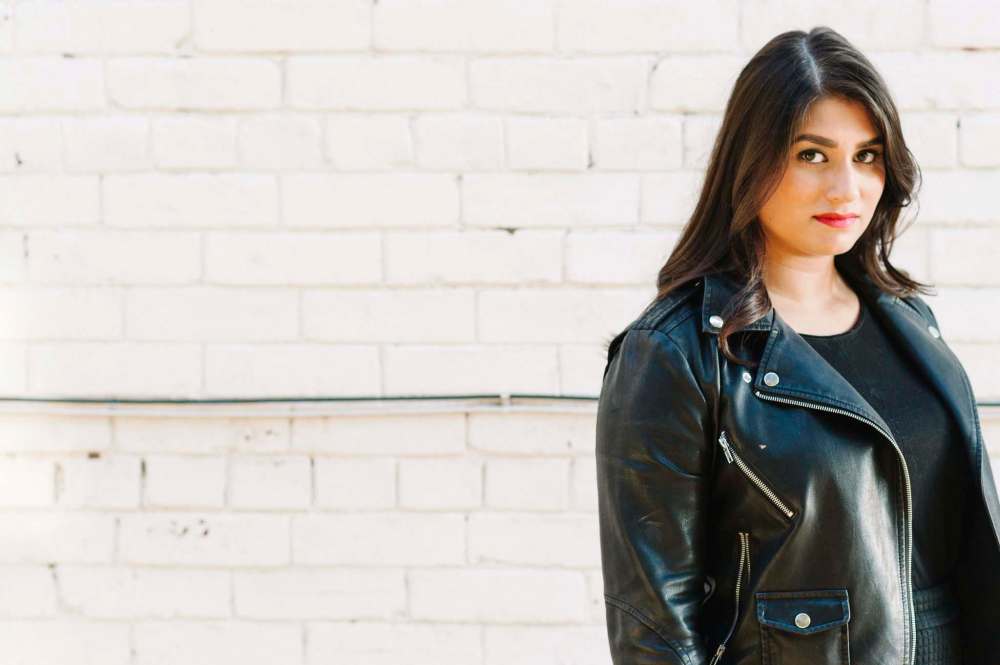
For Koul, humour is not always used as a shield; she isn’t afraid to be vulnerable. If there’s a through-line running through these 10 revealing essays, it’s what it feels like to be an outsider. Loneliness, isolation and othering are ever-present sub-themes, whether she’s writing about feeling out of place at her cousin Sweetu’s wedding in India, her father’s propensity for giving her silent treatment when he’s upset (an icy 11 weeks and three days after she brought home her white boyfriend), or having to downplay her brownness in order to survive junior high and high school.
In Fair and Lovely, one of the best essays in the book, she writes about shadism — “the idea that lighter skin is better skin even when it’s all brown skin.” While Koul is a person of colour in Canada, in India she is the white person. And she writes about her beloved niece Raisin — so nicknamed because she came out “wrinkled, purple, furious” — who is half Indian but passes as white. “In some ways things will be much easier for her, and in others, much harder, because you can belong even less when you come from two separate factions,” she writes. It’s a nuanced piece that illustrates just how complex the relationship with where you’re from can be.
Koul’s larger-than-life family plays a starring role in the book — and, obviously, in her life, as well. Koul writes about her parents with such affectionate humour that you’ll be struck by the sudden urge to call yours. Someone should option One Day We’ll All Be Dead… for a Netflix series; her charming, curmudgeonly father would be a fan favourite. When Koul went on a trip to Ecuador when she was 22, her father sent her an email that read, in part: “I know there is nothing I can do except stay up night and days while you are away. No other kid has done this. Why, why.”
In a disturbing comment on our times, every essay collection by a woman writer who makes her living on the Internet contains an essay about harassment. At a time when many women are abandoning platforms such as Twitter because the abuse is too much, Koul is standing her ground. “I like being present in spaces where I am not welcome because you do not deserve to feel comfortable just because you are racist or sexist or small-minded.” This is her house. She’s not leaving.

In the opening essay, Inheritance Tax, Koul hilariously catalogues her many fears — flying, dying, her parents dying, vein cancer, possibly dying from vein cancer. But when it comes to speaking her mind, she’s fearless.
Jen Zoratti is a Winnipeg Free Press columnist.
Jen Zoratti is a columnist and feature writer working in the Arts & Life department, as well as the author of the weekly newsletter NEXT. A National Newspaper Award finalist for arts and entertainment writing, Jen is a graduate of the Creative Communications program at RRC Polytech and was a music writer before joining the Free Press in 2013. Read more about Jen.
Every piece of reporting Jen produces is reviewed by an editing team before it is posted online or published in print – part of the Free Press‘s tradition, since 1872, of producing reliable independent journalism. Read more about Free Press’s history and mandate, and learn how our newsroom operates.
Our newsroom depends on a growing audience of readers to power our journalism. If you are not a paid reader, please consider becoming a subscriber.
Our newsroom depends on its audience of readers to power our journalism. Thank you for your support.

By Scaachi Koul
Doubleday Canada, 256 pages, $30
Jen Zoratti is a columnist and feature writer working in the Arts & Life department, as well as the author of the weekly newsletter NEXT. A National Newspaper Award finalist for arts and entertainment writing, Jen is a graduate of the Creative Communications program at RRC Polytech and was a music writer before joining the Free Press in 2013. Read more about Jen.
Every piece of reporting Jen produces is reviewed by an editing team before it is posted online or published in print – part of the Free Press‘s tradition, since 1872, of producing reliable independent journalism. Read more about Free Press’s history and mandate, and learn how our newsroom operates.
Our newsroom depends on a growing audience of readers to power our journalism. If you are not a paid reader, please consider becoming a subscriber.
Our newsroom depends on its audience of readers to power our journalism. Thank you for your support.
Advertisement Advertise With Us
Advertisement Advertise With Us