At a crossroads
Documentary explores the lives of the Pimicikamak Cree Nation in Cross Lake

Advertisement
Read this article for free:
or
Already have an account? Log in here »
To continue reading, please subscribe:
Digital Subscription
One year of digital access for only $1.44 a week*
- Enjoy unlimited reading on winnipegfreepress.com
- Read the E-Edition, our digital replica newspaper
- Access News Break, our award-winning app
- Play interactive puzzles
*Billed as $5.77 plus GST every four weeks. After 52 weeks, price increases to the regular rate of $19.95 plus GST every four weeks. Offer available to new and qualified returning subscribers only. Cancel any time.
To continue reading, please subscribe:
Add Free Press access to your Brandon Sun subscription for only an additional
$1 for the first 4 weeks*
- Enjoy unlimited reading on winnipegfreepress.com
- Read the E-Edition, our digital replica newspaper
- Access News Break, our award-winning app
- Play interactive puzzles
*Your next Brandon Sun subscription payment will increase by $1.00 and you will be charged $17.95 plus GST for four weeks. After four weeks, your payment will increase to $24.95 plus GST every four weeks.
Read unlimited articles for free today:
or
Already have an account? Log in here »
Hey there, time traveller!
This article was published 06/04/2017 (3380 days ago), so information in it may no longer be current.
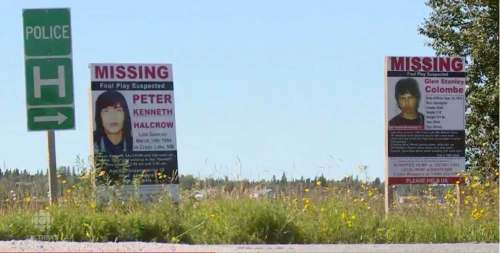
In early 2016, Pimicikamak Cree Nation in Cross Lake made national headlines.
Five people had killed themselves in the First Nations community and 140 more came forward saying they had either attempted to end their lives or had plans to. Grief-stricken and desperate for help, Cross Lake declared a state of emergency,
For Cross Lake: This Is Where I Live, a new hour-long documentary airing April 7, at 8 p.m., The Fifth Estate spent nine months in the community to get the perspective from the ground. Several of Cross Lake’s young people were given cameras so they could document their own experiences.
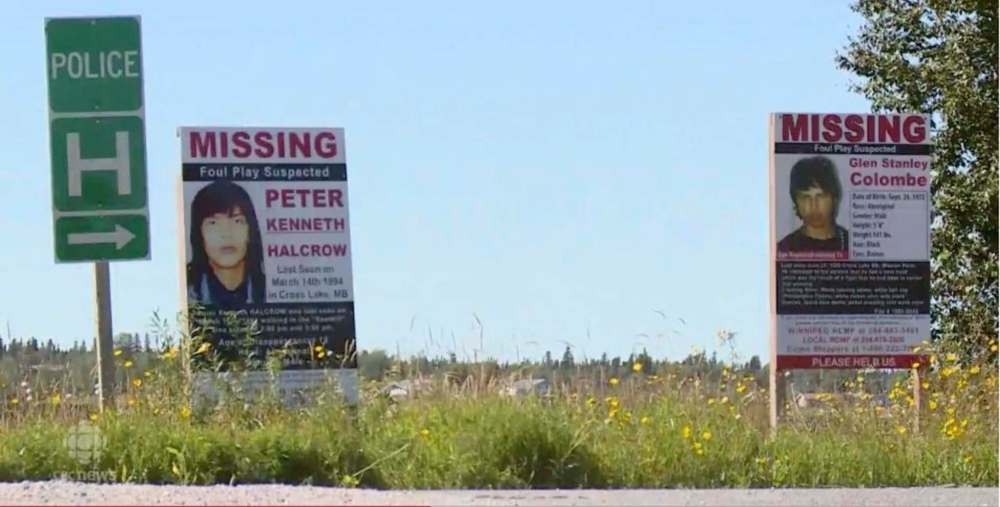
Their stories are gutting. Their resilience is inspiring.
You can’t help but become attached to these kids. We meet sweet, soft-spoken Maxine, who is navigating high school and motherhood; she’s in Grade 10 and has an 18-month-old son. Before the birth of her child, she tried to end her life four separate times, the first when she was just nine. We meet Vince, a budding pro-hockey star who dreams of skating his way out of Cross Lake and into the NHL. And gregarious Christian, who is trying to pass Grade 9 for a fourth time while beating back the addictions that plague his parents.
We also meet those in the community who are trying to help. They are exhausted and their anger and frustration is palpable. For too long, Cross Lake has been woefully underserved; that a community grappling with a suicide emergency had no full-time therapist is outrageous.
The documentary addresses the significant systemic factors that compound this crisis, including the inter-generational trauma of residential schoolS and colonialism, the construction of a dam in the 1960s that destroyed the land off which the Pimicikamak Cree Nation lived. Now, the unemployment rate hovers at around 80 per cent and the community is overwhelmed by a housing crisis. There are more than 1,000 families on the waiting list for a new house; last year, the federal government gave the First Nation enough money for 12 houses. One family has 11 people living under one roof.
While not explored explicitly in Cross Lake: This Is Where I Live, access to birth control appears to be yet another glaring crisis in the community. The arrival of a new baby is bittersweet in Cross Lake. Babies quite literally save the lives of teenage girls who were contemplating suicide, giving them a renewed sense of purpose. But babies also defer dreams. Babies might provide direction, but that direction doesn’t lead anywhere but Cross Lake. Two of the girls interviewed had hoped to become mothers some day, but they repeat a common refrain: “I didn’t think it would happen so soon.” The community is served by only a nursing station, so girls and women must leave their community for two weeks and give birth in Thompson, which is two hours away. Prenatal care also requires travel.
Though parenthood seems like an inevitability for a lot of teenagers in Cross Lake, one particular pregnancy announcement was built up for such dramatic effect by the narration that revealing too much here would practically feel like a spoiler. It’s an effective bit of storytelling, to be sure, but it also felt icky — as though they are characters on as soapy CW show, as opposed to real teenagers whose lives are about to be rocked. There’s a scene in which the boy is talking about how he can’t wait to be a daddy. The expression on the girl’s face, meanwhile, is heartbreaking.

The documentary acknowledges promises of help have been “partially kept” since the state of emergency was declared just more than a year ago, but doesn’t get into specifics — such as the fact that Cross Lake received $40 million from the government in July to build a long-overdue hospital and birth centre.
It’ll be five years before the hospital opens its doors and there’s so much more to be done. Pimicikamak Chief Cathy Merrick is worried about what will happen when her community loses the nation’s attention. “I feel like a beggar in my homeland,” she says.
Canada cannot afford to lose sight of Cross Lake and its young, vulnerable residents. Yes, Maxine, Christian and Vince are alive today. But surviving is not the same thing as living.
Twitter: @JenZoratti
Jen Zoratti is a columnist and feature writer working in the Arts & Life department, as well as the author of the weekly newsletter NEXT. A National Newspaper Award finalist for arts and entertainment writing, Jen is a graduate of the Creative Communications program at RRC Polytech and was a music writer before joining the Free Press in 2013. Read more about Jen.
Every piece of reporting Jen produces is reviewed by an editing team before it is posted online or published in print – part of the Free Press‘s tradition, since 1872, of producing reliable independent journalism. Read more about Free Press’s history and mandate, and learn how our newsroom operates.
Our newsroom depends on a growing audience of readers to power our journalism. If you are not a paid reader, please consider becoming a subscriber.
Our newsroom depends on its audience of readers to power our journalism. Thank you for your support.
TV preview
Cross Lake: This Is Where I Live
The Fifth Estate
CBC, Friday, April 7
9 p.m.
Jen Zoratti is a columnist and feature writer working in the Arts & Life department, as well as the author of the weekly newsletter NEXT. A National Newspaper Award finalist for arts and entertainment writing, Jen is a graduate of the Creative Communications program at RRC Polytech and was a music writer before joining the Free Press in 2013. Read more about Jen.
Every piece of reporting Jen produces is reviewed by an editing team before it is posted online or published in print – part of the Free Press‘s tradition, since 1872, of producing reliable independent journalism. Read more about Free Press’s history and mandate, and learn how our newsroom operates.
Our newsroom depends on a growing audience of readers to power our journalism. If you are not a paid reader, please consider becoming a subscriber.
Our newsroom depends on its audience of readers to power our journalism. Thank you for your support.
Advertisement Advertise With Us
Advertisement Advertise With Us