

De Palma, unfiltered
Doc tells story of a career of outsize ups and downs

Advertisement
Read this article for free:
or
Already have an account? Log in here »
To continue reading, please subscribe:
Digital Subscription
One year of digital access for only $1.44 a week*
- Enjoy unlimited reading on winnipegfreepress.com
- Read the E-Edition, our digital replica newspaper
- Access News Break, our award-winning app
- Play interactive puzzles
*Billed as $5.77 plus GST every four weeks. After 52 weeks, price increases to the regular rate of $19.95 plus GST every four weeks. Offer available to new and qualified returning subscribers only. Cancel any time.
To continue reading, please subscribe:
Add Free Press access to your Brandon Sun subscription for only an additional
$1 for the first 4 weeks*
- Enjoy unlimited reading on winnipegfreepress.com
- Read the E-Edition, our digital replica newspaper
- Access News Break, our award-winning app
- Play interactive puzzles
*Your next Brandon Sun subscription payment will increase by $1.00 and you will be charged $17.95 plus GST for four weeks. After four weeks, your payment will increase to $24.95 plus GST every four weeks.
Read unlimited articles for free today:
or
Already have an account? Log in here »
Hey there, time traveller!
This article was published 13/04/2017 (3334 days ago), so information in it may no longer be current.
It’s doubtful any contemporary filmmaker alive has experienced higher career peaks and lower career valleys than Brian De Palma.
In Winnipeg, of course, De Palma is celebrated for his 1974 cult movie Phantom of the Paradise. It was a hit in Winnipeg — and Paris — and a bomb just about everywhere else.
Most of his other movies haven’t been as equivocal, box-office-wise. When the Newark, N.J.-born director hit (Carrie, The Untouchables, Mission: Impossible), he hit big. When he bombed (The Bonfire of the Vanities, Mission to Mars, The Black Dahlia), he did that in an outsize way, too.
Co-directors Noah Baumbach and Jake Paltrow take the filmmaker, now 76, at face value. Indeed, their documentary De Palma eschews the use of any talking heads other than De Palma’s in a film-by-film discussion of his unfailingly fascinating career.
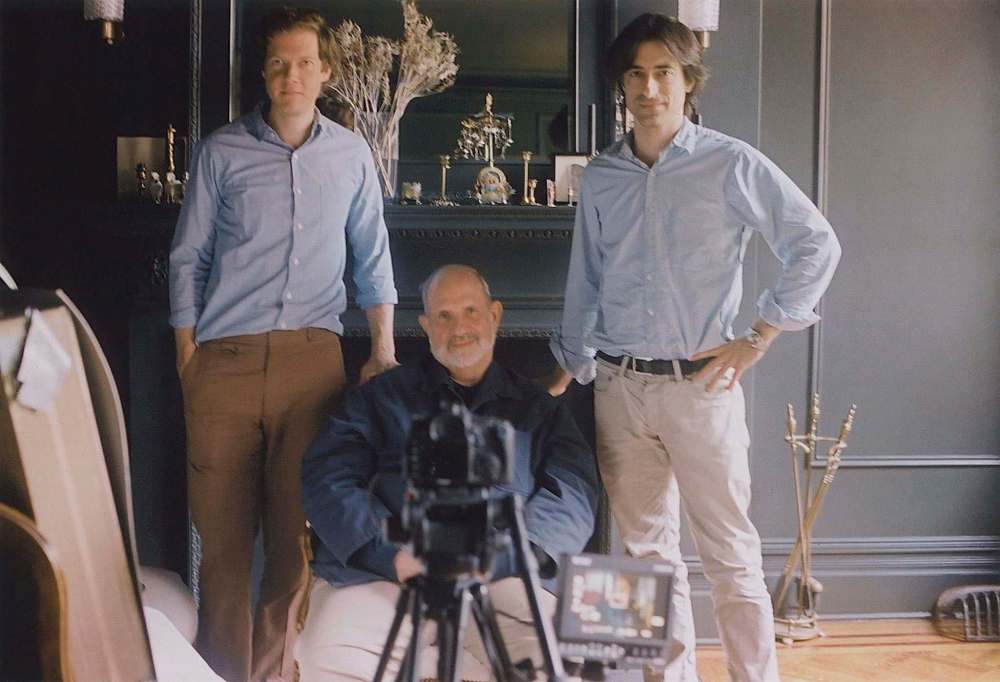
Granted, it might have been interesting to have a few other participants here, such as Robert De Niro, whose first feature films (Greetings; Hi, Mom!; and The Wedding Party) were collaborations with De Palma. (How fun it is to see footage from those early movies with young De Niro confidently holding the camera’s attention, baby fat notwithstanding.) It clearly rankles De Palma to this day that De Niro played hard-to-get before signing to play Al Capone in The Untouchables.
Doubtless John Lithgow could hold forth on the mystery of why De Palma insisted on repeatedly casting him as a heavy (Obsession, Blow Out, Raising Cain) when few other directors seemed to be able to see Lithgow’s dark side.
However, De Palma is so engaging, he doesn’t require any back-up. He delivers a healthy component of good old-fashioned insider dish, including some interesting stories of his early thriller Obsession (1976); he claims actor Cliff Robertson repeatedly attempted to subvert the work of his co-star Geneviève Bujold once he realized the actress was stealing the movie from him.
There is also some strange Hollywood history that will have cinephiles pondering weird what-if scenarios such as: what would it have been like if De Palma had ended up directing Flashdance instead of Scarface?
Baumbach and Paltrow entertain those notions, but the film remains a serious examination of De Palma as an auteur, coming through one of the most fevered epochs of Hollywood history and surviving to tell the tale.
randall.king@freepress.mb.ca Twitter: @FreepKing
Our newsroom depends on a growing audience of readers to power our journalism. If you are not a paid reader, please consider becoming a subscriber.
Our newsroom depends on its audience of readers to power our journalism. Thank you for your support.
Movie review

De Palma
Directed by Noah Baumbach and Jake Paltrow
New on Netflix
3 1/2 stars out of five
Essential De Palma

Five movies that capture the essence of director Brian De Palma:
Sisters (1972), De Palma’s first real hit, is a perverse riff on Rear Window, as a journalist (Jennifer Salt) witnesses the brutal murder of a man at the hands of a seemingly benign Québécois model (Margot Kidder). Further investigation reveals that the model is a separated conjoined twin and the other sister may be a homicidal maniac. The inspiration for the movie, the director recounts in De Palma, was an amazing photograph of young Russian conjoined twins, one cheerful and one evidently depressed.
Phantom of the Paradise (1974) may seem a gratuitous entry given Winnipeg’s fervent fan base for the film. Certainly, composer-star Paul Williams is largely responsible for the film’s postmodern groove, plucking from a number of musical genres from bubblegum to goth-rock to create a foundation suggestive of artistic indifference and corruption in the music industry. Cinematically, De Palma matches Williams’ magpie tendencies, stealing the long-take time-bomb scene from Orson Welles’s Touch of Evil and the shower scene from Hitchcock’s Psycho to create a unique, darkly perverse musical for which a worldwide audience just wasn’t ready.
Dressed to Kill (1980) was controversial when it came out because of scenes of baroque violence against women, especially in the scene in which Angie Dickinson’s character meets a nasty end in an elevator at the hands of a razor-wielding maniac. (De Palma insists that since the movie was structurally modelled after Psycho, it was a victim of a politically correct time. It’s a spurious argument: most filmmakers know to read the zeitgeist.) Apart from its technical finesse, like a true auteur film, Dressed to Kill really does reflect the director’s psyche, especially in a subplot in which Dickinson’s tech-savvy son (Keith Gordon) launches his own investigation into his mother’s murder, a plot turn inspired by the youthful De Palma’s misadventures secretly surveilling his surgeon father to uncover the fact he was having an affair.
The Untouchables (1987) sees De Palma confidently taking on material Hitchcock would not have considered: an epic crime saga pitting outgunned federal agent Eliot Ness (Kevin Costner, above) against all-powerful crime boss Al Capone (Robert De Niro). The doc has De Palma recounting how the film ran out of money to shoot an elaborate train chase scene, so the director himself wrote and staged its magnificent centrepiece — the train station shootout — modelled after the Odessa steps sequence of Sergei Eisenstein’s Battleship Potemkin.
Carlito’s Way (1993) is one of two De Palma collaborations with Al Pacino playing a Spanish-speaking hoodlum. But it’s this one, not Scarface, that demonstrates De Palma’s evolving finesse as we follow Pacino’s streetwise anti-hero doing his best to walk the straight and narrow after being released from prison, a choice that would never have occurred to Scarface’s crudely sociopathic Tony Montana.
Our newsroom depends on a growing audience of readers to power our journalism. If you are not a paid reader, please consider becoming a subscriber.
Our newsroom depends on its audience of readers to power our journalism. Thank you for your support.
Advertisement Advertise With Us