Film classification part of our history

Advertisement
Read this article for free:
or
Already have an account? Log in here »
To continue reading, please subscribe:
Digital Subscription
One year of digital access for only $1.44 a week*
- Enjoy unlimited reading on winnipegfreepress.com
- Read the E-Edition, our digital replica newspaper
- Access News Break, our award-winning app
- Play interactive puzzles
*Billed as $5.77 plus GST every four weeks. After 52 weeks, price increases to the regular rate of $19.95 plus GST every four weeks. Offer available to new and qualified returning subscribers only. Cancel any time.
To continue reading, please subscribe:
Add Free Press access to your Brandon Sun subscription for only an additional
$1 for the first 4 weeks*
- Enjoy unlimited reading on winnipegfreepress.com
- Read the E-Edition, our digital replica newspaper
- Access News Break, our award-winning app
- Play interactive puzzles
*Your next Brandon Sun subscription payment will increase by $1.00 and you will be charged $17.95 plus GST for four weeks. After four weeks, your payment will increase to $24.95 plus GST every four weeks.
Read unlimited articles for free today:
or
Already have an account? Log in here »
Hey there, time traveller!
This article was published 12/04/2017 (3481 days ago), so information in it may no longer be current.
For a little more than 100 years, Manitobans have relinquished the power of their own judgment to a board of a cross-section of Manitobans selected to be their eyes and ears when it comes to assessing the audience suitability of motion pictures.
That century of history came to a blunt, ignominious end with the budget announcement by the government of Brian Pallister that the Manitoba Film Classification Board is being eliminated.
The job of rating movies for Manitobans will be offloaded to Consumer Protection B.C., a body that may prove to be somewhat more liberal than our province’s own cultural curators: The upcoming guns-blazing dark comedy Free Fire, starring Brie Larson, opens next week in Manitoba with an 18A rating, meaning people between the ages of 14 and 18 must be accompanied by an adult and under-14s are prohibited from entry into the theatre.
If the British Columbia classification were to be observed, the rating would be 14A, meaning persons under the age of 14 can see the movie provided they’re accompanied by an adult.
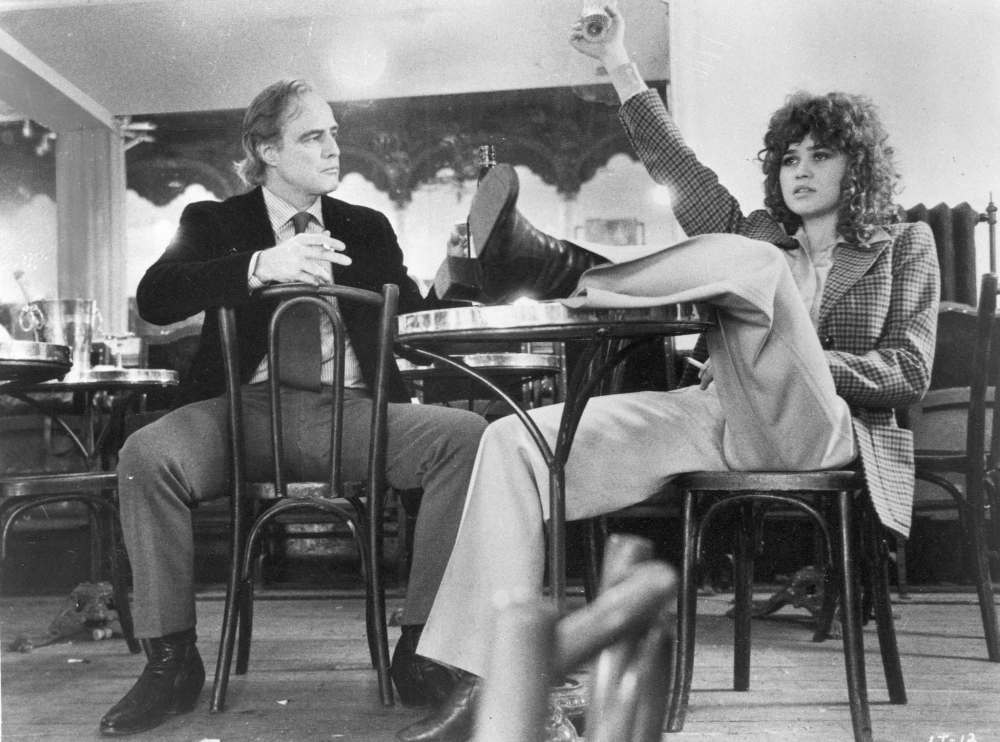
There was a time when that kind of thing was serious business to a teenager whose entertainment options were being decided by a committee of anonymous adults. (I speak as one who, back in 1973, made a point of seeing Bernardo Bertolucci’s Last Tango in Paris on a trip to Vancouver because the film had been pulled from theatres and prosecuted for obscenity in my Winnipeg hometown.)
But in an age when downloading movies is as easy as pressing an “Enter” button, such censorship doesn’t matter as much as it once did, especially in an online environment where anyone can access pornographic content that would have meant jail time for exhibitors a few decades ago.
As Manitoba relinquishes its regional voice in matters of film assessment, we might do well to consider our past.
Consider, for example, that back in 1915, when the city of Winnipeg operated its own censorship board, the D.W. Griffith film The Birth of a Nation warranted cuts, not due to the heroic depiction of the Ku Klux Klan, but for scenes showing women in distress over the notion of war.
https://www.youtube.com/watch?v=MQe5ShxM2DI
Strange as it may seem now, the government did not hold back when it came to either banning films outright or scissoring offending scenes at their whim. When giggling hoodlum Richard Widmark pushed a wheelchair-bound old lady down a flight of stairs in a famous scene in the 1947 noir thriller Kiss of Death, sensitive Manitobans saw only a truncated portion of that scene.
At least that movie still got released. The previous year, the Manitoba Censor Board banned outright a Bowery Boys comedy — Spook Busters — because the characters “did not live up to their traditional role as police helpers and community benefactors.”
https://www.youtube.com/watch?v=MkoNoGtI5LY
In 1971, the prosecution of a soft-core porn movie titled The Stewardesses (in 3-D!) actually proved to be the catalyst that transformed the censor board into the Manitoba Classification Board in 1972. But instead of liberalizing Manitobans’ viewing options, the move left some films vulnerable to police prosecution, including Last Tango, seized by police in May of 1973 and withheld from view until the Manitoba Court of Appeals decided it was not obscene after all.
https://www.youtube.com/watch?v=N25u6YZhHgE
As late as 1988, the cops struck again, seizing the European art film Devil in the Flesh because of an explicit 20-second scene depicting oral sex. Police, it turned out, proved to be unreliable arbiters of artistic merit when the charges were dropped after the film was screened for Crown attorneys.
Manitoba is not alone in its idiosyncratic prosecution of particular films. As long as provinces have asserted regional control over movies screening in their theatres, there have been outrages.

The lusty 1964 Oscar-winning best picture Tom Jones was banned in Alberta, as was Stanley Kubrick’s 1972 Oscar winner A Clockwork Orange. In British Columbia, Sergei Eisenstein’s landmark epic Battleship Potemkin was banned in 1929 for “sedition.” As late as 1994, the Saskatchewan Film and Video Board briefly banned the insipid kinky comedy Exit to Eden before reason prevailed and the film was left to the scorn of critics, as opposed to provincially appointed moral arbiters.
Given that checkerboard approach to film evaluation, it’s difficult to fire up much outrage as the Manitoba Film Classification Board prepares to shutter its premises on Weston Street.
Yet it does feel like a sad moment, not only for the good people who work at that office, but for anyone who relishes that precious component of our bizarre Manitoba history, destined to be lost forever in the relentless march toward boring cultural homogeneity.
Randall King covers film and theatre beats for the Winnipeg Free Press.
Our newsroom depends on a growing audience of readers to power our journalism. If you are not a paid reader, please consider becoming a subscriber.
Our newsroom depends on its audience of readers to power our journalism. Thank you for your support.
Our newsroom depends on a growing audience of readers to power our journalism. If you are not a paid reader, please consider becoming a subscriber.
Our newsroom depends on its audience of readers to power our journalism. Thank you for your support.
Advertisement Advertise With Us
Advertisement Advertise With Us