

Foreign cheese challenge
Manitoba firms ready for more competition, with European imports set to rise
Advertisement
Read this article for free:
or
Already have an account? Log in here »
To continue reading, please subscribe:
Digital Subscription
One year of digital access for only $1.44 a week*
- Enjoy unlimited reading on winnipegfreepress.com
- Read the E-Edition, our digital replica newspaper
- Access News Break, our award-winning app
- Play interactive puzzles
*Billed as $5.77 plus GST every four weeks. After 52 weeks, price increases to the regular rate of $19.95 plus GST every four weeks. Offer available to new and qualified returning subscribers only. Cancel any time.
To continue reading, please subscribe:
Add Free Press access to your Brandon Sun subscription for only an additional
$1 for the first 4 weeks*
- Enjoy unlimited reading on winnipegfreepress.com
- Read the E-Edition, our digital replica newspaper
- Access News Break, our award-winning app
- Play interactive puzzles
*Your next Brandon Sun subscription payment will increase by $1.00 and you will be charged $17.95 plus GST for four weeks. After four weeks, your payment will increase to $24.95 plus GST every four weeks.
Read unlimited articles for free today:
or
Already have an account? Log in here »
Hey there, time traveller!
This article was published 19/04/2017 (3335 days ago), so information in it may no longer be current.
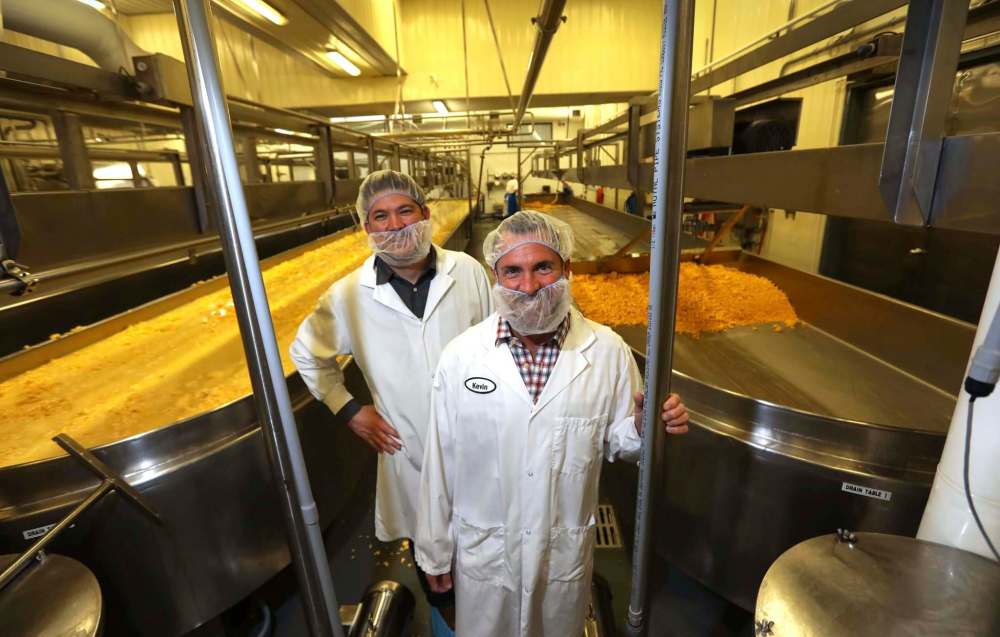
A wave of new European-made cheeses will be hitting the Canadian market this summer and Manitoba’s largest cheese maker believes product innovation will be the best defence against this new outside threat.
“One of our strengths has been product development and innovation and bringing new products to market,” Mike Raftis, vice-president of sales, marketing and communications for Bothwell Cheese, said.
“As more imported products… come into the market, it’s going to bring more options for the customer. They’ll have access to more varieties, so we have to continue to focus on innovation and product development and making sure we’re still competitive in the category.”
Raftis noted Bothwell is launching a new Non-GMO Project Verified line of cheeses this year, made with milk from dairy cows that are fed non-GMO (genetically modified organism) crops.
The Non-GMO Project offers North America’s only third-party program for verifying a product’s ingredients. Raftis said Non-GMO Project verification is the fastest-growing label in the natural products industry and Bothwell is the first Canadian cheese manufacturer to receive Non-GMO Project status. Its first such product — a medium-aged white cheddar — should be hitting store shelves in August or September.
“Providing products that customers are looking for is a great way for us to make sure we remain strong on the (store) shelf and competitive,” he said.
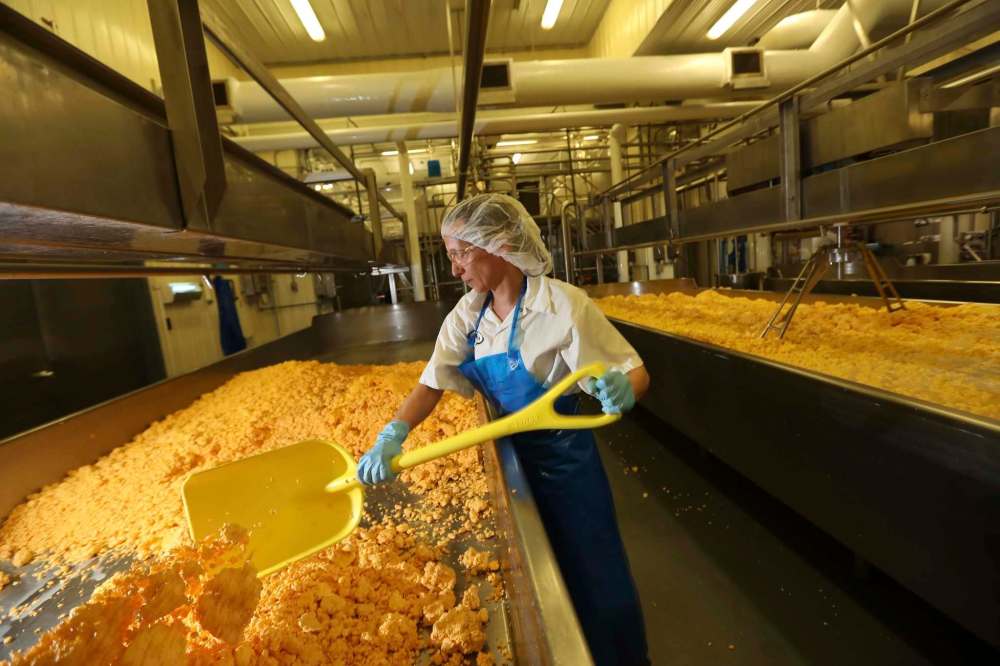
Bothwell, which was founded in 1936 by a group of local dairy farmers, produces more than 25 varieties of cheeses in six product categories: traditional, flavoured, smoked, cheese curds, shredded and sliced.
In July, the federal government is expected to more than double the amount of European cheese allowed into the country as part of the new Canada-European Union Comprehensive Economic and Trade Agreement (CETA). That means an extra 17,700 tonnes of tariff-free imported cheeses, which represents about four per cent of current Canadian cheese production.
The Dairy Processors Association of Canada, whose members include cheese manufacturers, estimates the increase in European imports could cost Canadian cheese makers up to $230 million annually in lost sales and up to 400 direct jobs.
Dave Shambrock, executive director of Food & Beverage Manitoba, said local cheese makers such as Bothwell and Santorini Dairies Inc. should fare better than some specialty cheese makers.
He noted Bothwell already has a strong market presence in Canada because of innovative products such as its line of flavoured Monterey Jack cheeses and its award-winning cheddar cheeses. And Santorini’s main cheese product is feta cheese, most of which it sells to an affiliated company — the Opa! of Greece chain of fast-food restaurants, he said.
“They’re (both) pretty efficient operations as well,” he added, “so I think they’re in a reasonably good position.”
Santorini president and CEO Paul Kostas noted while it may cost European cheese makers less to produce their product, they’ll still face added transportation costs to get their products to Canada. Also soft cheeses, such as feta, have a shorter shelf life than hard cheeses, he added.
“So there are still some things where we have an advantage.”
In a recent column, Sylvain Charlebois, a professor in food distribution and policy at Dalhousie University, wrote that the best tool the federal government has for offsetting the negative impact of CETA are the import quotas it’s expected to issue. But it hasn’t said yet who — grocers, processors, artisan cheese makers, dairy farmers or even restaurants — will get licences to import European cheeses, he wrote.

Charlebois warned that if not done right, many Canadian artisan cheese makers could disappear in the face of increased competition from European producers. To do it right, many of the import licences should go to small dairy processors, most of whom are family-owned fine-cheese makers, and to co-operatives, he said.
Dairy Processors Association of Canada president Jacques Lefebvre agreed, saying processors could supplement their product offering and incomes by importing European cheeses they don’t produce themselves. The retail sector would still benefit because the processors still have to sell the products through retail stores, he said.
Charlebois said while allowing more tariff-free European cheeses into Canada will mean more choice for Canadians, it likely won’t mean cheaper prices.
“Even though it is always difficult to predict what is likely to happen in retail stores, chances are prices will remain somewhat the same,” he said. “Cheese has historically been expensive in Canada, yet consumers have always continued to buy it. Unless retailers feel they would be selling more products with lower prices, rebates at the dairy counter are highly unlikely.”
murray.mcneill@freepress.mb.ca