

The deadly cocktail
Potent homebrew known as super-juice a scourge on dry Manitoba First Nations

Advertisement
Read this article for free:
or
Already have an account? Log in here »
To continue reading, please subscribe:

Digital Subscription
One year of digital access for only $205*
- Enjoy unlimited reading on winnipegfreepress.com
- Read the E-Edition, our digital replica newspaper
- Access News Break, our award-winning app
- Play interactive puzzles
*First annual payment billed as $205.00 + GST for one year. This annual subscription will automatically renew at $233.00 + GST every 52 weeks (10% off the regular annual price of $259.35). Offer available to new and qualified returning subscribers only. Cancel any time.
To continue reading, please subscribe:
Add Free Press access to your Brandon Sun subscription for only an additional
$1 for the first 4 weeks*
- Enjoy unlimited reading on winnipegfreepress.com
- Read the E-Edition, our digital replica newspaper
- Access News Break, our award-winning app
- Play interactive puzzles
*Your next Brandon Sun subscription payment will increase by $1.00 and you will be charged $17.95 plus GST for four weeks. After four weeks, your payment will increase to $24.95 plus GST every four weeks.
Read unlimited articles for free today:
or
Already have an account? Log in here »
Hey there, time traveller!
This article was published 22/04/2017 (3392 days ago), so information in it may no longer be current.
John Jacob Harper’s voice is quiet, almost inaudible, but the emotion in his words carries to the victim’s family and friends seated in the courtroom. They are waiting for justice in a case that has shone a spotlight on the deadly consequences of substance abuse in a northern Manitoba community.
“I lost my friend,” Harper, 29, tells the judge who is about to send him to prison for manslaughter.
“I didn’t mean to do that… I didn’t know that will happen to him.”
Harper was sentenced earlier this week to five years in prison for drunkenly beating one of his best friends, a 26-year-old man who had been drunkenly attacking his own wife before Harper intervened.
Everyone involved, including a co-accused who is still awaiting trial, had been at a party in St. Theresa Point in April 2016, drinking a dangerous type of homemade alcohol that has long been blamed for spikes in violent crime in remote First Nations communities designated as dry.
Harper’s friend died the next day after being flown 600 kilometres south to Winnipeg for emergency medical treatment that was ultimately unsuccessful. Before he died of a brain injury, likely caused by Harper kicking him in the head as he lay defenceless on the floor, he told Harper he forgave him.
“I deserved it,” he said.
The homicide is one of a rising number of violent-crime tragedies that has been blamed on the scourge of what is commonly called super-juice.
“It’s particularly tragic, and it’s typical. The difference is that someone died. But every court sitting we see a number of court cases very much like this where people are on super-juice and they have violent disputes and things get out of hand,” said Harper’s defence lawyer, Chris Sigurdson, who has been working in northern Manitoba communities for nearly 20 years.
“You’re looking at places that don’t have proper running water, there’s very high unemployment, it’s isolated — all of those factors are going to play into addictions and substance abuse,” he said.
Consumption of the potent homebrew has been particularly damaging in Manitoba’s remote First Nations that have banned the sale of alcohol.
Community leaders and First Nations advocates have been raising the alarm about super-juice since the homemade alcohol started gaining popularity in Manitoba nearly 10 years ago. The majority of RCMP calls in Manitoba’s north arise from alcohol abuse, and police say they’ve seen a rise in violent crime since super-juice came on the scene. Now, as prescription drug abuse becomes more common, the concoction is likely to be mixed with illegally obtained pills — and small, remote northern communities are suffering the consequences.
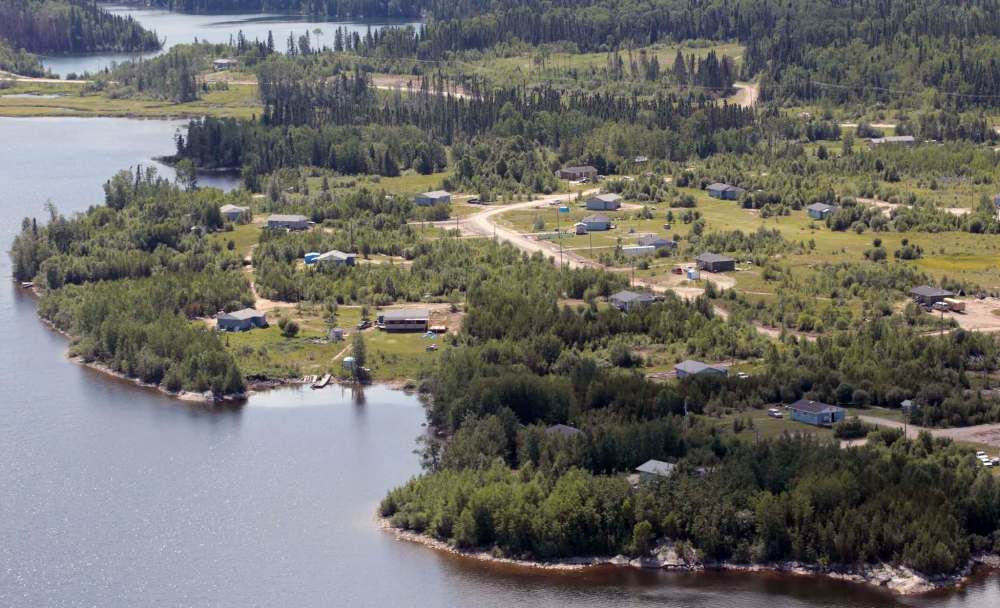
Curtis McDougall, justice director with St. Theresa Point First Nation, said the community of nearly 4,000 on the shore of Island Lake is seeing a spike in crime that can usually be traced back to substance abuse.
“The majority of murders that happen in our community, it’s with super-juice all the time. And that really causes a problem. Sometimes they don’t even know what happened. It’s really potent, that super-juice,” he said. “It’s not a regular alcohol like beer or liquor. It has more potency.”
Super-juice is a fermented mix of water, sugar and “super yeast,” commonly sold in wine making kits. It’s usually mixed in pails, forming a foul-smelling greyish-white liquid that sometimes contains floating pieces of fruit. It only takes a day or so to ferment, making it a quick option for people looking to sell the stuff in two-litre bottles or imbibe in their own homes — although they often do so too early, leading to painful stomach issues and increased intoxication as the yeast continues to ferment from inside.
St. Theresa Point is consulting with Public Safety Canada to develop a safety plan for the community, something McDougall hopes will address gaps in treatment and after-care and lead to better prevention on addictions, in addition to a wide range of issues the community is tackling.
“Instead of waiting, we have to go out there and try to bring it to reality,” he said.
While band councils across Manitoba’s north have tried to ban super yeast in their dry communities, it’s easy to bring in and RCMP can’t seize it because it’s a legal product, said Manitoba RCMP Staff-Sgt. Noel Allard, who oversees the north district which stretches from Grand Rapids to Churchill, with Flin Flon on the east and Shamattawa on the west.
The majority of calls — about 70 per cent — to northern RCMP detachments are alcohol-related, and super-juice is a contributor to that, particularly in the northeast region of the province, he said. People blackout on the quick-fermenting homebrew and often can’t remember what they did, he said.
“Usually that’s what the offender says to us when we interview them — they blacked out. Either they’re super drunk or high on drugs. It’s always the same answers, over and over.”
Homebrew has always been an issue, but alcoholic concoctions made with regular bread makers’ yeast weren’t as powerful, Allard said. Police have a difficult task when it comes to combatting super-juice because it’s made with a legal product, and they recognize fining someone for drinking in a dry community often takes money away from families who are struggling to make ends meet in places that lack basic infrastructure, including proper housing and plumbing.
“It’s a serious thing for northern communities, super-juice. But nobody can control it,” Allard said. “The family loses out, sometimes by death… there’s a lot of bad endings to something that they planned as a good evening (activity).”
A steady stream of alcohol-fuelled assaults — “a lot more body parts missing from victims, serious violent crimes,” Allard said — has broken up families and resulted in more children being placed in foster care.
More recreation, education and employment would go a long way toward helping people who turn to substance abuse and super-juice, Allard said.
“Everybody’s tried, the local chief and council have tried. I think the only way we could actually abate it is more education, more things for the family environment. Most of these communities don’t have nothing to do except watch TV. There’s no evening activities, there’s no family activities really in most communities.”
Many First Nations communities have long battled addictions in the fight to improve their quality of life, and that’s no easy task in a place like St. Theresa Point, where only about 10 per cent of the population has employment.
Many live in overcrowded homes and depend on social assistance cheques that aren’t adjusted for the high cost of food and supplies in remote areas. They’re still dealing with the effects of inter-generational trauma dating back to colonialism and residential schools, and substance abuse has arisen out of a feeling of hopelessness, Chief David McDougall said.
“This is one of the symptoms of an oppressed group of people,” he said.
“The key is that we’re given a chance to also generate resources so that we can help people help themselves. We can help ourselves out of this if we can find ways to do it, if we’re given a chance.”
Faced with the high cost of sending people down south for addictions treatment, justice director Curtis McDougall said he’s working toward the goal of building a treatment centre in St. Theresa Point to serve the four Island Lake First Nations.
“Let’s have a treatment centre here. We’re not the only ones that have a problem, but in the Island Lake region, there’s over 10,000 people. I don’t want to speak on their behalf what kind of problems they have, (but) I know they’ll utilize it too instead of shipping somebody off to Winnipeg,” he said.
“We deal with drugs and alcohol and that’s where the stem of it all is. If we eliminate that, we would have less crimes and less delinquencies, and I do believe that’s where it all begins.”

The community has eight safety officers — formerly known as band constables — who are called upon to respond immediately at the first sign of intoxication, before a drunken encounter escalates to violence, and they’re often able to nip conflicts in the bud, Curtis McDougall said.
But he said the community needs more funding — not only for treatment programs, but for youth centres and recreation.
“It doesn’t satisfy the whole community,” Curtis McDougall said. “The programs are there just to look good, but it’s not enough. I would like developing programs, youth centres.”
katie.may@freepress.mb.ca
Twitter: @thatkatiemay
Katie May is a multimedia producer for the Free Press.
Our newsroom depends on a growing audience of readers to power our journalism. If you are not a paid reader, please consider becoming a subscriber.
Our newsroom depends on its audience of readers to power our journalism. Thank you for your support.
Katie May is a multimedia producer for the Free Press.
Our newsroom depends on a growing audience of readers to power our journalism. If you are not a paid reader, please consider becoming a subscriber.
Our newsroom depends on its audience of readers to power our journalism. Thank you for your support.
Advertisement Advertise With Us
Advertisement Advertise With Us