Rich with history
New Brunswick offers man-made and natural beauty
Advertisement
Read this article for free:
or
Already have an account? Log in here »
To continue reading, please subscribe:

Digital Subscription
One year of digital access for only $205*
- Enjoy unlimited reading on winnipegfreepress.com
- Read the E-Edition, our digital replica newspaper
- Access News Break, our award-winning app
- Play interactive puzzles
*First annual payment billed as $205.00 + GST for one year. This annual subscription will automatically renew at $233.00 + GST every 52 weeks (10% off the regular annual price of $259.35). Offer available to new and qualified returning subscribers only. Cancel any time.
To continue reading, please subscribe:
Add Free Press access to your Brandon Sun subscription for only an additional
$1 for the first 4 weeks*
- Enjoy unlimited reading on winnipegfreepress.com
- Read the E-Edition, our digital replica newspaper
- Access News Break, our award-winning app
- Play interactive puzzles
*Your next Brandon Sun subscription payment will increase by $1.00 and you will be charged $17.95 plus GST for four weeks. After four weeks, your payment will increase to $24.95 plus GST every four weeks.
Read unlimited articles for free today:
or
Already have an account? Log in here »
Hey there, time traveller!
This article was published 03/06/2017 (3403 days ago), so information in it may no longer be current.
As a part of my series celebrating Canada’s provinces during our 150th anniversary since Confederation, I will focus on a province I have written about a few times over the past several years.
I love the East Coast, and New Brunswick has always fascinated me because of the unique Acadian history that is still preserved and protected so vehemently there.
The fact that my wife was originally from a town only an hour north of Moncton, in the heart of Acadian country, has provided me with a deeper perspective of that history than I might otherwise have.
But there’s much more to New Brunswick as a destination beyond the history that so defined that one aspect of the province.
With a population of less than 60,000, you will find the capital city of Fredericton to be one of the friendliest of any jurisdiction. Like many river cities, it has a beauty of its own, with the Saint John River running through it.
Once a separate community before it amalgamated into Fredericton in 1973, the Marysville suburb attracts thousands of visitors to see its 19th-century buildings and historic mill, which was the foundation of its economy for many years.
The mouth of the Saint John River, where the city of Saint John was founded, was discovered by French explorer Samuel De Champlain, but after the French expulsion of 1755, the city would become a favourite permanent home for British loyalist citizens, who were living in the United States, to escape to during the American Revolution.
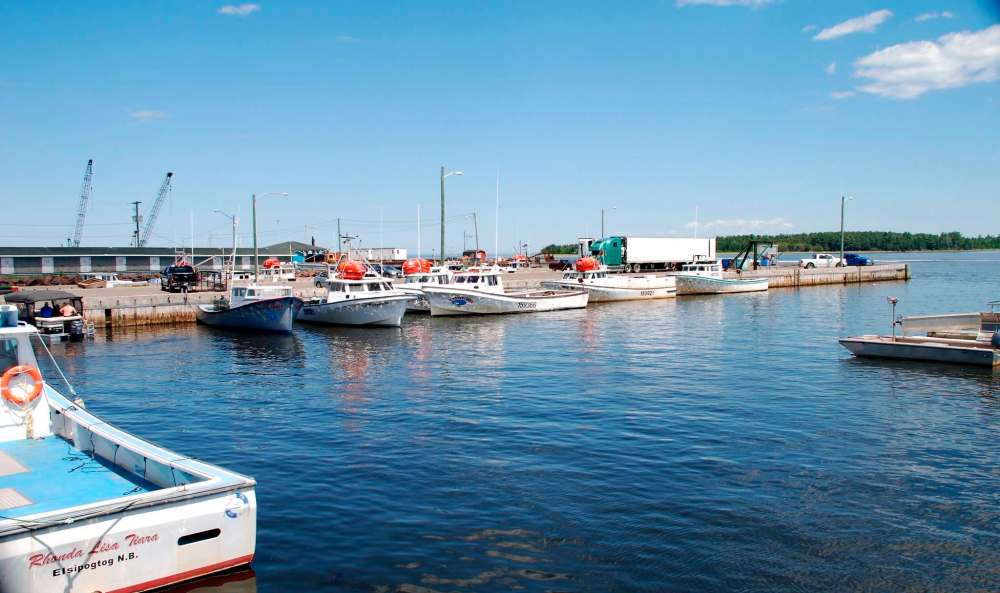
While not Canada’s oldest city, this gateway to the Bay of Fundy is, in fact, Canada’s oldest incorporated city.
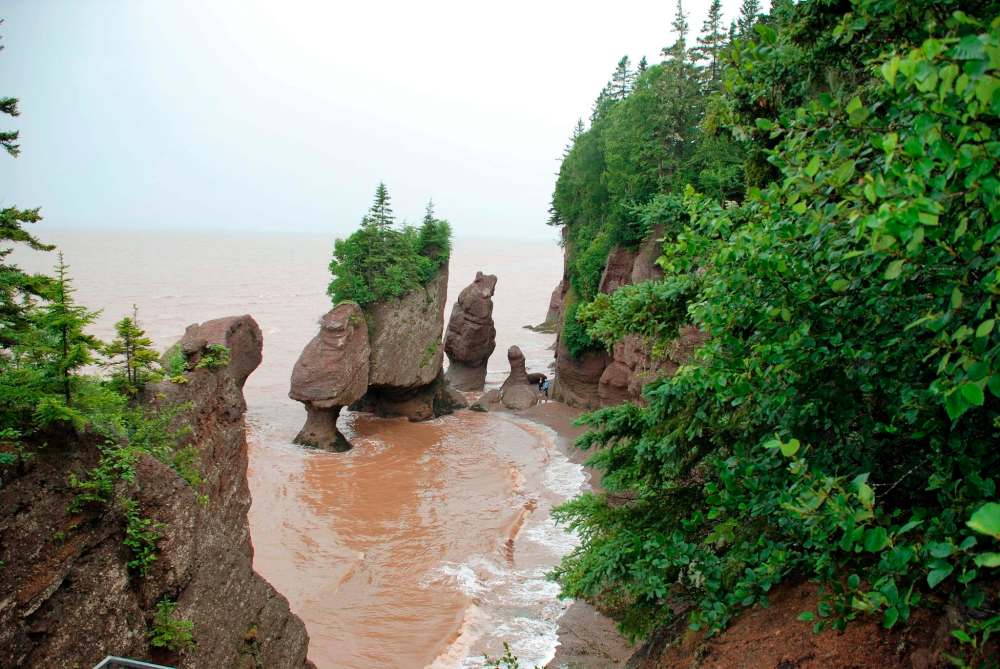
The Bay of Fundy National Park is a fascinating protection area, in no small part because of the Fundy tides, which people from around the world come to see every year.
You can stand on a sandy beach at low tide, then return several hours later to find the waters several metres higher. The Hopewell Rocks, as they are known, have the highest tides in the world, and are acknowledged as one of the marine wonders of the world.
Moncton, too, is a small city and, as in smaller communities all over Canada, the people are very friendly and helpful to visitors. The downtown core of entertainment venues and restaurants is small but active. Many of the better shopping and dining locations are located in the suburbs.
It is unlikely many will get to Moncton and not visit its most famous “magnetic hill.”
But Moncton is also the gateway to another tourist treasure only a few kilometres away.
The community of Shediac may have anointed itself the “Lobster Capital of the World’, but it is not without good reason. Off its shores lie some of the best lobster fishing areas which, fairly speaking, stretch up the New Brunswick coast and down through to Nova Scotia. But Shediac has its huge lobster festival to solidify its bragging rights, which the other areas don’t.
During the summer, you will find tourists from all over the world who come to sit on its amazing saltwater beaches, visit its artists village, sample its many restaurants — specializing not just in lobster but fresh Atlantic salmon, scallops and clams — and stroll through its “Corridor of Lights” in the evening.
Just a few kilometres up Acadie Road you will enter Cap-Pelé, not much more than a village, but home to the kind of restaurants locals drive a long way to visit for home-style meals like the ones they likely grew up with.
Here, at a reasonable price, you will leave stuffed with copious quantities of deep fried clams, poutines New Brunswick style, or fish and shrimp platters that won’t leave you asking for more until next day.
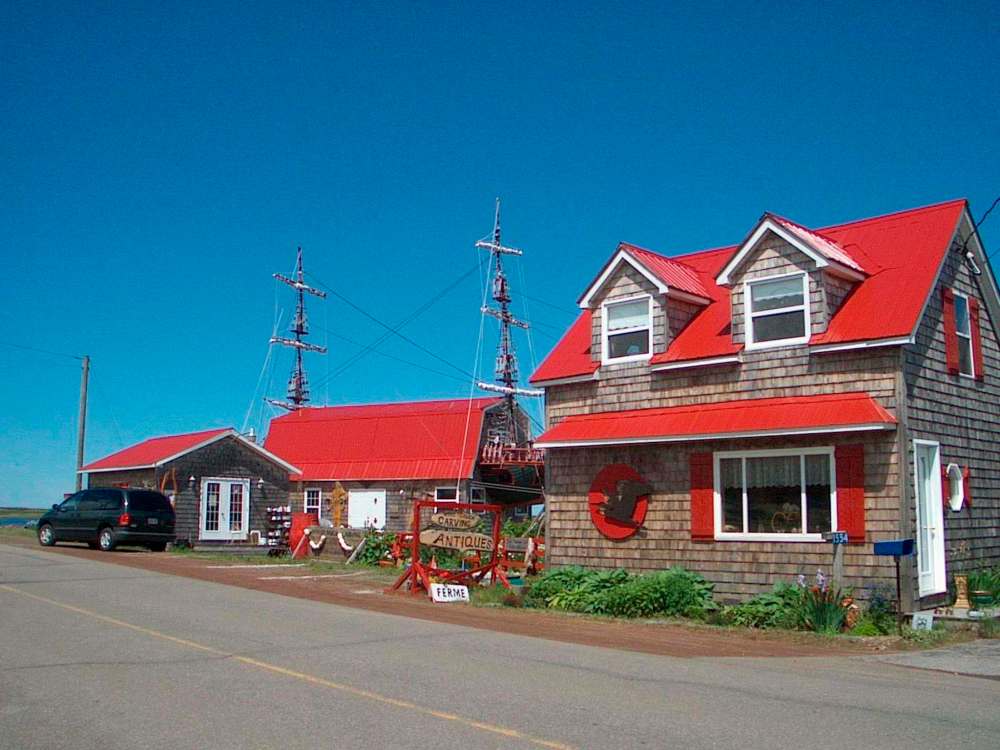
There are two ways to drive farther north. Highway 11, still waiting to be fully twinned all the way from Shediac to Miramichi after promises from successive federal and provincial governments, is the fastest. But following the coastal roads when you can, while dramatically slower, will take you through many more interesting communities and offer views and rest stops that can be much more satisfying if you are not in a rush.
Le Pays de la Sagouine! Here, just outside of Bouctouche, you will know you are in the heart of Acadian country when you visit this internationally known recreation of old Acadia. It came to life through the creative mind of novelist Antonine Maillet. At various times during the day, music will keep your feet tapping and the boardwalk to get there puts you back into history, without the surrounding trappings of urban life you might find in other areas.
For a day of rest, visit La dune de Bouctouche, promoted as “one of the few remaining great sand dunes on the northeastern coastline of North America.” Irving Oil has invested millions in building its boardwalk, preserving its exceptional natural treasures, and supporting the Irving Eco-Centre so people can gain an appreciation of the delicate balance between man and nature.
Farther up the coast, in the community of Rexton, you can visit the birthplace and historical home of Bonar Law, the only prime minister of England not born in Great Britain.
Once a major shipping centre, it now holds the wreckages of vessels of a bygone era that did not survive the storms that lashed and smashed them.
Only a couple of kilometres from the small village of St. Ignace, golfers can experience one of the most challenging tracks in the province. Unless you are in really good shape you will want to take a cart on this course.
It is its huge escarpments and rolling hills that make it a place of beauty, as well as the occasional source of frustration for golfers whose directional abilities are less than perfect.
Some have referred to Kouchibouguac National Park as Canada’s best-kept secret. Along its shores you can find hundreds of harbour and grey seals, rare species like the piping plover and fisher marten, and for only a few dollars a day, you can dig for your own clams.
But for most tourists, its biggest draws are great hiking and biking, and its kilometre-long interpretive boardwalk that leads to its busiest attraction, Kelly’s Beach.
Originally the home of the Mi’kmaq Nation, Miramichi was flooded with Irish settlers after the Napoleonic Wars in the early 1800s, so much that its “Canada’s Irish Festival” is one of the most celebrated events of the year.
And for those who like Atlantic salmon, its river is renowned as one of the best for anglers to catch this real fighting fish.
A visit to New Brunswick during our 150th year deserves more than a quick pass through its better recognized sites. It is a province that will hold your fascination for days, and even weeks.
Read Ron’s blog at thattravelguy.ca. Listen to Ron’s latest podcasts via his website, or on demand on iTunes.
pradinukr@shaw.ca