

Government, Senate at odds over scope of indigenous lineage bill
Advertisement
Read this article for free:
or
Already have an account? Log in here »
To continue reading, please subscribe:

Digital Subscription
One year of digital access for only $205*
- Enjoy unlimited reading on winnipegfreepress.com
- Read the E-Edition, our digital replica newspaper
- Access News Break, our award-winning app
- Play interactive puzzles
*First annual payment billed as $205.00 + GST for one year. This annual subscription will automatically renew at $233.00 + GST every 52 weeks (10% off the regular annual price of $259.35). Offer available to new and qualified returning subscribers only. Cancel any time.
To continue reading, please subscribe:
Add Free Press access to your Brandon Sun subscription for only an additional
$1 for the first 4 weeks*
- Enjoy unlimited reading on winnipegfreepress.com
- Read the E-Edition, our digital replica newspaper
- Access News Break, our award-winning app
- Play interactive puzzles
*Your next Brandon Sun subscription payment will increase by $1.00 and you will be charged $17.95 plus GST for four weeks. After four weeks, your payment will increase to $24.95 plus GST every four weeks.
Read unlimited articles for free today:
or
Already have an account? Log in here »
Hey there, time traveller!
This article was published 20/06/2017 (3337 days ago), so information in it may no longer be current.
OTTAWA — Manitoban parliamentarians are digging in their heels in a dramatic fight with the federal Liberals to give more Canadians with indigenous roots official Indian status.
They’re planning to use an extraordinary procedural move to settle the dispute before the summer break, the Free Press has learned.
The decision comes after a judge decided Tuesday not to extend a deadline for Ottawa to fix the lineage provisions of the Indian Act, meaning the government’s limited interpretation is likely to stand.
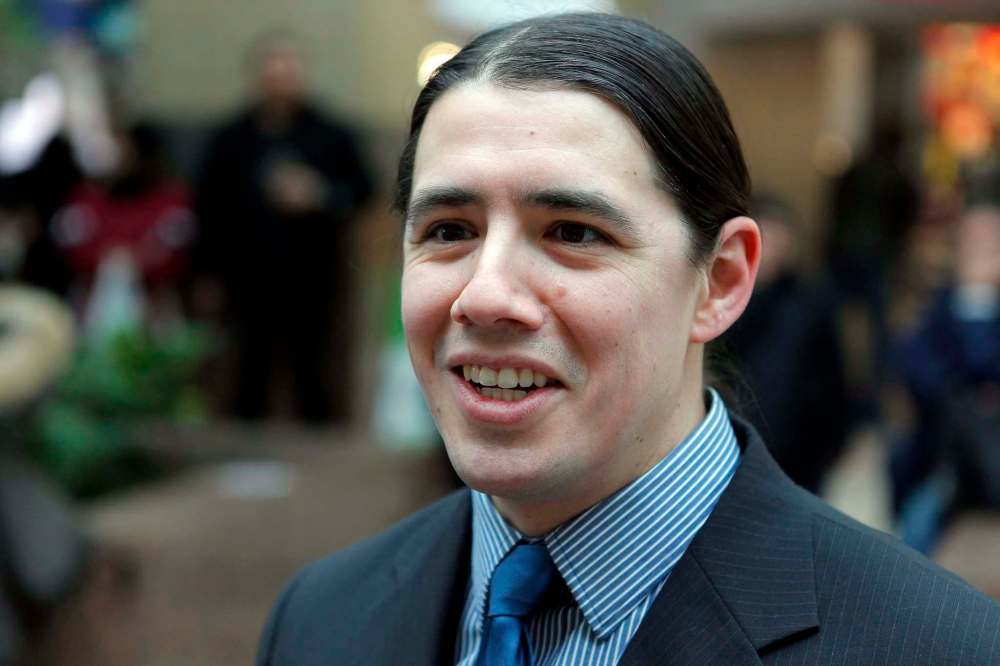
“The day before National Aboriginal Day,” said Winnipeg Centre MP Robert-Falcon Ouellette, shaking his head. “A kick in the teeth.”
Bill S-3 aims to restore Indian status to women who married non-indigenous men and their descendants. The federal Liberals tabled the bill in November after a Quebec court case in August 2015 found the policy violated charter rights.
A judge gave Ottawa until Feb. 3 to rectify the situation, before extending the deadline to July 3. At that point, the government would not be able to register any Indians in Quebec.
As written, the bill would restore Indian status to roughly 35,000 people who lost their lineage from 1951 onwards. It mentions a consultation process to look at older cases, but only commits to solving discrimination from the post-war era.
But last month, Manitoba Senator Marilou McPhedran amended the bill to apply to cases dating to 1876, which the Senate as a whole approved in its final vote. She cited previous court rulings that gradually extended the rights to more people.
That prompted a showdown with the government, which warned that up to two million people could suddenly be eligible for Indian status — citing a report from a Winnipeg demographer, who told the Free Press last week it was an extreme-case example.
The government gutted McPhedran’s amendment and could send it back to the Senate as soon as Wednesday for a final vote. Indigenous Affairs Minister Carolyn Bennett insists the limited bill “is the responsible thing to do” because it restores status to one group, while binding the government “to move forward immediately with broader reforms.”
Ouellette said his Liberal colleagues mean well, but he blames bureaucrats for not consulting with indigenous groups to write a bill that included more people in the first place. He said that makes it impossible for indigenous people to believe a later consultation will fold them in.
“It’s the department’s fault,” said Ouellette, who is Cree. “We’re afraid, that getting so close to this goal of giving someone their birthright back… might never come to realization.”
With both branches of Parliament sparring over the bill, the complainant’s lawyer asked Justice Chantal Masse to extend her July 3 deadline to give more time to decide.
Though the Free Press could not obtain the Tuesday ruling, the lawyer said Masse rejected that request, claiming it would be inappropriate to intervene in a dispute between the government and the Senate. She said she’d consider an extension if both sides asked for it.
That’s given a group of senators, including McPhedran and Saskatchewan’s Lillian Dyck, reason to consider a procedural move last used in the 1940s, the Free Press has learned. They’ve proposed what’s called a “free conference” in which both chambers meet together to settle a debate.

“It does seem to fit, in this time of reconciliation,” said McPhedran, adding the judge “left a wide, open door for the government” to ask for more time.
Under a free conference, parliamentarians vote to accept the House or Senate’s version of the bill — and if they reach a stalemate, the bill dies and neither chamber can propose a similar bill in the parliamentary session.
Ouellette, 40, supports the idea.
“We’ve been talking for years about this, since I was born,” he said. “It’s time for action.”
dylan.robertson@freepress.mb.ca
HOW MANY MANITOBANS COULD GET INDIAN STATUS?
Stewart Clatworthy, a Winnipeg demographer who has specilaized in Indian status for decades, says he’s unsure how many Manitobans could be eligible for Indian status under either version of Bill S-3.
Clatworthy completed a 2005 study for the government, which suggested Ottawa would have to pay $54 million in health benefits for Manitobans granted Indian status, most of whom are already covered by provincial and private insurance.
Related Articles
Youth shine as legislative battle rages
Advertisement Advertise With Us
Advertisement Advertise With Us