Fascinating perspective
Documentary goes on modern-day pilgrimage

Advertisement
Read this article for free:
or
Already have an account? Log in here »
To continue reading, please subscribe:

Digital Subscription
One year of digital access for only $205*
- Enjoy unlimited reading on winnipegfreepress.com
- Read the E-Edition, our digital replica newspaper
- Access News Break, our award-winning app
- Play interactive puzzles
*First annual payment billed as $205.00 + GST for one year. This annual subscription will automatically renew at $233.00 + GST every 52 weeks (10% off the regular annual price of $259.35). Offer available to new and qualified returning subscribers only. Cancel any time.
To continue reading, please subscribe:
Add Free Press access to your Brandon Sun subscription for only an additional
$1 for the first 4 weeks*
- Enjoy unlimited reading on winnipegfreepress.com
- Read the E-Edition, our digital replica newspaper
- Access News Break, our award-winning app
- Play interactive puzzles
*Your next Brandon Sun subscription payment will increase by $1.00 and you will be charged $17.95 plus GST for four weeks. After four weeks, your payment will increase to $24.95 plus GST every four weeks.
Read unlimited articles for free today:
or
Already have an account? Log in here »
Hey there, time traveller!
This article was published 30/06/2017 (3336 days ago), so information in it may no longer be current.
It’s become a bit of a cliché to say that the journey is more important than the destination.
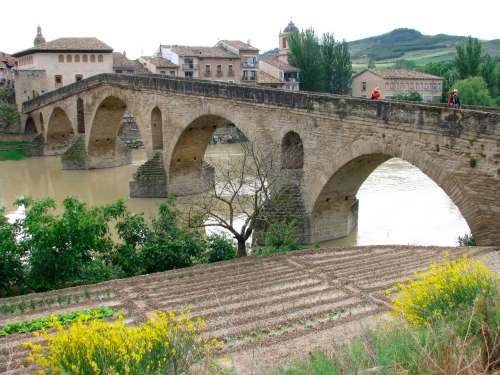
The Camino de Santiago offers arduous and profound proof of that statement. Every year, tens of thousands of people walk hundreds of kilometres, generally from southern France through Spain to Santiago de Compostela, along pilgrimage routes set down in the Middle Ages.
Originally meant as a form of Christian penance — and for some travellers it still is — the Camino has become something else in our secular age. German, American, Italian, British and Korean wayfarers now throng these roads, many wearing or carrying the scallop shell symbol of St. James, each with his or her own reason for making the trek.
Some want to rediscover God. Some want to rediscover themselves. Some are cancer survivors, celebrating life. Some are mourners, grieving a loss. Most seem to be searching for something they haven’t found in the rush of modern middle-class life. Leaving behind the distractions and obligations of daily existence, as well as its usual comforts, they set out with backpacks, high-tech hiking shoes and a lot of big questions.
American filmmaker Tristan Cook follows a loose collection of these walkers, tracking their physical challenges and spiritual discoveries. He starts with Dane Johansen, whose walk is complicated by the fact he’s carrying his cello: he plans to play Bach’s cello suites at 36 churches along the way. While Johansen supplies the film’s beautiful soundtrack, his story is one of the least interesting elements of the doc, something that Cook seems to figure out fairly quickly.
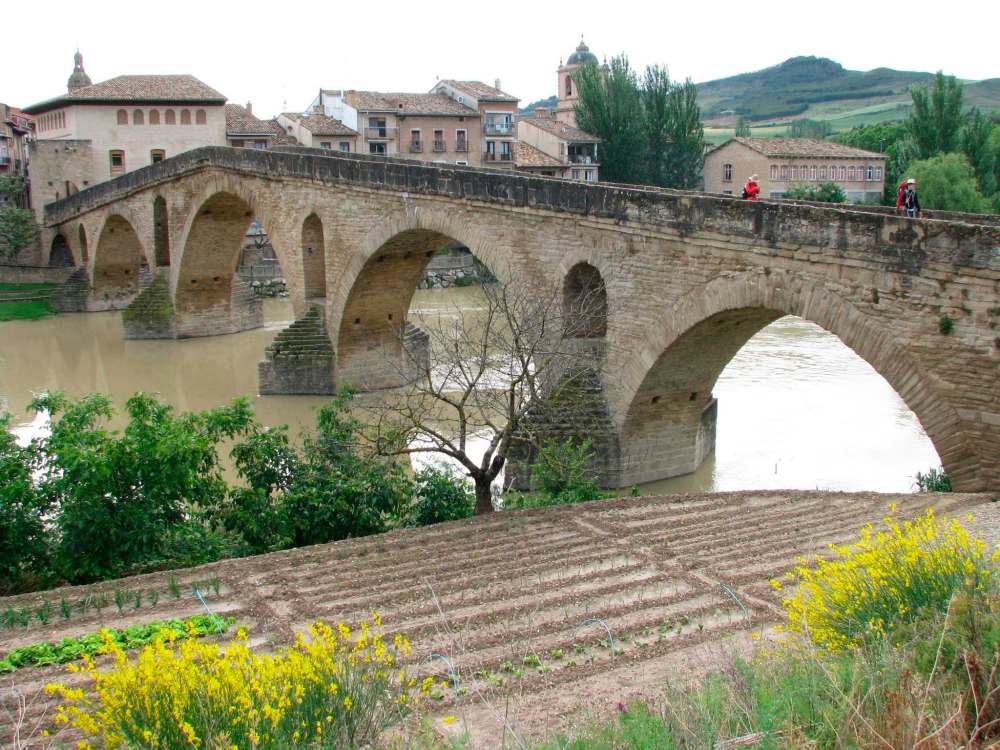
Strangers on the Earth is roughly structured as a journey — no surprise there! — tracking a pilgrim’s progress in stages along a map. Within that simple linear progression, however, it remains open-ended and gently meandering. Along with leisurely footage of the Spanish landscape and its ancient churches, there is a range of interviews, with subjects offering up musings both mystical and mundane.

For many travellers, the pace of walking helps to slow their thoughts, leading to a meditative state.
Some ponder the nature of the universe and the meaning of life and death.
Of course, human nature is still human nature. “It sounds awful to say, but I think the Camino is very trendy right now,” one pilgrim admits. Another sheepishly recounts a nasty break-up with his walking partner after a dispute about a phone charger. And there are, inevitably, “Camino snobs” who question other travellers’ commitment or motivation.
Cook takes this all in with a curious eye and accepting heart. Strangers on the Earth never quite reaches the level of transcendence it seems to be yearning for, but it offers a fascinating perspective on the Camino’s historic roads and modern-day pilgrims.
alison.gillmor@freepress.mb.ca
Studying at the University of Winnipeg and later Toronto’s York University, Alison Gillmor planned to become an art historian. She ended up catching the journalism bug when she started as visual arts reviewer at the Winnipeg Free Press in 1992.
Our newsroom depends on a growing audience of readers to power our journalism. If you are not a paid reader, please consider becoming a subscriber.
Our newsroom depends on its audience of readers to power our journalism. Thank you for your support.
Movie review

Strangers on the Earth
Directed by Tristan Cook
Cinematheque
Subject to classification
96 minutes
★★★ 1/2 stars out of five
Other voices
We are alone on this trip — take it, and this marvellous film, at your own pace.
— Brad Wheeler, Globe and Mail
Pleasant, but only intermittently engaging.
— Ken Eisner, Georgia Straight
Studying at the University of Winnipeg and later Toronto’s York University, Alison Gillmor planned to become an art historian. She ended up catching the journalism bug when she started as visual arts reviewer at the Winnipeg Free Press in 1992.
Our newsroom depends on a growing audience of readers to power our journalism. If you are not a paid reader, please consider becoming a subscriber.
Our newsroom depends on its audience of readers to power our journalism. Thank you for your support.
Advertisement Advertise With Us
Advertisement Advertise With Us