

The new Doctor is a balm, not a cure
Advertisement
Read this article for free:
or
Already have an account? Log in here »
To continue reading, please subscribe:

Digital Subscription
One year of digital access for only $205*
- Enjoy unlimited reading on winnipegfreepress.com
- Read the E-Edition, our digital replica newspaper
- Access News Break, our award-winning app
- Play interactive puzzles
*First annual payment billed as $205.00 + GST for one year. This annual subscription will automatically renew at $233.00 + GST every 52 weeks (10% off the regular annual price of $259.35). Offer available to new and qualified returning subscribers only. Cancel any time.
To continue reading, please subscribe:
Add Free Press access to your Brandon Sun subscription for only an additional
$1 for the first 4 weeks*
- Enjoy unlimited reading on winnipegfreepress.com
- Read the E-Edition, our digital replica newspaper
- Access News Break, our award-winning app
- Play interactive puzzles
*Your next Brandon Sun subscription payment will increase by $1.00 and you will be charged $17.95 plus GST for four weeks. After four weeks, your payment will increase to $24.95 plus GST every four weeks.
Read unlimited articles for free today:
or
Already have an account? Log in here »
Hey there, time traveller!
This article was published 22/07/2017 (3293 days ago), so information in it may no longer be current.
This past week, the BBC revealed that actress Jodie Whittaker will become the first woman to play the lead character in Doctor Who, which is now the longest-running television show in the world. Reaction to the casting of Ms. Whittaker has been, well, predictable.
As has been the case in other films and television shows in which women have assumed roles typically held by men — including, most recently, the freakout that accompanied the all-woman cast of the 2016 Ghostbusters remake — trolls and random fanboys flooded the web with offensive, profane and misogynistic commentary.
If that were the extent of the abuse, it might be easily overlooked. But it was not.
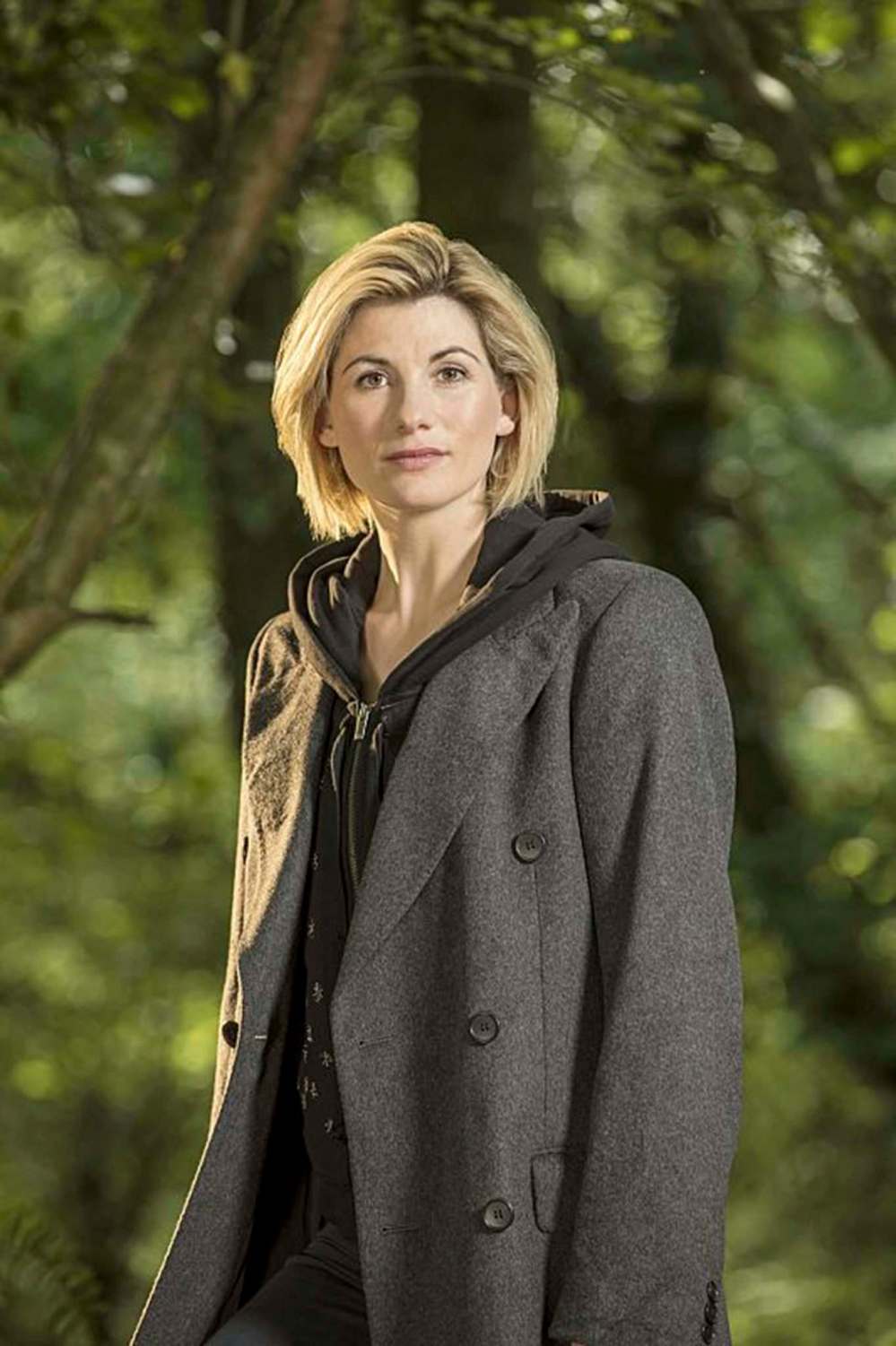
Two British tabloids — the Daily Mail and The Sun — published photos of nude scenes involving Ms. Whittaker from previous film and television roles. “Dr. Nude,” a headline in the Daily Mail screamed after the BBC announced its decision.
For everyone who longs for true gender equality, it was a disheartening reaction to an event that otherwise marks a true quantum leap forward in the struggle to give women the same opportunities, in life and in work, as men.
How important is Ms. Whittaker’s appointment? Doctor Who is a global entertainment phenomenon, featuring what is surely one of the best-known fictional characters in the world. Assigning a woman to an iconic role typically played by a man is an important statement, both for society and for the entertainment industry, which has failed rather spectacularly to achieve gender equality.
Male actors still generally make more than female actors of similar stature and profile, and are much more likely to get the lucrative “back-end” deals — a percentage of the profits — than their female co-stars. Men are also substantially more likely to serve as directors and executive producers.
Men also continue to be dramatically overrepresented in films and television. A 2016 study by the USC Annenberg School for Communication and Journalism examined 35,000 speaking characters in 800 films released from 2007 to 2016 (excluding 2011). It found that among the top 100 highest-grossing films during that period, women only accounted for 31 per cent of all speaking roles. Across the span of all 800 films, only four per cent of directors were women.
The inequity even extends to lowest rungs of the acting ladder. A recent study by the Geena Davis Institute on Gender in Media found that even in mundane crowd scenes, male extras tend to inexplicably outnumber females four to one.

In this context, the venerable BBC should be congratulated for its Doctor Who decision, even though full gender equality remains as elusive at the United Kingdom’s public broadcaster as elsewhere.
The same week the female Doctor was unveiled, the BBC disclosed the identities of its on-air talent earning more than £150,000 ($250,000). Of the top 25 highest paid on-air BBC personalities, only nine were women.
And the highest-paid woman — television host Claudia Winkleman — made £450,000 (about $735,000), a fraction of the £2.2 million ($3.6 million) paid to the top-earning man, television host and producer Chris Evans.
All of this means that while Ms. Whittaker’s ascension to the title role in Doctor Who is a seismic moment in the evolving pursuit of gender equality, it by no means signals a mission accomplished.
For the time being, progressive minds can celebrate the fact that Ms. Whittaker is not just a doctor. She is THE Doctor. Deal with it.