

Transcona man victim of wartime atrocity
Advertisement
Read this article for free:
or
Already have an account? Log in here »
To continue reading, please subscribe:
Monthly Digital Subscription
$1 per week for 24 weeks*
- Enjoy unlimited reading on winnipegfreepress.com
- Read the E-Edition, our digital replica newspaper
- Access News Break, our award-winning app
- Play interactive puzzles
*Billed as $4.00 plus GST every four weeks. After 24 weeks, price increases to the regular rate of $19.95 plus GST every four weeks. Offer available to new and qualified returning subscribers only. Cancel any time.
Monthly Digital Subscription
$4.99/week*
- Enjoy unlimited reading on winnipegfreepress.com
- Read the E-Edition, our digital replica newspaper
- Access News Break, our award-winning app
- Play interactive puzzles
*Billed as $19.95 plus GST every four weeks. Cancel any time.
To continue reading, please subscribe:
Add Free Press access to your Brandon Sun subscription for only an additional
$1 for the first 4 weeks*
*Your next subscription payment will increase by $1.00 and you will be charged $16.99 plus GST for four weeks. After four weeks, your payment will increase to $23.99 plus GST every four weeks.
Read unlimited articles for free today:
or
Already have an account? Log in here »
Hey there, time traveller!
This article was published 31/07/2017 (3148 days ago), so information in it may no longer be current.
It was a 20th-century “walk the plank” scenario that claimed the life of a Transcona man and 37 other seamen a century ago today, in one of the most heinous war crimes of the First World War.
In fact, that’s what the British newspapers compared it to.
“The foulest deeds of Capt. Kidd Morgan and the other blood-thirsty pirates of the Spanish main, who made their victims ‘walk the plank,’ have been surpassed by the latest exploits of the Kaiser’s emissaries,” said one British newspaper.
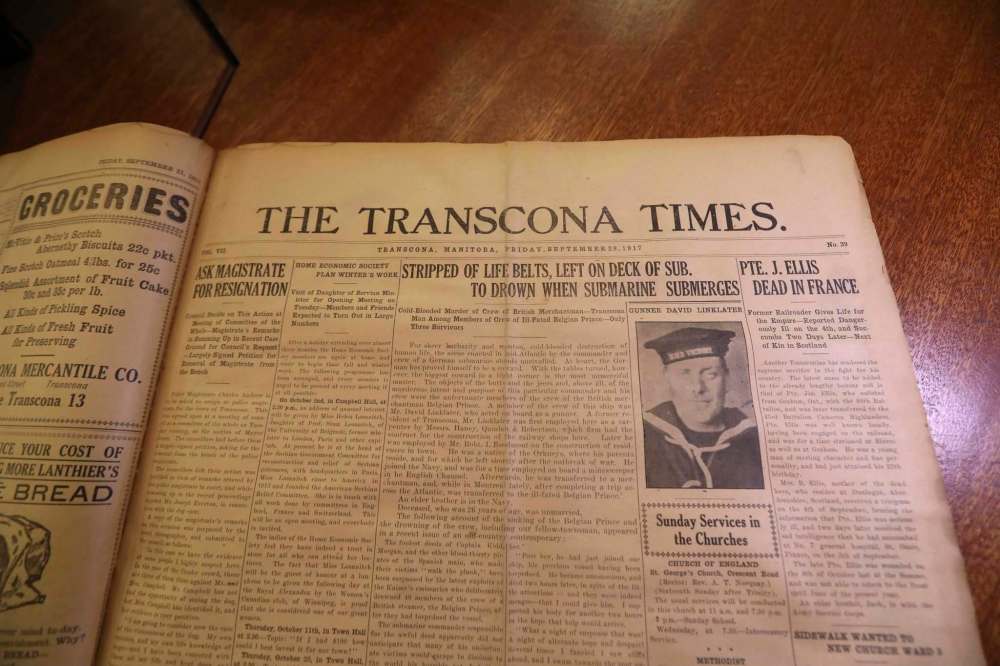
The Transcona Times expressed similar disgust. “For sheer barbarity and wanton, cold-blooded destruction of human life, the scene enacted in mid-Atlantic by the commander and crew of a German submarine stand unrivalled,” the weekly reported Sept. 28, 1917.
The Transcona Historical Museum will commemorate the event today with a social-media page on Facebook and Twitter. In England, the maritime charity Sailors’ Society will lay a wreath at the Portsmouth Naval Memorial.
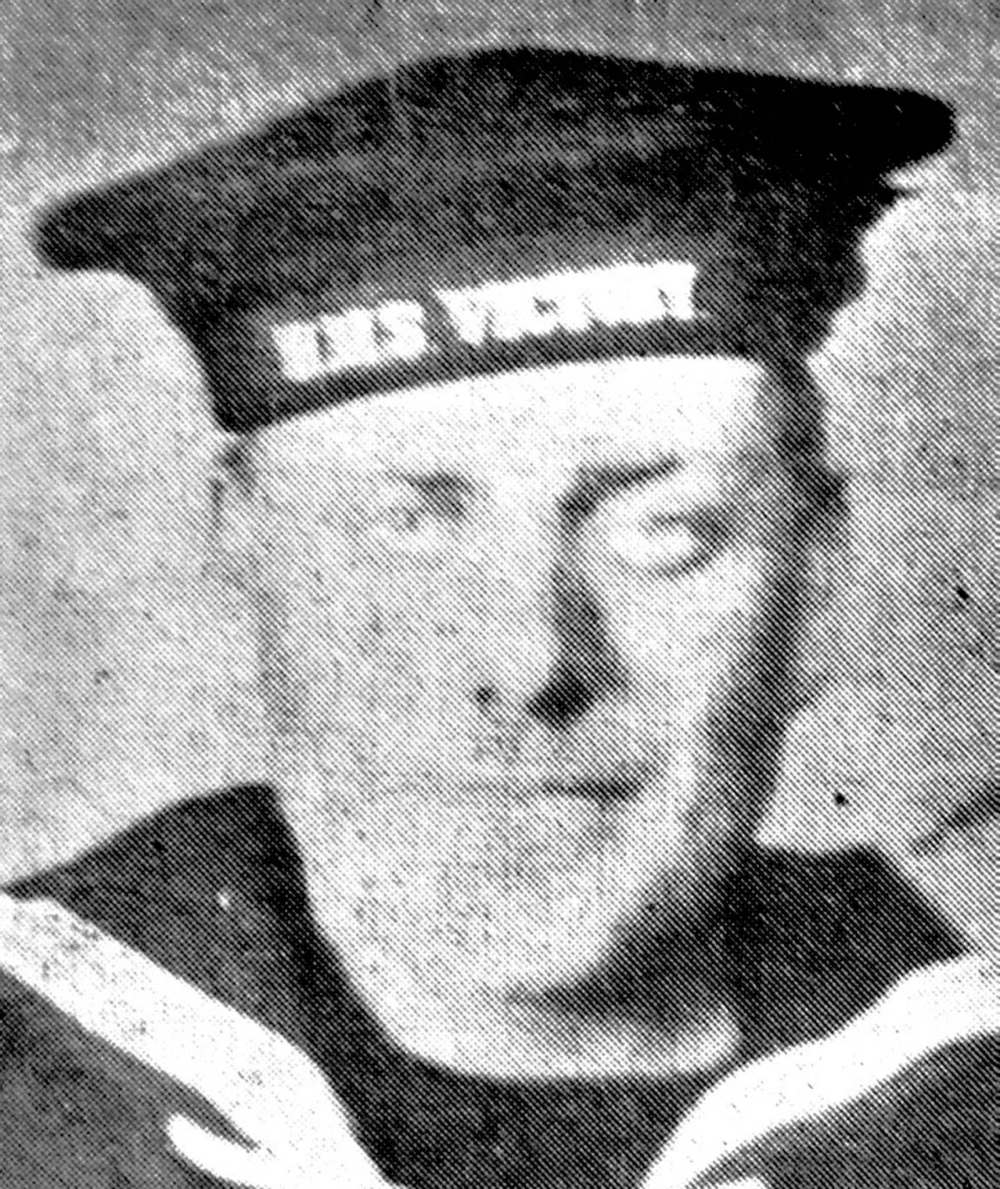
The SS Belgian Prince was a cargo steamship setting sail to Newport News, Va., from Liverpool, England. On board was David Linklater, who resided in Transcona, where he worked as a carpenter after emigrating from the Orkney Islands. He enlisted with the British military when war broke out and was a gunner on the Belgian Prince.
On July 31, 1917, the Belgian Prince was torpedoed by a German U-boat about 320 kilometres from the nearest land. The ship’s men took to lifeboats and were soon ordered at gunpoint to board the submarine’s deck.
Forty-one men stood on the deck — all except the captain, who was taken below and not seen again. (Newspapers reported in 1917 there were 43 men plus the captain, but Sailors’ Society uses a revised figure.)
The ship’s crew were ordered to throw their lifebelts on the deck and German sailors kicked them away. The Germans started smashing the lifeboats with axes, under orders from notorious commander Wilhelm Werner.
Then the Germans went below and the submarine sped away with the prisoners still on its deck. It travelled about four kilometres, stopped and started to submerge, emptying its boat-less and life jacket-less passengers into the Atlantic Ocean.
Chief engineer Thomas Bowman was lucky. He had concealed a lifebelt and was a strong swimmer. He held on to the only person he saw, a young man on one of his first missions. “We appeared to be the only living things in that wide expanse of waters,” Bowman said later.
The young man started to lose consciousness. “He kept crying for his mother and I felt for him keenly,” Bowman said. “‘Tell my mother,’ he said, ‘that my last thoughts were for her.’” He died two hours later.
Bowman stayed alive through the night. Several times, he thought he recognized the cliffs of England and swam in their direction “only to find that I was dissipating my remaining strength in pursuing a mirage.”
The next day, he saw what remained of the Belgian Prince, floating in the distance, explode. The incident told him the U-boat was still nearby, so he swam in the opposite direction.
He later saw smoke from a British patrol ship. He tried to shout, but his throat was so parched that no sound came out. He described the “terrible anxiety” he felt as the ship seemed to speed past him. Then it slowed down and started to lower a life raft. Bowman had spent 11 hours in the Atlantic.
Only two other men lived to tell the story: British seaman George Silessi, who clung onto a remnant of one of the smashed lifeboats; and American Willie Snell, the ship’s second cook, who had concealed a lifebelt.
All three survivors received care from maritime charity Sailors’ Society, which assists seafarers and their families through chaplaincy, education and the relief from poverty and distress.
The Geneva Convention that calls for humanitarian treatment of prisoners did not come into existence until 1929, but the preceding agreements it was built upon were in place.
They were not followed.
After the war, the Allies demanded Werner’s extradition on war crimes. Werner also was accused of killing the crew of the SS Torrington in the same way, as well as other atrocities. He escaped to Brazil before he could be brought to trial.
Werner returned to Germany in 1924 and later joined the upper ranks of the Nazi party as one of Heinrich Himmler’s personal staff. He died in 1945.
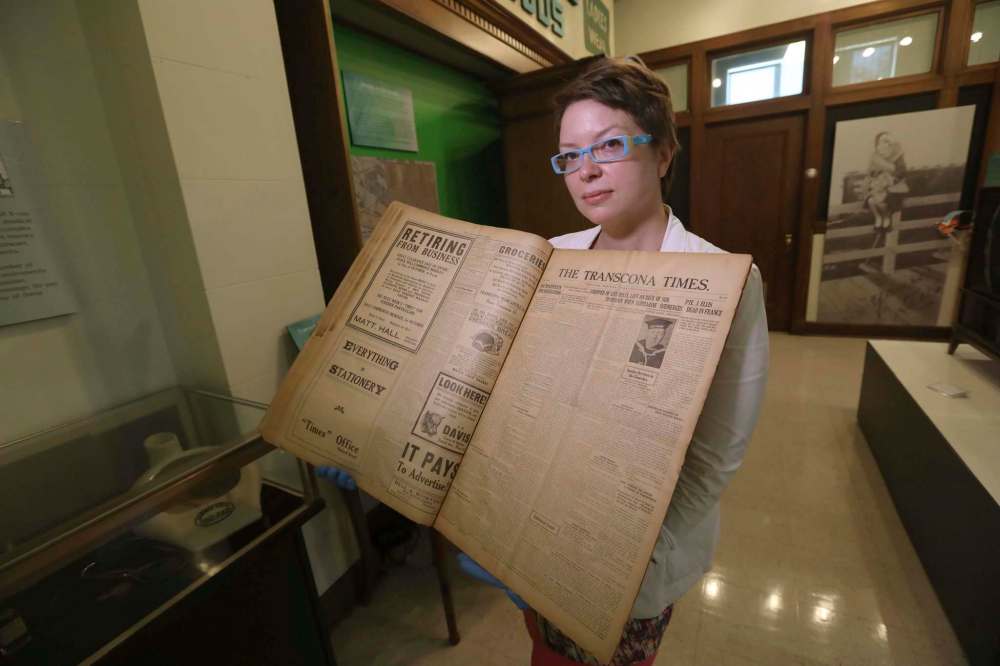
Transcona, which became part of Winnipeg in 1972, has a strong military tradition, Transcona Historical Museum curator Alanna Horejda said. Of 1,600 residents in Transcona during the First World War, 400 men enlisted.

Horejda said people can make the mistake of taking their freedom for granted: “if we don’t remember the sacrifices of those individuals who participated in the world wars.”
Linklater, 27, is remembered at Tower Hill in London, the Portsmouth Naval Memorial and the Cenotaph Memorial in Memorial Park in Transcona.
On the cenotaph, Linklater is the 20th name in the middle row of a plaque honouring people who lost their lives in the First World War.
Fighting was fierce on the ocean. A total of 3,305 merchant ships were lost and 17,000 people killed during the First World War.
bill.redekop@freepress.mb.ca