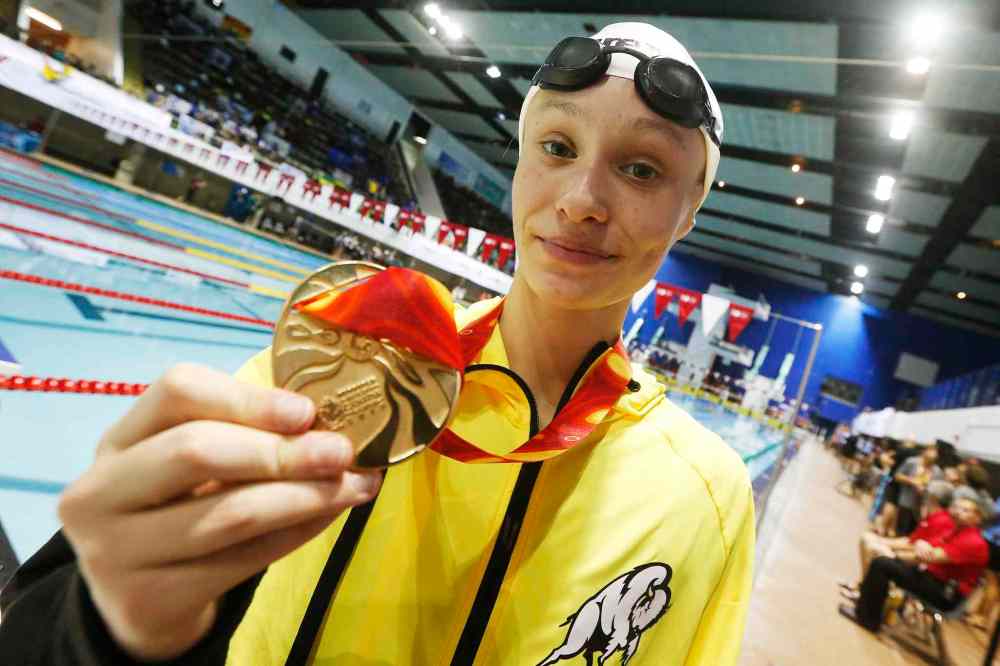
We’re getting great value for our 18 cents; imagine what folding money could buy
Advertisement
Read this article for free:
or
Already have an account? Log in here »
To continue reading, please subscribe:

Digital Subscription
One year of digital access for only $205*
- Enjoy unlimited reading on winnipegfreepress.com
- Read the E-Edition, our digital replica newspaper
- Access News Break, our award-winning app
- Play interactive puzzles
*First annual payment billed as $205.00 + GST for one year. This annual subscription will automatically renew at $233.00 + GST every 52 weeks (10% off the regular annual price of $259.35). Offer available to new and qualified returning subscribers only. Cancel any time.
To continue reading, please subscribe:
Add Free Press access to your Brandon Sun subscription for only an additional
$1 for the first 4 weeks*
- Enjoy unlimited reading on winnipegfreepress.com
- Read the E-Edition, our digital replica newspaper
- Access News Break, our award-winning app
- Play interactive puzzles
*Your next Brandon Sun subscription payment will increase by $1.00 and you will be charged $17.95 plus GST for four weeks. After four weeks, your payment will increase to $24.95 plus GST every four weeks.
Read unlimited articles for free today:
or
Already have an account? Log in here »
Hey there, time traveller!
This article was published 09/08/2017 (3290 days ago), so information in it may no longer be current.
In a city that loves a bargain, it’s our kids down at the Canada Summer Games who are delivering the best deal of all right now.
Consider:
In a province where taxpayers annually dedicate just 18 cents per person to the development of Manitoba’s high-performance athletes, Manitobans had won a total of 23 Summer Games medals as of noon Wednesday.
Break that down and it represents less than a penny per medal per taxpayer which is, even in a town as notoriously frugal as this one, a steal of a deal.
And that’s the problem.
Manitobans, like Canadians generally, have long had a conflicted relationship with our amateur athletes.
We bask in their reflected glory every two years at the Olympics — or at niche events like these Canada Summer Games — and agonize if they are not winning sufficient medals or living up to our ridiculously high expectations.
What we don’t do is to put our money where our patriotic hearts are, and that’s especially true here in Manitoba, where we contribute infinitely more as taxpayers to the multimillionaires (and billionaire part-owner) of the Winnipeg Jets than we do to the kids we expect to represent our flag.
Consider:
In 2017, we as taxpayers will hand over to the Winnipeg Jets a total of $13.5 million in public funding and operating subsidies.
In a province with 1.27 million people in it as of the last census, that represents $10.63 per taxpayer in this province in handouts to an ownership group whose US$170 million original investment in the Jets in 2011 has already doubled — at least — in value, according to Forbes magazine, and possibly even tripled, judging by the $500-million expansion fee the NHL got in Las Vegas and that an investor has reportedly offered to buy the moribund Carolina Hurricanes.
By even the most generous of measures, Mark Chipman and David Thomson don’t need our handouts. They’re doing just fine without government welfare — and so is their team.
And yet this year we will give the Jets owners freebies that, according to a CBC report, includes an entertainment-funding tax refund worth about $7 million, a city business tax refund of about $250,000 this year and a property-tax break worth $775,000.
Throw in a sweetheart VLT deal worth another $5.5 million a year or so to the Jets owners and we as taxpayers will provide the Jets with roughly 60 times the funding earmarked for the amateur high-performance athletes who use the facilities and services of Canadian Sports Centre Manitoba at the U of M.
In 2017, we as taxpayers will hand over to the Winnipeg Jets a total of $13.5 million in public funding and operating subsidies.
It is not a coincidence that Winnipeg is one of the few major cities in Canada without a national team program of any kind ever since the national volleyball program fled last year after two decades for a better deal in Richmond, B.C.
National team programs cost money and take a commitment from the entire community to make them work and the simple fact is that we don’t back up all of the intermittent flag-waving we do with much in the way of money required to nurture elite athletes.
In an extraordinary written statement issued in February 2016 after the national volleyball team announced it was moving west, Jeff Powell, the general manager of Canadian Sport Centre Manitoba, called on Manitobans to take a long hard look in the mirror.
“We must ask ourselves why multiple other communities across the country have embraced National Team programs when we have not,” he wrote. “We have committed millions of community dollars to for-profit sports enterprises, but cannot muster sufficient resources to support one National Team program…
“In hindsight, there would have been no investment too great if we knew that it would produce champions and role models like Clara Hughes or Cindy Klassen. Why then, do we rank so low our desire to support the programs that cause those performance(s) to be possible? We should challenge our notions of what it means to support such efforts and what the benefits to a community are. Others have judged us wanting in this area and it is (up) to us to respond.”
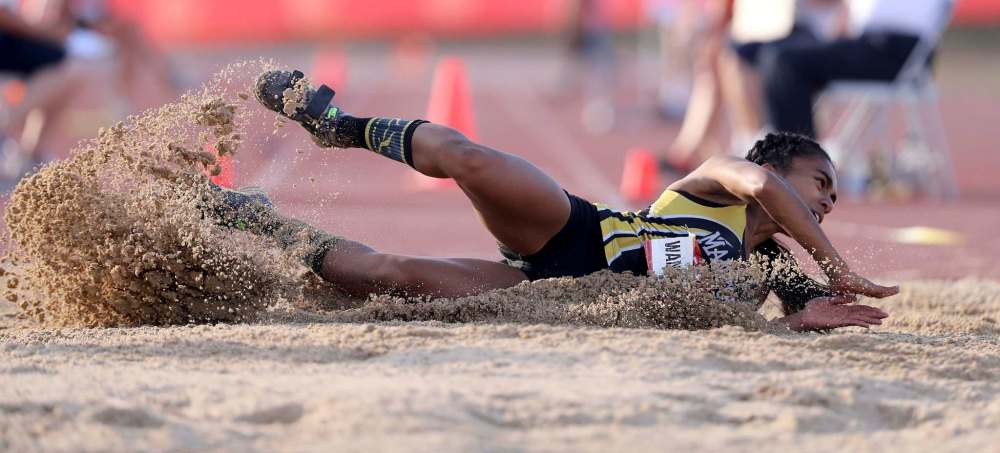
A lot of the funding for CSC Manitoba comes not from taxpayers but from the proceeds of a legacy fund that was set up after the 1999 Pan Am Games.
Some very-forward thinkers set up that fund almost two decades ago and Manitoba’s elite athletes are still benefiting today from all the hard work done that sweltering summer by those thousands of volunteers in unspeakably ugly salmon-coloured shirts.
But it’s all a pittance compared with the money and resources other provinces dedicate to high-performance athletes.
You ever notice how the Canadian delegations to every Olympics seem to overwhelmingly come from Quebec? That’s neither a fluke nor a simple result of a high population — Quebec athletes receive more provincial funding, tax credits, services and resources than their counterparts in other provinces and the results are there for all of Canada to see on the podium every couple of years.
At one point early in the first week of the Sochi Winter Games — where Quebecers represented fully 40 per cent of the Canadian delegation — a writer did the math and figured out that if Quebec was a country, it would have been second in the medal standings.
Money might not be able to buy happiness, but if you spend it right — targeting it at high performance athletes in sports where Canada does well internationally — it can very definitely buy you medals.
That’s not been the approach in Manitoba until now, but that may be finally starting to change.
While there is significant public investment and expenditure on Sport Manitoba — I counted 54 staff members on the organization’s website directory Wednesday — its emphasis until now has been on building and nurturing the grassroots of sport in this province rather than on developing elite competitors.
But there’s now a push within the organization to change that and put a new emphasis — and more resources — towards developing what could ultimately turn out to be a made-in-Manitoba version of the Own The Podium program, the national initiative set up in advance of Vancouver 2010 that is credited with Canada’s dramatically improved podium results ever since.
The idea would be to target sports and athletes in Manitoba just as Canada does nationally. Sports we do well at as a province with athletes who have proven themselves nationally (hello, curling and hockey) would get more funding, support and resources while other sports (I’m looking at you, cricket) might have to become even more self-supporting.
With four golds and 23 medals overall, Manitoba has performed well before home-province crowds at these Canada Summer Games. Our total medal tally was tied with Saskatchewan and trailed only Nova Scotia, Alberta, B.C., Quebec and Ontario as of this writing.
Our kids are all right, is what I’m telling you. But it’s the grown-ups who need to get their act together in this province and start supporting our most promising athletes at a level commensurate with our high expectations.
Eighteen cents. It says something about this province that our commitment to our elite athletes is measured in a currency so trivial it doesn’t even exist anymore.
paul.wiecek@freepress.mb.ca
Twitter: @PaulWiecek