

Feds urged to change way francophones counted in stats
Advertisement
Read this article for free:
or
Already have an account? Log in here »
To continue reading, please subscribe:

Digital Subscription
One year of digital access for only $205*
- Enjoy unlimited reading on winnipegfreepress.com
- Read the E-Edition, our digital replica newspaper
- Access News Break, our award-winning app
- Play interactive puzzles
*First annual payment billed as $205.00 + GST for one year. This annual subscription will automatically renew at $233.00 + GST every 52 weeks (10% off the regular annual price of $259.35). Offer available to new and qualified returning subscribers only. Cancel any time.
To continue reading, please subscribe:
Add Free Press access to your Brandon Sun subscription for only an additional
$1 for the first 4 weeks*
- Enjoy unlimited reading on winnipegfreepress.com
- Read the E-Edition, our digital replica newspaper
- Access News Break, our award-winning app
- Play interactive puzzles
*Your next Brandon Sun subscription payment will increase by $1.00 and you will be charged $17.95 plus GST for four weeks. After four weeks, your payment will increase to $24.95 plus GST every four weeks.
Read unlimited articles for free today:
or
Already have an account? Log in here »
Hey there, time traveller!
This article was published 11/08/2017 (3274 days ago), so information in it may no longer be current.
OTTAWA — Manitoba’s French community is pushing Ottawa to follow the province’s lead in broadening the definition of who counts as a francophone — and to boost spending on opportunities for people to practise speaking French.
Census data released last week show a slight decline in the number of Manitobans speaking French. The province’s top advocate says the problem is how the government counts francophones.
“We weren’t caught off-guard,” said Jacqueline Blay, head of the Winnipeg-based Société franco-manitobaine. “We have work to do.”
The 2016 census found francophones accounted for 3.2 per cent of Manitoba’s population, a drop from 3.5 per cent in 2011. While that means only 500 fewer people, it bucks the trend of the province’s growth.
Blay takes issue with how Statistics Canada defines francophones; the agency counts those whose first official language is French and not English. She says that excludes French-immersion students and thousands of immigrants.
The society’s welcoming centre, perched behind Saint Boniface Cathedral, is often visited by people from countries such as Senegal or Mali, whose native tongue is an African language but who mostly communicate in French. Many of them only find work opportunities in English.
In June 2016, Manitoba’s legislature adopted Bill 5, which expanded the definition of a francophone from those with French as a mother tongue, to include people “who have a special affinity for the French language and who use it on a regular basis in their daily life.”
The legislation passed with multi-party support, making waves in French-speaking media across Canada while drawing little attention from English-language journalists.
It also started the first review of officially bilingual zones since 1982, where the province is obligated to provide services in French.
In a statement, the province said it has “no set timeline” for that review, which “could take at least another year,” though it claims it’s already boosting French language services in areas where people speak the language.
The review will find French spoken in homes in St. James and Strathcona, and schools in Thompson and Brandon, Blay said.
“The readers of the Free Press, for example, might say, ‘Oh well, we’re spending money for (a small minority).’ Maybe, but I think the 28,000 students who bring French into public spaces will continue to have a wider vision of Canada.”
In February 2015, the society took the federal government to court, asking it to expand the definition of francophone in Statistics Canada data.
Blay said her group is analyzing last week’s census data, and will decide whether to proceed with the case at a Sept. 28 meeting. They’re also trying to steer French speakers away from using English at home.
Last week’s data showed the proportion of Manitobans identifying as bilingual stayed stable at 8.6 per cent between 2011 and 2016. Like all of Canada, the rate was highest among those aged 10 to 14.

Meanwhile, Manitobans whose mother tongue is French overwhelmingly speak English at home.
Blay said that means Franco-Manitobans send their children to French schools, but don’t make an effort to use the language at home, prompting her group to launch an awareness campaign.
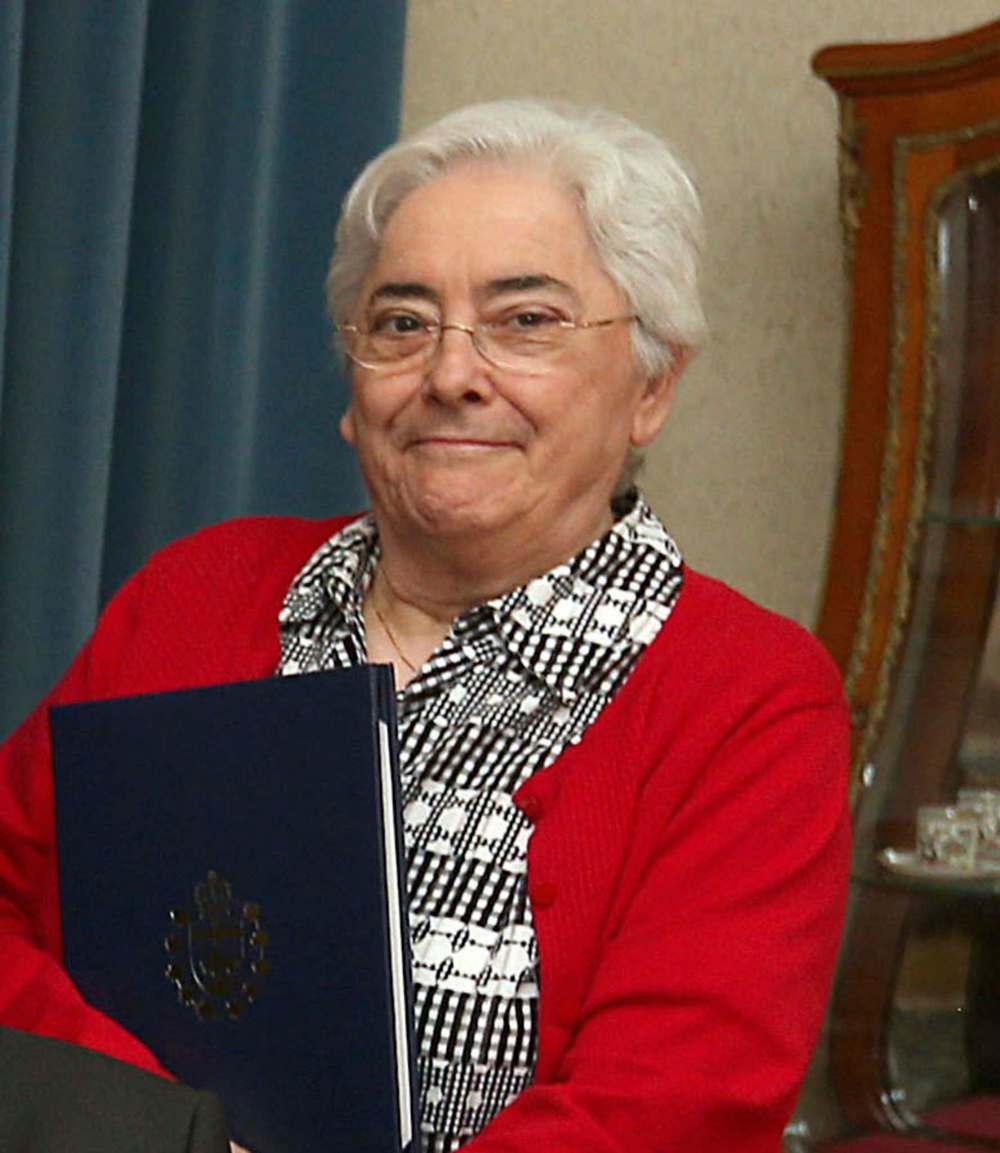
Sen. Raymonde Gagné said there must be more opportunities for the increasing number of Manitobans taking up French to practise it with native speakers at work, school and in sports.
“You have to make people feel comfortable and normal to speak French in the public sphere,” said Gagné, former president of the Université de Saint-Boniface. “Humans are social animals.”
dylan.robertson@freepress.mb.ca