

Flowers a growing business
Homegrown bouquets have something extra to offer

Advertisement
Read this article for free:
or
Already have an account? Log in here »
To continue reading, please subscribe:

Digital Subscription
One year of digital access for only $205*
- Enjoy unlimited reading on winnipegfreepress.com
- Read the E-Edition, our digital replica newspaper
- Access News Break, our award-winning app
- Play interactive puzzles
*First annual payment billed as $205.00 + GST for one year. This annual subscription will automatically renew at $233.00 + GST every 52 weeks (10% off the regular annual price of $259.35). Offer available to new and qualified returning subscribers only. Cancel any time.
To continue reading, please subscribe:
Add Free Press access to your Brandon Sun subscription for only an additional
$1 for the first 4 weeks*
- Enjoy unlimited reading on winnipegfreepress.com
- Read the E-Edition, our digital replica newspaper
- Access News Break, our award-winning app
- Play interactive puzzles
*Your next Brandon Sun subscription payment will increase by $1.00 and you will be charged $17.95 plus GST for four weeks. After four weeks, your payment will increase to $24.95 plus GST every four weeks.
Read unlimited articles for free today:
or
Already have an account? Log in here »
Hey there, time traveller!
This article was published 19/08/2017 (3301 days ago), so information in it may no longer be current.
What’s more welcome than the gift of a flower bouquet, beautifully arranged and sweetly fragrant? When the flowers are homegrown, the bouquet takes on even greater significance.
A small but burgeoning industry, Manitoba’s handful of flower farmers are supplying buckets of locally grown, premium flowers for weddings, special events, florist shops and anyone who desires a bunch of flowers fresh from the field.
Established flower farms such as Strawberry Lane in Morris, Garden Path Flowers in Winnipeg, Lily Stone Gardens in Rosenort and Prairie Blossom in Portage la Prairie are each offering a myriad of cut flower varieties.
How do these entrepreneurs connect with their growing audience? Dreamy photography on social media, pop-up sales at local venues or at a farm’s gate, kiosks at Saturday morning markets brimming with baskets of flowers and word of mouth fuels a steady demand.
What does it take to get started in the flower farm business?
Manitoba’s newest flower farmer, Terry Neufeld, is the owner and operator of Sweet Petals Farm, located minutes outside of St. Norbert. Neufeld has been growing flowers and arranging bouquets for more than 15 years. What started out as an enjoyable pastime — one that filled the vases of friends and neighbours — gradually become much more. Soon Neufeld began sowing specific flower seeds each spring in her garden at special request by brides.
Earlier this month when I visited Sweet Petals Farm, it was a hive of activity (and not only because Neufeld also happens to be a beekeeper). The expansive flower garden, replete with delicious edibles and tall obelisks supporting vines, has been in harvest mode for the past several weeks as a succession of plants came into bloom at different times. With the launch of her new business, Neufeld has also been busy this summer creating new garden beds throughout her 3.7-acre property. Each new bed, built to a generous size, is assigned a particular type of flowering perennial or shrub that is planted en masse and interspersed with one or two compatible types of perennials or bulbous plants.
In one bed, for example, Neufeld has planted 35 different varieties of herbaceous peonies, including three types of Itoh peonies. Once mature (about three years), a single peony can produce up to 50 lush blooms.
To create the peony bed, her husband Vic used a rotary tiller to loosen the soil, then used a hand-operated rototiller to work in a deep layer of fresh, loamy topsoil. To minimize weed growth, Neufeld added a layer of landscape fabric to the top of the bed and then cut holes the appropriate size for each peony root, taking into consideration the proper spacing required for mature growth. A layer of natural wood chips will cover the surface.
This fall, allium bulbs will be planted between the peonies.
Neufeld is also reworking existing beds for a variety of hydrangeas including paniculata and macrophylla types.
Some of the beds sit atop a massive grass-covered berm built during the flood of 1997. The length and breadth of one bed, for example, which has been prepared for next year’s annuals, is an impressive 30 meters by two meters.
From the top of the berm, visitors have a breathtaking view on one side of a colourful rock garden with huge boulders and a cascading waterfall with Neufeld’s house in the distance and, on the other side, a view of the cutting flower garden nestled below as if in a valley.
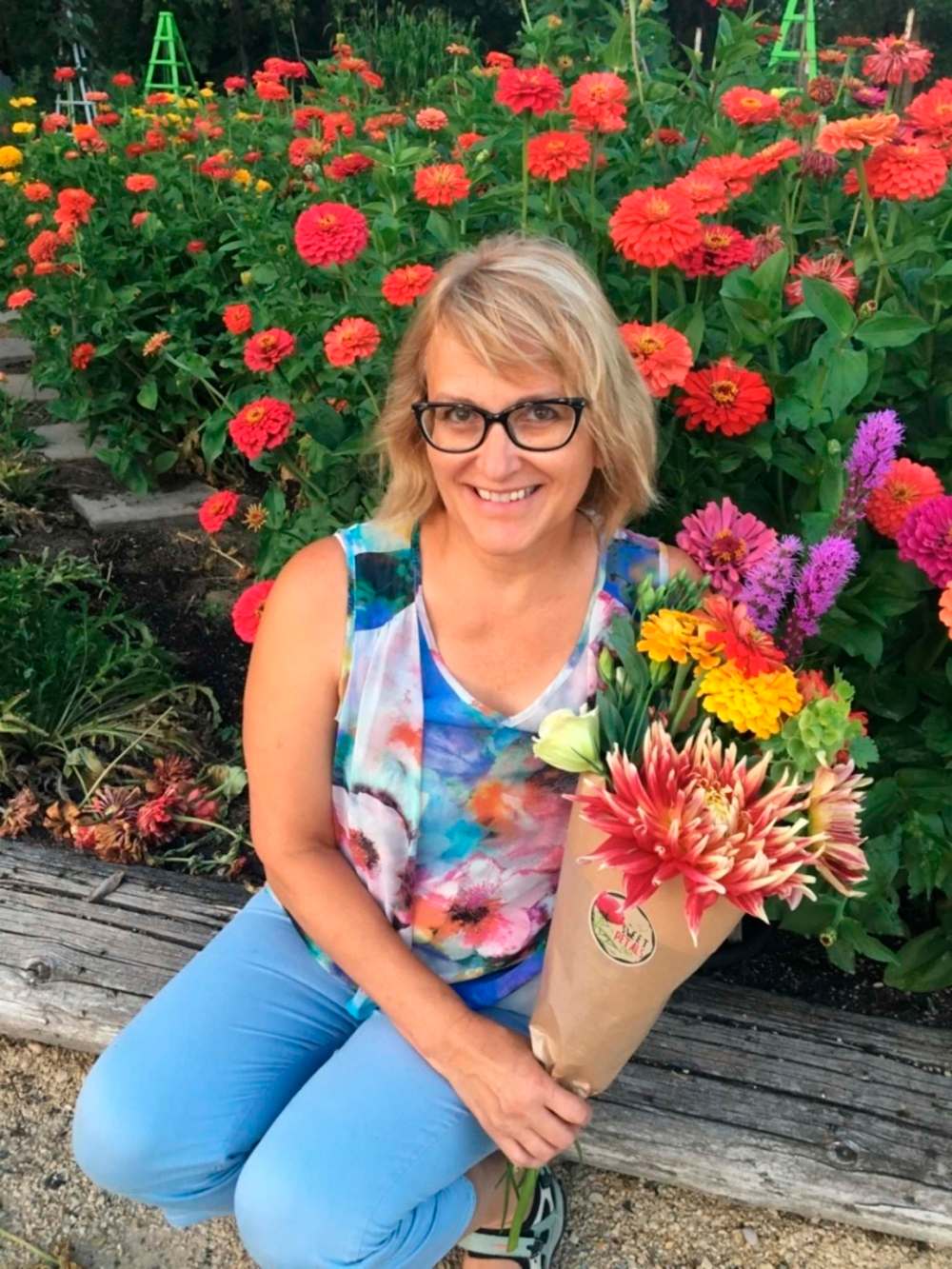
The entrance to the garden is through a metal arbor covered with the dense green, pink-tipped foliage of a hardy kiwi vine dripping with clusters of smooth-skinned, grape-sized fruit. A wide swath of violet-blue larkspur frames the edge of a raised bed planted with row upon row of zinnias. Neufeld has had a love affair with zinnias for as long as she can remember. Benary’s Giant Series of zinnia is a classic favourite for its long, strong stems and uniformly large flower heads with layers of petals in numerous colours.
Neufeld takes inspiration from Erin Benzakein, who owns and operates Floret Farm in Washington’s Skagit Valley and whose recent book, Floret Farm’s Cut Flower Garden (Chronicle Books LLC, 2017), is an authoritative guide to planning and getting started in the flower farm business. In her book, Benzakein recommends pinching out the centre flower bud when zinnia plants are about 46 cm tall to encourage plants to develop lower branches and produce longer stems.
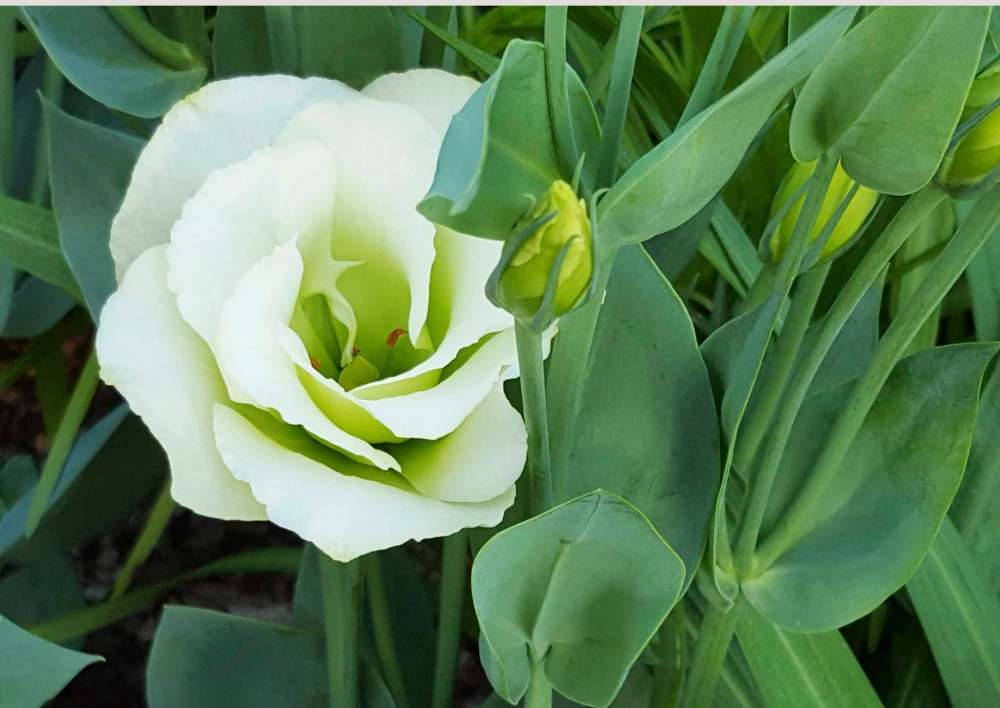
Lisianthus is another of Neufeld’s favourites. Blooms, flawless in their perfection, were just opening at the time I visited the garden. Next year Neufeld plans to use plastic netting with 15 cm squares to provide support for her lisianthus. Another of Benzakein’s recommendations, the netting is applied once the stems of the young plants reach 20 to 30 cm. The corners of the netting, about 15 cm above the ground, are staked. Each individual plant can move within the grid but without breakage.
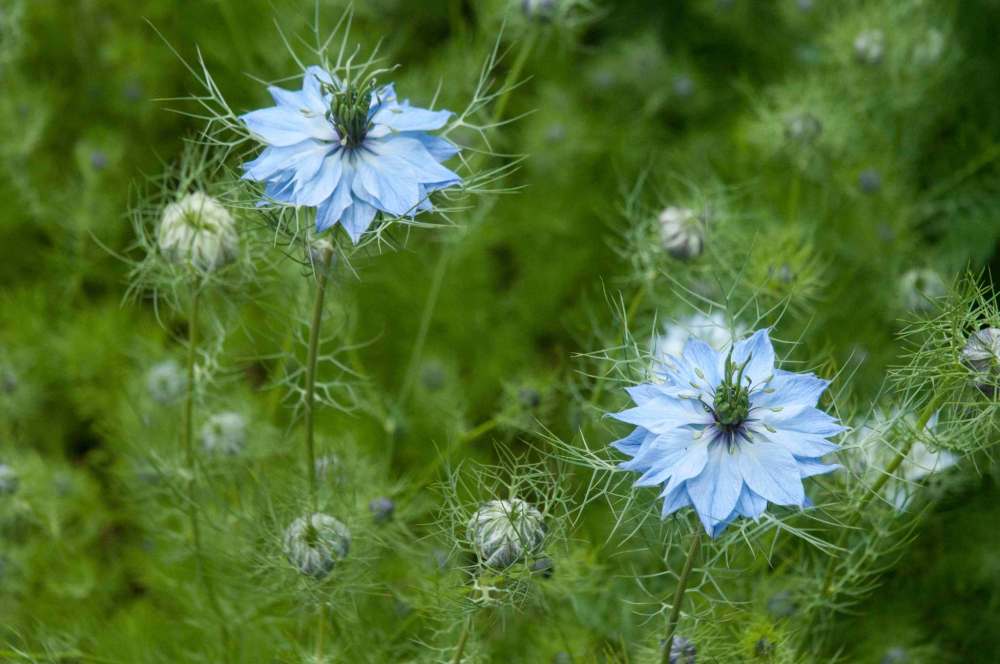
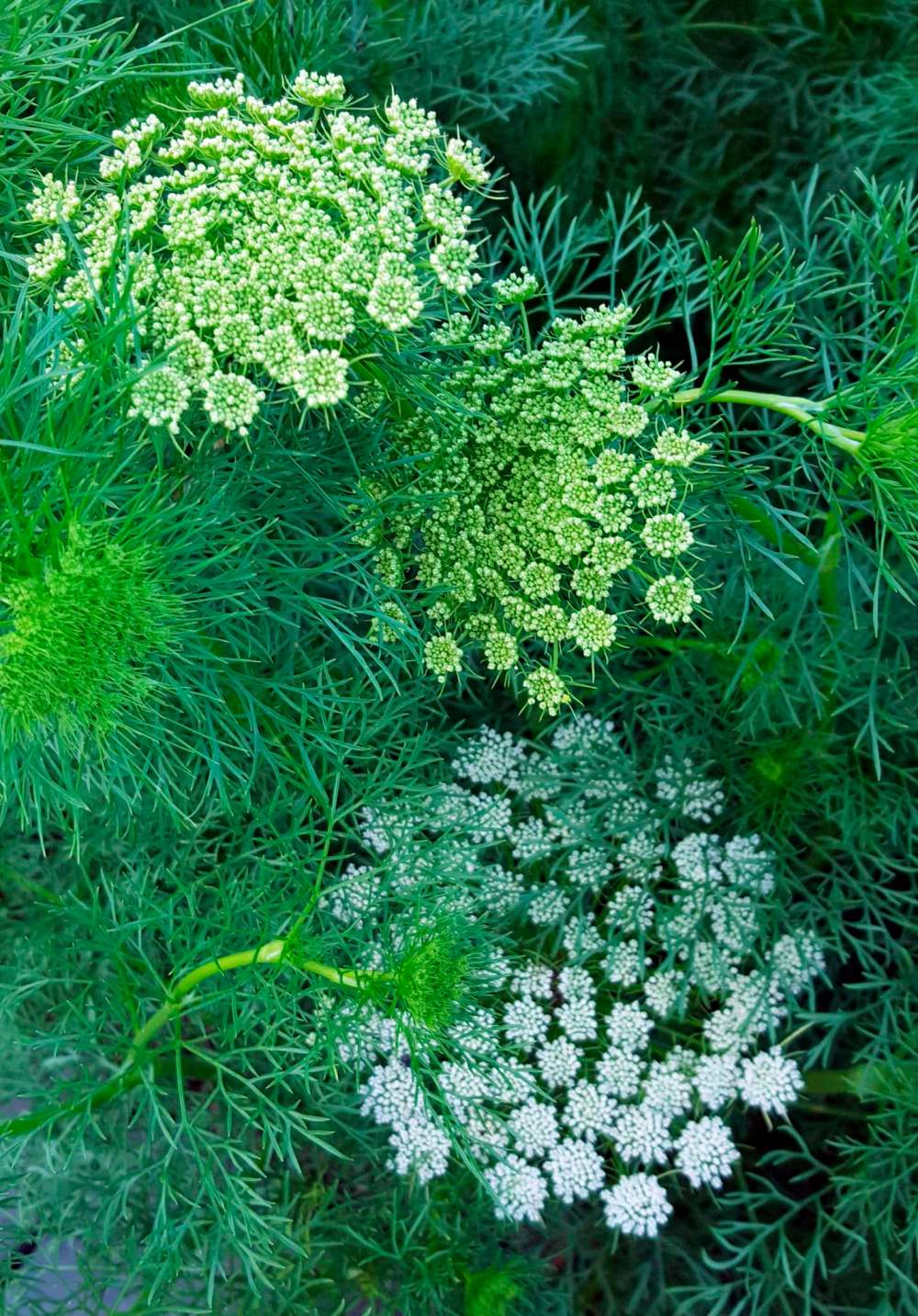
Romantic, old-fashioned cutting flowers such as Green Mist (Queen Anne’s Lace), with its intricate lacy flowers and feathery, finely dissected foliage, and Love-in-a-Mist Nigella, with its equally fascinating blooms and seed pods, grow in raised beds alongside more unusual specimens such as Green Pearls Amaranthus, a late-blooming love-lies-bleeding variety with pendulous green foxtails that have pompom balls.
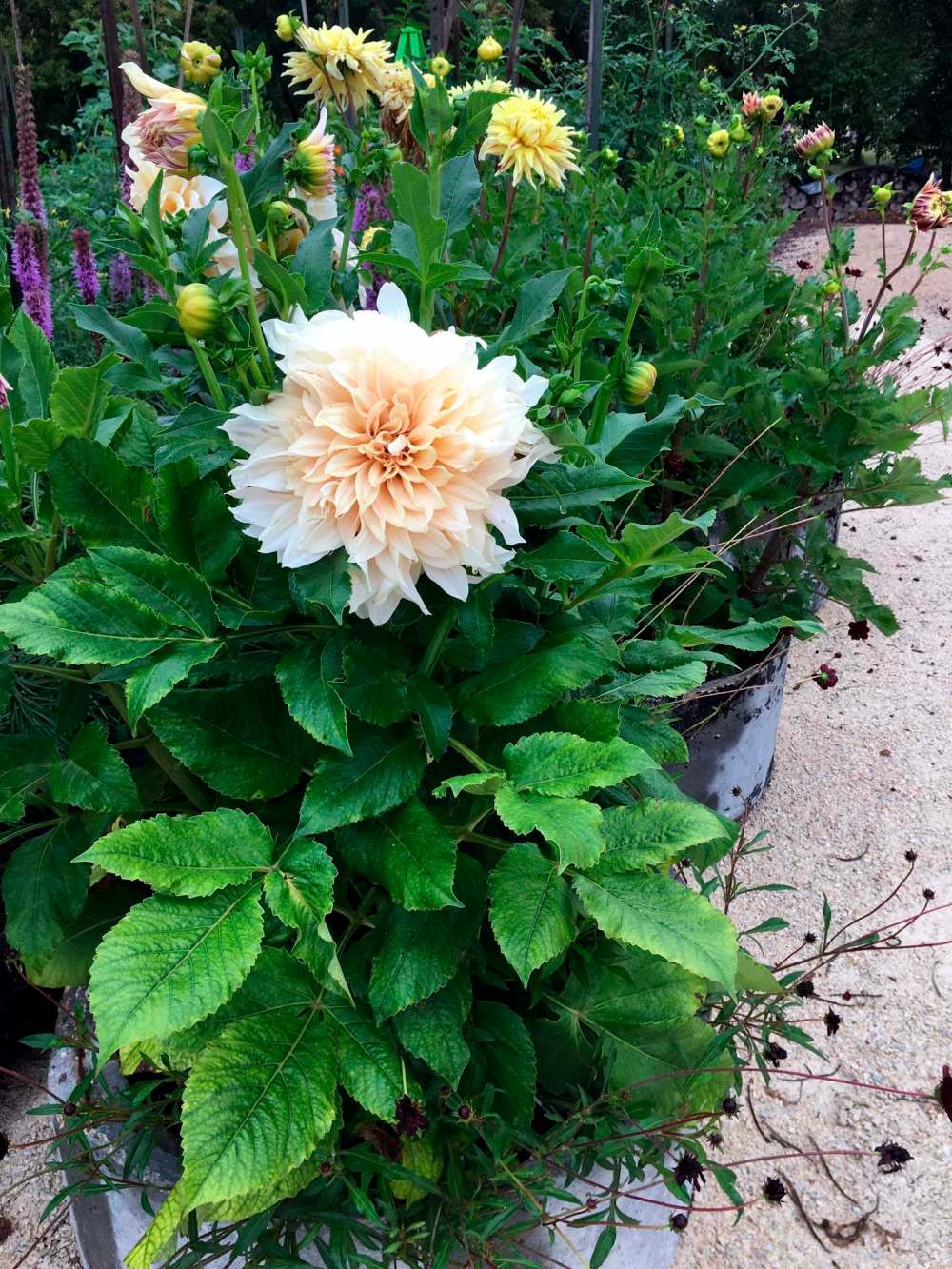
Neufeld plans to combine the bronze to chestnut-coloured plumes of tall growing Hot Biscuit Amaranth with dahlias in some of her fall bouquets. Dahlias, filled with buds for a continuous succession of blooms, have been planted in thick-walled concrete collars reclaimed from an old cistern. One variety is a dinnerplate dahlia called Cafe au Lait. Highly sought after by brides, Cafe au Lait has layers of pointy-tipped blush pink blooms with a hint of creamy beige.
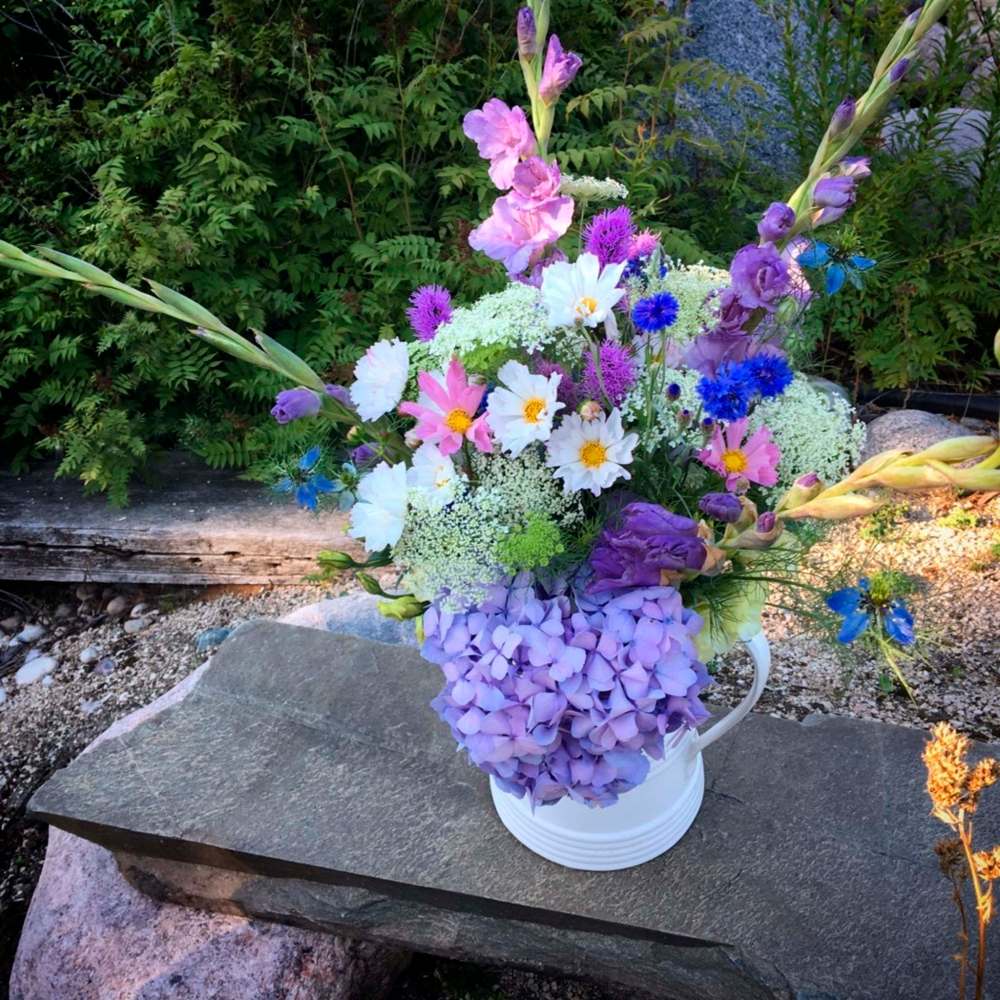

Asters, Chinese Lanterns, hydrangea and stems of berries from shrubs such as Highbush Cranberry and Little Goblin Holly are just some of the varieties grown for late-season bouquets. Shrubs such as Blizzard mockorange, Hakuro nishiki willow, Royal Purple smoke bush and a sensational Baptisia Solar Flare False Indigo are weaved into riveting spring bouquets.
Conditioning flowers with proper hydration solutions is also key to creating beautiful bouquets that have a long vase life. Neufeld takes a clean pail of water to the garden, cuts flowers with a clean knife, and immediately places stems into the water. Bringing the flowers into the cool indoors, she removes all of the bottom leaves and re-cuts the bottoms of stems at a 45 degree angle (although, Neufeld admits, not all agree that the degree of angle affects vase life). She adds a package of floral food solution to one litre of fresh water, allowing the stems to sit for a few hours before creating her bouquet at which time she re-cuts the stems and adds more of the flower food solution.
Neufeld keeps a record of bloom times in her journal, jotting down observations and ideas for the next growing season. Sweet Petals Farm is off to a blooming good start.
colleenizacharias@gmail.com
Notice: St. James Horticultural Society invites you to attend its 103rd annual exhibition afternoon tea on Wednesday, August 23, 1 p.m. to 3 p.m., Linwood School, 266 Linwood St.
Colleen Zacharias
Gardening columnist
Colleen Zacharias writes about many aspects of gardening including trends, plant recommendations, and how-to information that is uniquely relevant to Prairie gardeners. She has written a column for the Free Press since 2010 and pens the monthly newsletter Winnipeg Gardener. Read more about Colleen.
Every piece of reporting Colleen produces is reviewed by an editing team before it is posted online or published in print — part of the Free Press‘s tradition, since 1872, of producing reliable independent journalism. Read more about Free Press’s history and mandate, and learn how our newsroom operates.
Our newsroom depends on a growing audience of readers to power our journalism. If you are not a paid reader, please consider becoming a subscriber.
Our newsroom depends on its audience of readers to power our journalism. Thank you for your support.
Colleen Zacharias
Gardening columnist
Colleen Zacharias writes about many aspects of gardening including trends, plant recommendations, and how-to information that is uniquely relevant to Prairie gardeners. She has written a column for the Free Press since 2010 and pens the monthly newsletter Winnipeg Gardener. Read more about Colleen.
Every piece of reporting Colleen produces is reviewed by an editing team before it is posted online or published in print — part of the Free Press‘s tradition, since 1872, of producing reliable independent journalism. Read more about Free Press’s history and mandate, and learn how our newsroom operates.
Our newsroom depends on a growing audience of readers to power our journalism. If you are not a paid reader, please consider becoming a subscriber.
Our newsroom depends on its audience of readers to power our journalism. Thank you for your support.
Advertisement Advertise With Us
Advertisement Advertise With Us