Mechanics of civil wars masterfully detailed

Advertisement

Advertise with us

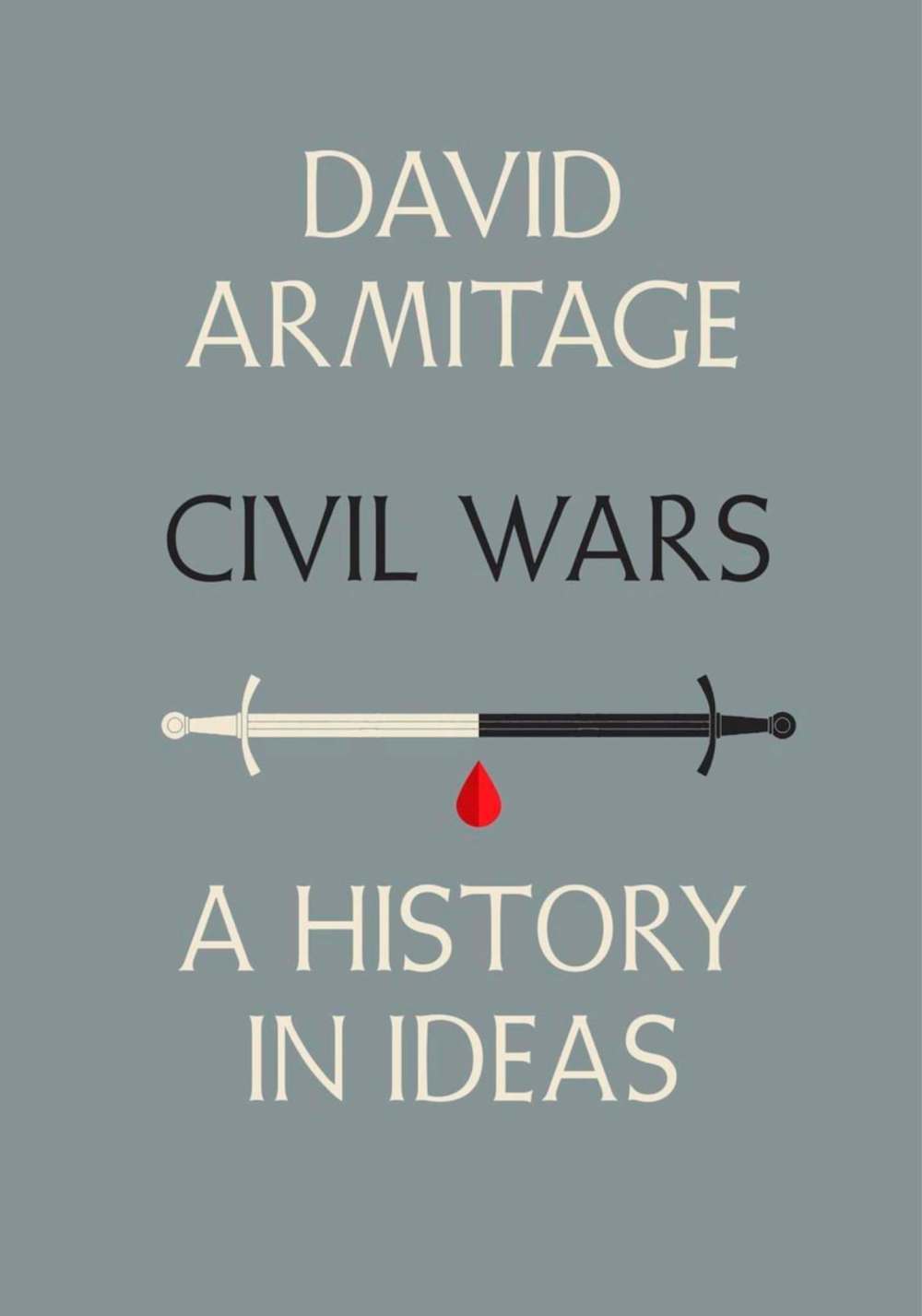
AS is now so often the case with a work of excellent, earnest scholarship, the key is found in David Armitage’s book’s subtitle: A History in Ideas. This is not an intellectual history “of” ideas, it is an intellectual history of a slippery political concept — civil war — as bandied about “in” the minds of select, brilliant, dazzling writers over the centuries.

Read this article for free:


or

Already have an account? Log in here »

To continue reading, please subscribe:

Subscribe and receive a limited-edition Free Press branded hat or tote.

Digital Subscription

One year of digital access for only $205*

  • Enjoy unlimited reading on winnipegfreepress.com
  • Read the E-Edition, our digital replica newspaper
  • Access News Break, our award-winning app
  • Play interactive puzzles

*First annual payment billed as $205.00 + GST for one year. This annual subscription will automatically renew at $233.00 + GST every 52 weeks (10% off the regular annual price of $259.35). Offer available to new and qualified returning subscribers only. Cancel any time.

To continue reading, please subscribe:

Add Free Press access to your Brandon Sun subscription for only an additional

$1 for the first 4 weeks*

  • Enjoy unlimited reading on winnipegfreepress.com
  • Read the E-Edition, our digital replica newspaper
  • Access News Break, our award-winning app
  • Play interactive puzzles
Start now

*Your next Brandon Sun subscription payment will increase by $1.00 and you will be charged $17.95 plus GST for four weeks. After four weeks, your payment will increase to $24.95 plus GST every four weeks.

Hey there, time traveller!
This article was published 19/08/2017 (3286 days ago), so information in it may no longer be current.

AS is now so often the case with a work of excellent, earnest scholarship, the key is found in David Armitage’s book’s subtitle: A History in Ideas. This is not an intellectual history “of” ideas, it is an intellectual history of a slippery political concept — civil war — as bandied about “in” the minds of select, brilliant, dazzling writers over the centuries.

Armitage, born, raised and trained in England, is a professor and the former chair of history at Harvard, having meandered to the field of sprawling intellectual histories from English literature (especially through John Milton). His work, as is the case with this book, typically involves peering painstakingly at the political underpinnings of great works of western literature and history.

This exhaustively researched and documented book is a desperately welcoming and frequently gripping read. Writing in graceful, easy prose, Armitage admits a comprehensive history of this curious political label “civil war” is impossible in a single book or even career, and so aptly opts for an eclectic threefold focus. First, the ancient roots of the term in the Classical world, paying attention to the Greeks but homing in on the Romans (who both engaged more addictively in civil war and wrote more ruefully and obsessively about it). Second, early modern Europe and its dark habit of civil war and more auspicious tendency toward “revolution,” concentrating here especially on the English Civil Wars (1642-51), the American Revolution (1765-83) and the French Revolution (1789-99). Finally, the 19th century and beyond, with an expected and climactic focus on the U.S. Civil War (1861-65).
Throughout, Armitage is careful to trace, with persistent pause and elegant elaboration, the contours of the ways “civil war” has been deployed as a descriptive category by keenly thinking intellects. One would guess the adjective “civil” wants simply and plainly to refer to “within a particular city-state” (or corresponding discrete political unit), but it is more complicated and tricky than that. At various points, for just one example, historians and theorists have understood “civil” to mean “within one’s own religion.” In that line of thinking, any Christian nation-state that engages in armed conflict with another Christian nation-state is embroiled, technically, in a “civil war.” Throw in haphazardly deployed and differently connoting terms such as “revolution” and “rebellion” and “insurrection” and “secession” and you have waters thoroughly muddied.

Despite these (intriguing) bits of semantic minutiae, Armitage lays out and clings to a few resounding points. The most arresting one is cynically ironic: Those states beset and hounded by civil war are invariably horrified by it, and by themselves, and therefore seek to make amends by documenting it carefully, even celebrating lessons to be learned painfully from it.

But the rub is right there: the more a state retells and remains conscious of its own civilly bellicose past, the more it is likely to descend once again into its awful snare. The Romans learned this. The Early Modern Europeans knew this. Americans ought to know this, but have perhaps not quite caught that point yet. To escape the crippling contagion of “civil war,” one must wilfully stop shining a beacon on it. The choking dust is churned up too easily.

It takes a busy, productive, deft mind to craft a timely history book such as this — and, even more, to deliver it in a form that both experts and lay people alike can absorb handily.

Laurence Broadhurst teaches English, history and religion at St. Paul’s High School in Winnipeg.

Report Error Submit a Tip

More Stories

Hayden Panettiere, who starred in ‘Heroes’ and ‘Nashville,’ dies at 36

Hannah Schoenbaum, The Associated Press 6 minute read Preview

Hayden Panettiere, who starred in ‘Heroes’ and ‘Nashville,’ dies at 36

Hannah Schoenbaum, The Associated Press 6 minute read Updated: Yesterday at 12:26 PM CDT

Hayden Panettiere, a onetime child star who soared to fame in the TV shows “Heroes” and “Nashville” while enduring struggles with alcohol addiction and depression, has died. She was 36.

Police said Panettiere was found unresponsive in an apartment in Greenville, South Carolina, shortly before 2 p.m. Sunday. Lifesaving measures were performed but she was pronounced dead at the scene.

No cause of death has been determined and Panettiere's death remains under investigation. An autopsy found no signs of trauma and police said officers saw no signs of foul play.

The television and film performer, who would have turned 37 on Friday, had been open about her private battles and wrote at length about them in the memoir, “This Is Me,” which came out in May. She described lifelong scars from her early fame, and acknowledged being addicted to alcohol and enduring postpartum depression after the birth of her daughter, Kaya, with Ukrainian boxer Wladimir Klitschko in 2014.

Read
Updated: Yesterday at 12:26 PM CDT

Letters, Aug. 18

7 minute read 2:01 AM CDT

In support of real engineering

Jerry Storie’s op-ed Take advantage of hydroelectric potential and Laura Cameron’s op-ed Lasting legacy or pining for a pipe dream, both in the Free Press Aug. 17, provide quite different perspectives on what should be done to provide reliable power to Manitoba residents in the future.

Mr. Storie advocates construction of more hydroelectric projects rather than new natural gas generated capacity to offset looming power shortages. He argues that these hydroelectric projects will benefit Manitoba for the next century, and observes there will be significant increases in the demand for electricity in upcoming years. He is not wrong in any of these observations. However, hydroelectric developments are very capital intensive and have long lead development periods. Natural gas generation can be brought on line far more quickly with less investment. And perhaps Mr. Storie’s minimization of the environmental impacts of these developments deserves more scrutiny. Any First Nations impacted by development deserve to be consulted and participate in any benefits. Having said this, Mr. Storie is a former minister responsible for Manitoba Hydro, and thus has a fairly deep understanding of the issues at hand.

Laura Cameron advocates against construction of the LNG pipeline and terminal at Churchill, citing “the technical challenges of building a pipeline over thawing permafrost; the prohibitive cost of ice-breaking tankers that move LNG through the Arctic; and a forecasted global oversupply of LNG and uncertain long-term export markets.” These would all be persuasive arguments if Ms Cameron possessed any credentials indicating an expertise in engineering or economics. She does not. The balance of Ms Cameron’s op-ed focuses on ways for Manitoba to reduce its carbon footprint while taking a few shots at the proposed LNG pipeline to B.C. Her opposition to the pipeline to Churchill is almost a Trojan horse.

Trustees call for e-scooter safety education

Maggie Macintosh 4 minute read Preview

Trustees call for e-scooter safety education

Maggie Macintosh 4 minute read Yesterday at 6:00 AM CDT

School trustees are calling on the province to bolster public education around e-bike and e-scooter safety ahead of back-to-school season.

The Manitoba School Boards Association brought members’ concerns about a growing number of students using electronic devices to get to and from classes to the education minister’s office this month.

“There’s a concerning lack of safety knowledge on the part of Manitoba youth,” executive director Alan Campbell said.

Campbell, a long-time trustee in the Interlake School Division, resigned from elected office this summer to run the association that mobilizes school boards and provides them with labour relations support.

Read
Yesterday at 6:00 AM CDT

It’s back and it’s better than ever.

National non-profit ogranization motionball will be returning for its annual event — the 2026 Marathon of Sports Winnipeg — at the Dakota Community Centre Sept. 19. This fundraising event will help support the Special Olympics Manitoba and Canada foundation in hopes of reaching their goal of $100,000.

Local Special Olympic athletes, including the province’s own Alec Baldwin, as well as registered participants will join together to play a variety of team sports such as basketball, kinball and bocce ball.

Manitoba man lied about abduction: N.D. police

Scott Billeck 2 minute read Yesterday at 3:17 PM CDT

U.S. authorities say a Manitoba man falsely claimed he had been kidnapped and taken across the Canada-U.S. border over the weekend.

Roderick Garson, 37, is being held in a county jail near Alexandria, Minn., after he was arrested and charged with falsely reporting a crime.

The arrest stems from a report police received Saturday that a man had been abducted with a weapon in Manitoba and taken across the border into the United States.

The investigation led U.S. authorities to Alexandria, about two hours northwest of Minneapolis, where police located the reported victim and suspect after the latter ran into a local store claiming he had escaped from his 31-year-old unnamed captor.

A grand jeté of climate-change denial

Gwynne Dyer 5 minute read Preview

A grand jeté of climate-change denial

Gwynne Dyer 5 minute read 2:00 AM CDT

The first hurricane to hit Hawaii in 34 years. The Mediterranean on fire from Spain to Greece. ‘Heat domes’ one after another for months on end in Europe and North America. Thousands of excess deaths. A record El Niño piled on top of an average global temperature up from +1.2 C five years ago. Predicted high for this year: +1.7 C.

Surely they’ll get it now, you think — but no, they won’t. It once seemed sensible to think that when the climate damage gets bad enough and the trend line becomes impossible to ignore, ‘they’ (meaning the climate change deniers and their fellow travellers) will finally accept that the threat is real and urgent action is necessary.

A few of them will, but most will not.

It is becoming clear that as the old position of flat disbelief in climate science becomes untenable, the preferred response among former deniers is to admit that climate change is big, dangerous and already well underway — but to insist that it is already too late and nothing can be done about it now.

Read
2:00 AM CDT