Finding light in the darkness
Community and connection integral to preventing suicide
Advertisement
Read this article for free:
or
Already have an account? Log in here »
To continue reading, please subscribe:

Digital Subscription
One year of digital access for only $205*
- Enjoy unlimited reading on winnipegfreepress.com
- Read the E-Edition, our digital replica newspaper
- Access News Break, our award-winning app
- Play interactive puzzles
*First annual payment billed as $205.00 + GST for one year. This annual subscription will automatically renew at $233.00 + GST every 52 weeks (10% off the regular annual price of $259.35). Offer available to new and qualified returning subscribers only. Cancel any time.
To continue reading, please subscribe:
Add Free Press access to your Brandon Sun subscription for only an additional
$1 for the first 4 weeks*
- Enjoy unlimited reading on winnipegfreepress.com
- Read the E-Edition, our digital replica newspaper
- Access News Break, our award-winning app
- Play interactive puzzles
*Your next Brandon Sun subscription payment will increase by $1.00 and you will be charged $17.95 plus GST for four weeks. After four weeks, your payment will increase to $24.95 plus GST every four weeks.
Read unlimited articles for free today:
or
Already have an account? Log in here »
Hey there, time traveller!
This article was published 06/09/2017 (3237 days ago), so information in it may no longer be current.
Bonnie Bricker has become a familiar face in Winnipeg’s media, but it’s a role she would have preferred to avoid.
Her son, Reid, took his life at age 33 in 2015, a high-profile suicide that illustrated the challenges faced by at-risk individuals seeking care.
These days Bricker never turns down an opportunity to get the word out about the need for us to be more caring and understanding when it comes to one of the leading causes of death in Canada — and, for that matter, the second most common killer of Canadians between ages 10 and 24, trailing only accidental fatalities.
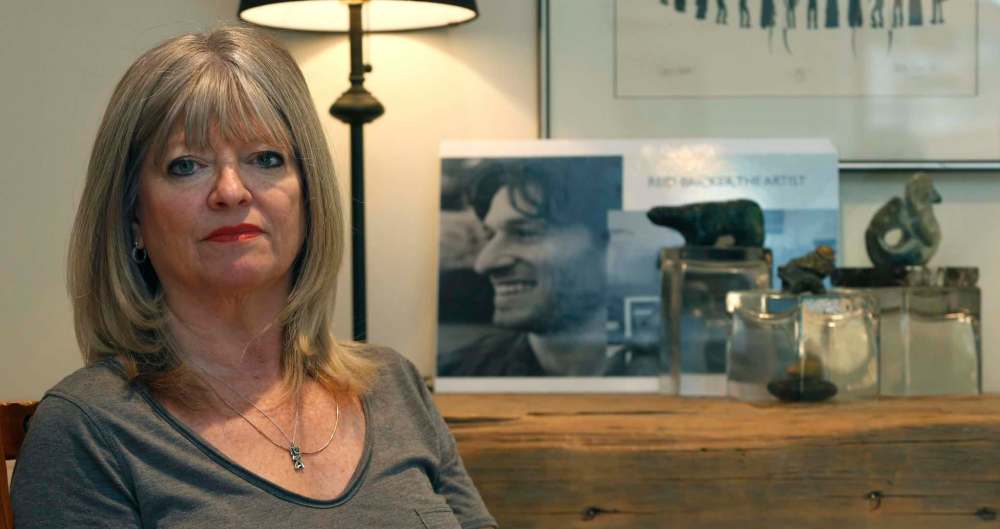
“I never say no to an interview,” Bricker, who worked previously as a banker and then in theatre, says.
She’s since become the director of family navigation for programs and services at the Mood Disorders Association of Manitoba and she couldn’t imagine doing anything other than helping families find their way through the maze that is Manitoba’s mental health care system, where wait times for care can be longer than a year.
“I’m very determined to change the system and not let anybody else suffer what we suffered.”
It’s not that health-care providers and society as a whole aren’t trying to make things better, she adds.
“Unfortunately, it’s a very slow-moving train.”
Awareness initiatives are of particular importance, including World Suicide Prevention Day on Sunday, she adds.
Consciousness-raising events such as this one help shine a light into the darkness that is experienced by those who die by suicide, or who are at risk of taking their lives. But these initiatives also focus the spotlight on their friends and families, who can suffer just as profoundly.
“It’s an opportunity for us to talk about mental health struggles and to support each other,” Mary-Jo Bolton, clinical director at Klinic Community Health in Winnipeg, says.
That’s why Klinic is holding its own event to mark World Suicide Prevention Day on Friday from noon to 1:15 p.m. at its Portage Avenue location.
“Ultimately, we want to bring a sense of hope, connection, community and belonging and that’s what can help prevent suicides,” she adds.
Perhaps more than anything else, awareness lets people who are struggling know they’re not alone and that help is available — from friends, family and the wider community. In large part this is because the mental illnesses that can lead to suicide are almost always borne alone, Bricker says.
“There can be a thousand different scenarios, but the haunting theme that goes with almost all of them is the person is alone and has lost all hope.”
Consequently, anything that stirs public awareness is a positive step.
“Things are improving,” Bricker says. But suicide is “still very much wrapped in stigma and very alienating.”
Still, when someone dies by suicide, no one person or condition is to blame, she notes. Suicide is often the result of many factors. But a common thread running is that someone feels so hopeless and hurts so much that he or she sees no better option.
That said, suicide is often preventable, Bricker adds.
But prevention often hinges on two conditions: “Not leaving people alone and giving them the peer support they need to change their lives in a positive way.”
To this end, Bricker has been pushing for change in the health-care system to ensure suicidal individuals are not left to their own devices. Already, the system has made changes to hospital protocols for discharging patients so at-risk individuals do not leave hospitals without support. Bricker also wants improved access to peer support, similar to that offered by Alcoholics Anonymous.
“The same results can be attained between two people who have mental-health concerns with the one in recovery and turning around to the next person in line and offering them a relationship of support that could make all the difference in the world.”
Mood Disorders Association of Manitoba already has two support workers at Health Sciences Centre providing this kind of assistance to patients receiving psychiatric care. But Bricker says the service should also be available in emergency rooms, which are often the first line of contact for people in crisis.
Beyond peer support, most at-risk individuals have a host of challenges that must be addressed in a timely manner so they can return to well-being.
“Lots of things co-exist with suicide,” Bolton says, adding it’s not just caused by a mental illness.
“It can be driven by the effects of trauma, or an addiction that is out of control.”
At-risk individuals often feel they have lost their way. They may be disconnected from family and society. They can be battling troubled pasts of abuse, or may suffer from chronic physical pain.
“Mental-health problems don’t like to travel by themselves,” Bricker says, adding her son battled depression, anxiety and other mental-health challenges since age 12. “At the very least, they like to be in pairs — it’s called co-morbidity.”
The recent boost in mental health care funding of more than $10 million a year from Ottawa to Manitoba is a recognition of the complexity of treating mental-health problems — and that more must be done.
It’s not just up to the health-care system, Bricker adds. Everyone has a role to play by reaching out more often to connect with friends, family and even strangers.
It’s a lesson that Bricker admits, with a deep sense of pain and regret, she learned far too late.
“Knowing what I know now, I might have been more open about things before and it might have saved my son’s life had I done that.”
When her son took his life, Bricker was understandably enraged — at the system, at herself and — for that matter — the world. But rather than letting her pain destroy her, she channelled it into positive action.
“I was so incensed and angry about it that I just could not live with my conscience if I didn’t do something to change that,” she says. “Anything that can raise awareness may change somebody’s life and I can’t take the risk that if I don’t do something, there’s someone who won’t end up getting help.”
joelschles@gmail.com