

Health fee could hit $900 per adult
Manitoba considering B.C., Ontario models
Advertisement
Read this article for free:
or
Already have an account? Log in here »
To continue reading, please subscribe:
Digital Subscription
One year of digital access for only $1.44 a week*
- Enjoy unlimited reading on winnipegfreepress.com
- Read the E-Edition, our digital replica newspaper
- Access News Break, our award-winning app
- Play interactive puzzles
*Billed as $5.77 plus GST every four weeks. After 52 weeks, price increases to the regular rate of $19.95 plus GST every four weeks. Offer available to new and qualified returning subscribers only. Cancel any time.
To continue reading, please subscribe:
Add Free Press access to your Brandon Sun subscription for only an additional
$1 for the first 4 weeks*
- Enjoy unlimited reading on winnipegfreepress.com
- Read the E-Edition, our digital replica newspaper
- Access News Break, our award-winning app
- Play interactive puzzles
*Your next Brandon Sun subscription payment will increase by $1.00 and you will be charged $17.95 plus GST for four weeks. After four weeks, your payment will increase to $24.95 plus GST every four weeks.
Read unlimited articles for free today:
or
Already have an account? Log in here »
Hey there, time traveller!
This article was published 14/09/2017 (3194 days ago), so information in it may no longer be current.
Manitobans could be in line for a massive tax increase, should the Progressive Conservative government forge ahead with health premiums similar to those in British Columbia and Ontario.
But Premier Brian Pallister isn’t saying how massive.
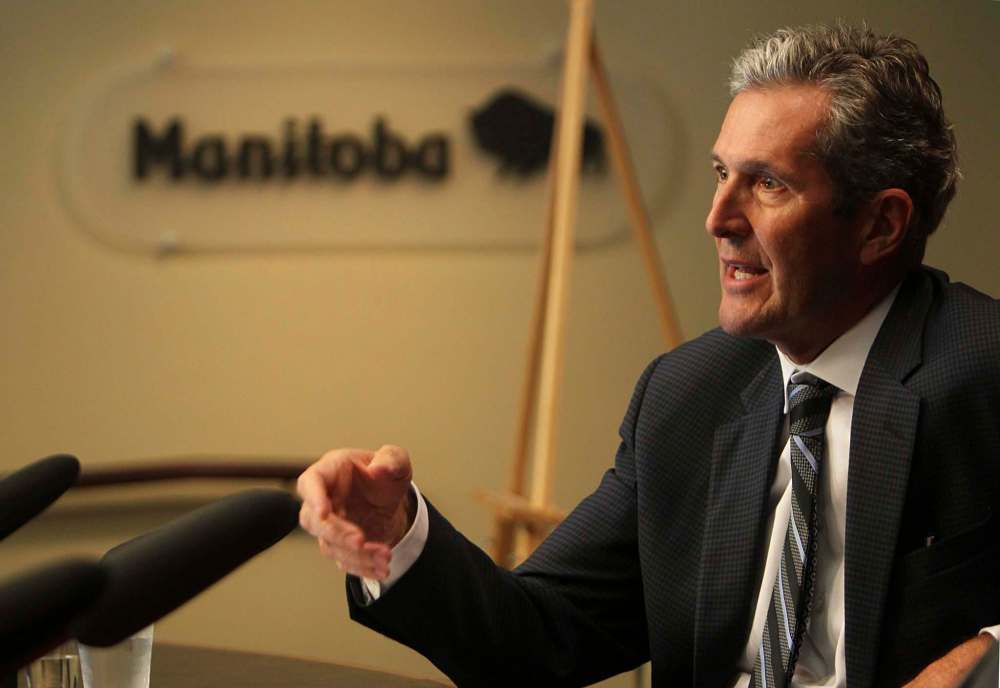
A day after his bombshell announcement that the province may introduce medical services premiums, Pallister dismissed questions about the size of the potential tax hike as “hypothetical.”
He said the government is taking the issue to Manitobans as part of extensive consultations in advance of next spring’s budget. An online survey is available on the government’s website for the public to weigh in.
“It’s premature to assume,” he said. “This is a questionnaire and it’s not a policy decision that we’re acting on, so give me a break.”
Manitobans who earn anything above poverty-level wages, however, could face a sizable tax bill — as early as next year — if the government goes ahead with the introduction of health premiums in the next budget.
In British Columbia, for instance, an adult with an adjusted net income higher than $42,000 a year pays $900 annually in health fees. In Ontario, the maximum premium is also $900, but someone would have to earn a taxable income of more than $200,000 to pay the same amount. An Ontarian earning $48,000 pays about $500 in health fees.
The Winnipeg Chamber of Commerce is alarmed by the implications for individuals and businesses of similar premium regimes in Manitoba.
By the numbers
Brian Pallister came to power on a promise to roll back a percentage point increase in the PST instituted in 2013 by the former NDP government. Here are examples of how a one-point increase in the provincial sales tax affects different Manitobans:
$52 — the additional tax paid by a single person earning $30,000 a year
$196 — the additional tax paid by a family of four earning $60,000
$230 — the additional tax paid by a family of five earning $75,000
$82 — the additional tax that a single person earning $50,000 would pay.
*Based on a 2013 estimate by the Manitoba Finance Department
Here are some examples of the annual health care premiums paid (per adult) in Ontario and British Columbia:
$0 — for those with a taxable income of up to $20,000 in Ontario and up to $24,000 in adjusted net income in British Columbia
$330 — for those with a taxable income of $36,500 in Ontario.
$552 — for those with an adjusted net income of $30,001 in B.C.
$650 — for those with a taxable income of $72,200 in Ontario
$900 — for those with an adjusted net income of more than $42,000 in British Columbia
$800 — for those with a taxable income of $200,200 in Ontario
Source: C.D. Howe Institute
Loren Remillard, the chamber’s president and chief executive officer, noted medical services premiums account for 13 per cent of British Columbia’s health budget. If Manitoba were to count on fees making up a similar percentage of its health spending, that would amount to $894.5 million, he said.
In a province with about one million adults, that translates to average fees of close to $900 per adult.
“If (Manitobans with) low incomes are exempt, you could probably anticipate higher-income individuals would be paying a higher cost,” Remillard said.
Pallister refused to say Thursday whether such a massive tax hike was in the cards. He did allow, however, after repeated questioning at a late afternoon news conference called to launch a public-awareness campaign on marijuana use and driving, that less-onerous health premiums could be introduced here.
“One of the options, I think, is to sustain health care with a moderate or somewhat lower premium,” the premier said.
Pallister is considering the imposition of a new health tax while insisting he will keep a promise to reduce Manitoba’s retail sales tax by a percentage point by the end of his first term in office in 2020. The PST reduction would cost the government $300 million in annual revenue.
Business leaders and the Opposition New Democrats are perplexed by Pallister’s seemingly contradictory approach.
Remillard said Manitobans “have adjusted” to the PST increase, and if the state of the province’s finances dictate Pallister delay his promise to reduce the retail sales tax, that would be better than introducing a new health levy.
While it might not be politically palatable, Colin Busby, associate director of research with the C.D. Howe Institute, said it would be a lot simpler if the government just raised the PST a percentage point instead of instituting a premium.
“The structure of it is going to matter a great deal,” Busby said. “When they come up with the details, that’s when we can really chew into this and decide how effective… this measure going to be and how many distortions might it introduce into the tax system and how burdensome it might be on, say, lower-income Manitobans.”
In Ontario, where its premium is based on taxable income, people can reduce their premium by putting money into non-taxable accounts such as registered retirement savings plans they can then deduct from their taxable income.
Premiums really are “a way to sell publicly the idea of raising taxes to pay for what are popular government services,” Busby said. “If you need money to pay for public services, then raise the PST.”
Remillard said businesses are already battling tax fatigue, with looming increases to Canada Pension Plan contributions and proposed federal changes to the small-business tax.
“It is exhaustion, it’s frustration. I think many small-business people feel that… governments just continue to look at the business community as an endless well to draw upon,” Remillard said.
In provinces with health premiums, levies are frequently covered by employers as part of the benefits package. Some businesses can afford it, but many can’t, he said.
NDP finance critic James Allum said he’s worried about the potential unfairness of a health premium system. He pointed to the B.C. situation, where an adult pays the same amount whether he or she is earning $50,000 or $500,000.
“That’s utterly regressive,” he said.
Allum also said by reducing the PST and introducing a health user’s tax, the Pallister government would be shifting some of the tax burden away from corporations and businesses and onto individuals. “It’s a double whammy to the people of Manitoba.”
John McCallum, an economist with the University of Manitoba’s Asper School of Business, said the fact Pallister is entertaining the idea of introducing health premiums shows he believes the province’s financial situation is “very, very serious.”

McCallum said he agrees with that assessment. Manitoba is deeply in debt and the government is continuing to run large operating budget deficits. As interest rates rise, the province’s fiscal challenges will grow, he said.
It appears Pallister is saying all of his options for getting the province out of its fiscal predicament “are awful,” McCallum said.
Health premiums may seem to the premier to be the “least bad way” to try to get Manitoba’s finances on a more stable footing, he said.
jane.gerster@freepress.mb.ca
larry.kusch@freepress.mb.ca