Author brings mystery to the Rock
Advertisement
Read this article for free:
or
Already have an account? Log in here »
To continue reading, please subscribe:

Digital Subscription
One year of digital access for only $205*
- Enjoy unlimited reading on winnipegfreepress.com
- Read the E-Edition, our digital replica newspaper
- Access News Break, our award-winning app
- Play interactive puzzles
*First annual payment billed as $205.00 + GST for one year. This annual subscription will automatically renew at $233.00 + GST every 52 weeks (10% off the regular annual price of $259.35). Offer available to new and qualified returning subscribers only. Cancel any time.
To continue reading, please subscribe:
Add Free Press access to your Brandon Sun subscription for only an additional
$1 for the first 4 weeks*
- Enjoy unlimited reading on winnipegfreepress.com
- Read the E-Edition, our digital replica newspaper
- Access News Break, our award-winning app
- Play interactive puzzles
*Your next Brandon Sun subscription payment will increase by $1.00 and you will be charged $17.95 plus GST for four weeks. After four weeks, your payment will increase to $24.95 plus GST every four weeks.
Read unlimited articles for free today:
or
Already have an account? Log in here »
Hey there, time traveller!
This article was published 20/09/2017 (3286 days ago), so information in it may no longer be current.
For Wayne Johnston, getting reacquainted with his fictional journalist character Sheilagh Fielding was like seeing an old friend.
The 59-year-old Johnston’s critically acclaimed 1998 novel The Colony of Unrequited Dreams, arguably his “breakout” novel, is a fictional account of the life of former Newfoundland politician Joey Smallwood, the man largely responsible for the province’s entry into Confederation in 1949 and who went on to become its first premier. It marked the introduction of Fielding to readers, whose story continued in 2006’s The Custodian of Paradise.
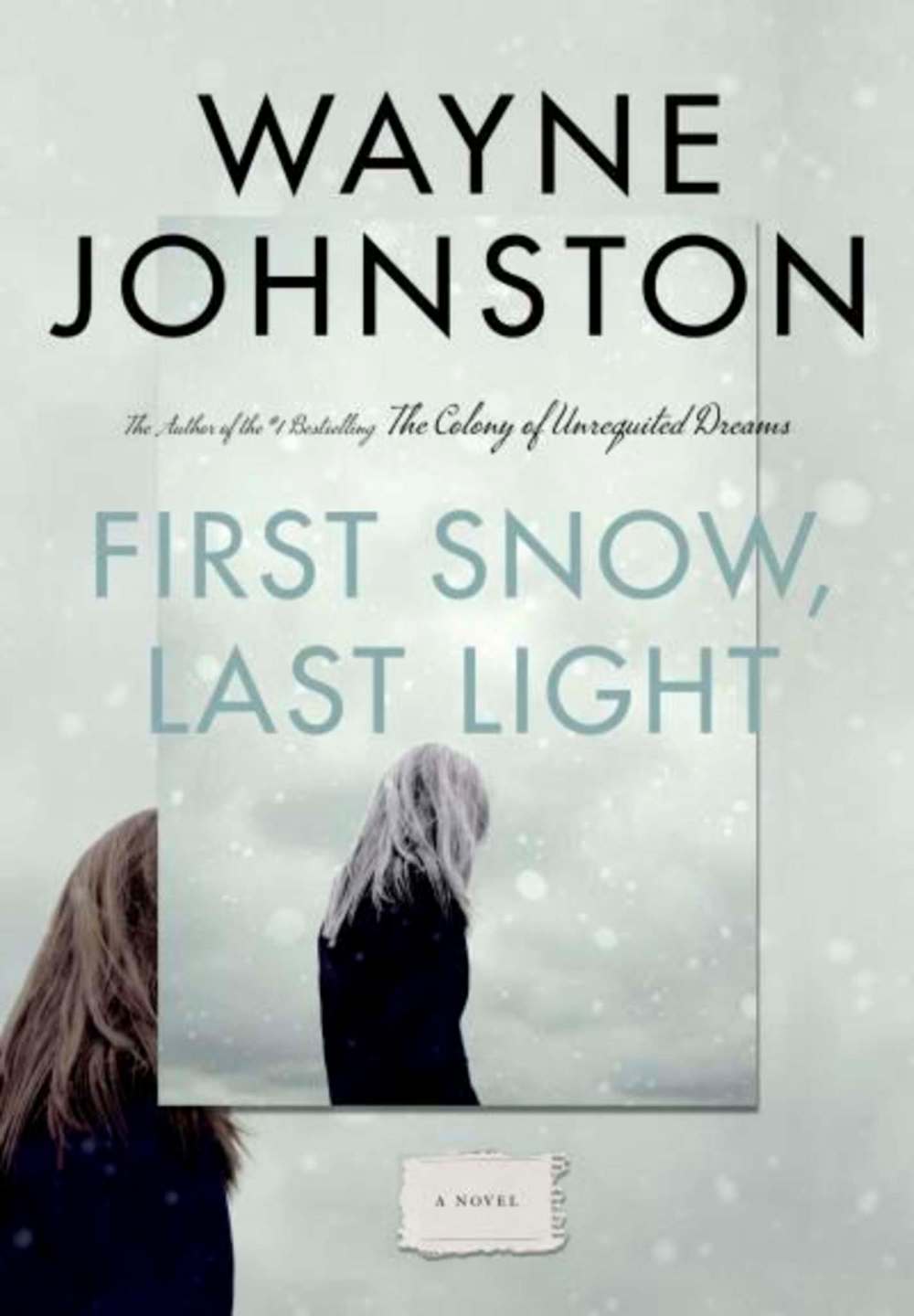
Fielding returns in First Snow, Last Light, a story told from the alternating perspectives of Fielding and Ned Vatcher, who is introduced as a teen shortly before his parents vanish without a trace. Ned leaves Newfoundland and learns about the world of business in Boston before returning to the Rock and becoming a successful businessman — albeit one obsessed with solving the mystery of what happened to his parents.

“There’s a comfort to coming back to a character because there’s not as much laying of groundwork,” Johnston says of Fielding from his Toronto home in advance of tonight’s launch of First Snow, Last Light at McNally Robinson Booksellers. “I know Fielding so well, know her voice really well. I can slip into those things very quickly and write at a fairly high level.”
The return to mid-20th century Newfoundland and the reappearance of Fielding is in part why the book is being loosely dubbed the third in Johnston’s so-called Newfoundland trilogy. “It’s a trilogy in the sense that it carries forward themes from the other two books. And it does feature Sheilagh Fielding and one or two other people (from other books) make little cameos. But you could read the books in any order and understand the context.”
Like in The Colony of Unrequited Dreams, Johnston’s main character is based on a real-life Newfoundlander — in this case businessman and TV mogul Geoff Stirling.
“Anyone familiar with Geoff Stirling’s life will see that I have by no means stuck to it, and that’s why I didn’t use his name,” explains Johnston. “With Smallwood’s story I stayed so close to what he actually did, except for Fielding’s involvement, that I felt I was justified in using his name.”
Where Ned Vatcher and Geoff Stirling’s stories stray from each other is the mysterious disappearance of Ned’s parents. (Stirling’s parents died in a car crash.) “I wanted this figure who early in life lost his parents and then was faced with two questions: what do I do and why did I lose them?” Johnston explains.
This meant building a story around a mystery that had to carry through the entire novel, something Johnston found to be a challenging, but ultimately rewarding exercise. “I have a renewed appreciation for people who write literary mysteries, because you have to be so careful not to be obviously planting a hint or directing the reader away from what might be a giveaway.
You have to hold the reader’s interest not only about the characters but about this mystery, keeping it close enough to the solution that the reader will keep guessing, but withholding it as well.”
Johnston’s penchant for fiction set in the past spans beyond his home province. His 2002 novel The Navigator of New York, which was shortlisted for the Giller prize and Governor General’s Award for fiction, starts in St. John’s, N.L., but moves to the titular city before the characters race north to the Arctic in the hopes of being the first to get to the North Pole.
Similarly, his 2011 novel A World Elsewhere is set in part in St. John’s, but quickly delves into the America of the Gilded Age (it’s loosely based on the life of millionaire George Vanderbilt).
And while Johnston’s fiction often ventures beyond Newfoundland, he’s still often thought of as a Newfoundland writer — much in the same way ex-Winnipegger Miriam Toews (also now living in Toronto) is considered a Manitoba writer.
“I don’t mind the idea of being called a Newfoundland writer. I have no doubt, even though I can’t put my finger on it, that no matter where I set my books there’s something about the way I write, something about my style, sentence by sentence, that is peculiar or unique to Newfoundland,” Johnston says.
Perhaps as a result of that isolation, Johnston sees his home province as a place populated by many with compelling stories to be told. “Newfoundland is a place that is given to producing people who seem larger than life. The inspiration for this book, for instance, Geoff Stirling — if anyone ever writes a biography of him, they will see it will be very difficult to convince this reader that all these things are true.”
books@freepress.mb.ca