

Ouellette pushes for Indigenous-language interpreters in House
Advertisement
Read this article for free:
or
Already have an account? Log in here »
To continue reading, please subscribe:

Digital Subscription
One year of digital access for only $205*
- Enjoy unlimited reading on winnipegfreepress.com
- Read the E-Edition, our digital replica newspaper
- Access News Break, our award-winning app
- Play interactive puzzles
*First annual payment billed as $205.00 + GST for one year. This annual subscription will automatically renew at $233.00 + GST every 52 weeks (10% off the regular annual price of $259.35). Offer available to new and qualified returning subscribers only. Cancel any time.
To continue reading, please subscribe:
Add Free Press access to your Brandon Sun subscription for only an additional
$1 for the first 4 weeks*
- Enjoy unlimited reading on winnipegfreepress.com
- Read the E-Edition, our digital replica newspaper
- Access News Break, our award-winning app
- Play interactive puzzles
*Your next Brandon Sun subscription payment will increase by $1.00 and you will be charged $17.95 plus GST for four weeks. After four weeks, your payment will increase to $24.95 plus GST every four weeks.
Read unlimited articles for free today:
or
Already have an account? Log in here »
Hey there, time traveller!
This article was published 10/10/2017 (3267 days ago), so information in it may no longer be current.
OTTAWA — Winnipeg MP Robert-Falcon Ouellette has asked for House of Commons interpretation for Indigenous languages, putting his Liberal government’s commitment to reconciliation to the test.
“It’s the right thing to do,” Ouellette said.
Ouellette has spoken at least twice in the House in the Cree dialect of Nehiyo. Each time, his comments have been marked “(Member spoke in Cree)” in the Hansard transcript.
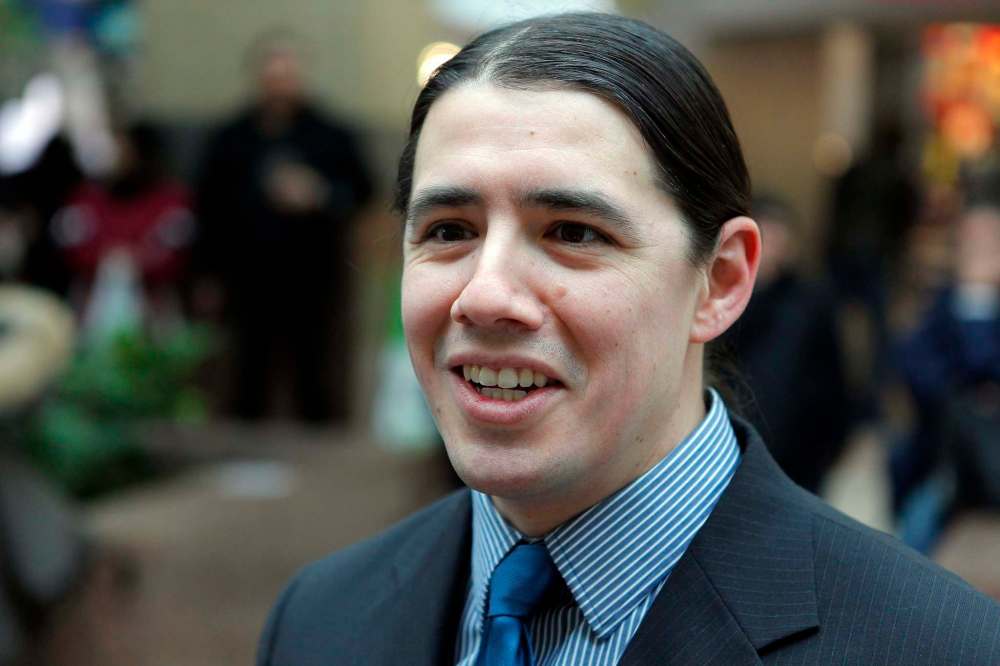
On June 8, Ouellete raised a point of privilege, arguing his rights as an MP “have been violated because I could not be understood by my fellow parliamentarians and Canadians viewing the proceedings, thus negating the debate.”
That month, the Speaker ruled that Ouellette’s rights hadn’t been violated, but wrote on Sept. 25 to the House procedure committee, suggesting it study the issue.
That committee is wading through issues ranging from political financing to a sexual-harassment code and hasn’t yet decided whether it will debate providing Indigenous interpretation.
Winnipeg North MP Kevin Lamoureux sits on the committee as a non-voting member. He said he’s “open” to having that debate. “I think that’s recognizing that Canada is a multicultural society; our founding First Nations are obviously important.”
Lamoureux suggested MPs could provide written translations in advance. “I’m all in favour of us being able to use multiple languages; the issue then becomes, ‘How do you provide translation services?’”
The idea is supported by Indigenous MPs such as Romeo Saganash, who recalled asking reluctant Commons clerks if he could speak in Cree right after his 2011 election.
“It’s part of reconciliation in this country, to acknowledge that there were languages spoken thousands of years before English or French was even heard on this part of the world.”
Saganash, who represents northern Quebec for the NDP, said he’s not running in the 2019 election. “I want to leave that place with that assurance that no other Indigenous person has to fight for the right to speak their language in the House of Commons.”
The Speaker has noted that the House of Commons might not have the physical space to include more interpreters, who must see people speaking to ensure they accurately capture what people are saying.
But Saganash pointed out that the House is undergoing a major renovation as soon as next year, which could provide more space for interpreters.
Both Ouellette and Saganash argue they have a right to speak their language under the Charter’s section on treaty rights. Attorney General Jody Wilson-Raybould, a former regional chief, declined an interview request Tuesday and wouldn’t say whether she agrees with that understanding.
Last December, Prime Minister Justin Trudeau pledged legislation to preserve Indigenous languages, which is expected next year.
The Truth and Reconciliation Commission on residential schools suggested calling for language laws, funding and college programs.
The House of Commons introduced simultaneous interpretation of both official languages in 1958, after MPs argued they had a right not just to speak, but to be understood.
In 2008, the Senate voted to introduce Inuktitut interpretation in Red Chamber debates and at two committees pertinent to Nunavut. The move came to accommodate two Inuk senators who speak English as a second language.
Typically, those senators give 48 hours’ notice that they plan to speak in Inuktitut and an interpreter is brought in to translate their remarks into English, which is then translated simultaneously in a separate booth into French. The Speaker or committee chair normally starts the proceedings by telling senators Inuktitut will be spoken and what language channel to tune their headsets.
Both senators had asked for full-time interpretation. A report suggested the idea could be broadened to include other Indigenous languages, but that hasn’t happened yet.

Ouellette suggested the Senate’s approach could be a model for the House. But Saganash said he’d be “offended” to have to request interpretation in advance.
“My language has been spoken for 7,000 years; why should I be obliged to provide notice to one of the most democratic places in this country, that I want to speak my language?” he said, bristling at the Speaker mentioning Indigenous languages alongside immigrant ones.
“Indigenous languages have a rightful place constitutionally in this country,” he said.
The Northwest Territories provides daily interpretation on a rotating basis for English, French and nine languages that are indigenous to the territory.
dylan.robertson@freepress.mb.ca