

Indigenous leaders’ names floated for Supreme Court
Advertisement
Read this article for free:
or
Already have an account? Log in here »
To continue reading, please subscribe:

Digital Subscription
One year of digital access for only $205*
- Enjoy unlimited reading on winnipegfreepress.com
- Read the E-Edition, our digital replica newspaper
- Access News Break, our award-winning app
- Play interactive puzzles
*First annual payment billed as $205.00 + GST for one year. This annual subscription will automatically renew at $233.00 + GST every 52 weeks (10% off the regular annual price of $259.35). Offer available to new and qualified returning subscribers only. Cancel any time.
To continue reading, please subscribe:
Add Free Press access to your Brandon Sun subscription for only an additional
$1 for the first 4 weeks*
- Enjoy unlimited reading on winnipegfreepress.com
- Read the E-Edition, our digital replica newspaper
- Access News Break, our award-winning app
- Play interactive puzzles
*Your next Brandon Sun subscription payment will increase by $1.00 and you will be charged $17.95 plus GST for four weeks. After four weeks, your payment will increase to $24.95 plus GST every four weeks.
Read unlimited articles for free today:
or
Already have an account? Log in here »
Hey there, time traveller!
This article was published 24/10/2017 (3256 days ago), so information in it may no longer be current.
OTTAWA — The Supreme Court is expected to soon welcome an Indigenous jurist to fill its quota for western and northern Canada, but it’s unlikely the appointment will come from Manitoba.
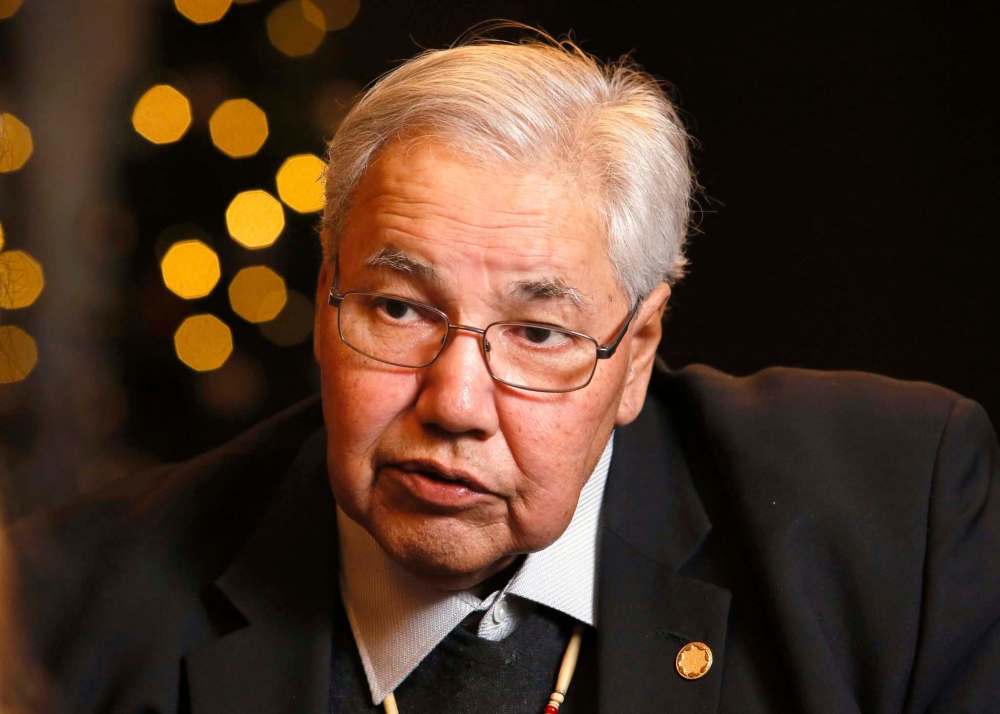
“It would feel burdensome,” Sen. Murray Sinclair said in an interview Monday. “It is a tremendous workload.”
Sinclair is among the few Indigenous Manitobans who would qualify for the job, and a Toronto Star editorial suggested him for the role in a June editorial.
In mid-July, Prime Minister Justin Trudeau opened a two-month application period to fill the spot for a judge from either the territories or the West (British Columbia and the Prairies). The regional requirement can be filled by the area of bar membership, judicial appointment or a personal connection.
An advisory committee had planned to present a short list on Monday of three to five candidates.
Trudeau has sought “functionally bilingual” jurists who are “representative of the diversity” of Canada, but he’s been under pressure from First Nations activists and legal scholars to appoint an Indigenous judge.
Sinclair wouldn’t say whether he applied, saying it would violate the process’ confidentiality rules (by either admitting so, or allowing others to be singled out). But he hinted he’s already taken on a series of accomplishments.
He’s troubled the court has lacked an Aboriginal voice since its 1875 creation.
“That speaks volumes about the systemic racism in this country, and it’s about time we address that… in the most positive a way that we can,” he said, noting the court deals with many Indigenous cases, and broadened its perspective when women joined the bench.
Whomever is chosen, they’ll replace Chief Justice Beverley McLachlin, who retires in December. Trudeau will then choose a new top judge from the nine justices.
The two names most often discussed in Canada’s legal community are John Borrows and Mary Ellen Turpel-Lafond, both of whom are legal experts with experience in multiple provinces.
Borrows is the Indigenous law Canada research chair at the University of Victoria, while Turpel-Lafond worked as B.C.’s child-welfare youth representative for a decade.
Karen Busby, director of the Centre for Human Rights Research at the University of Manitoba, is familiar with both “fantastic” candidates.
Busby is on a first-name basis with Turpel-Lafond, whom she says was an exceptional academic who was missed when she went into law. She describes Borrows as a rare mix of “brilliant academic and warm and approachable.”
Typically, Busby says, a Supreme Court judge from B.C. is replaced by another (Alberta-born McLachlin spent almost all her legal career in B.C.).
Sinclair hopes the committee has embraced candidates from outside the courts. They can pick from people who were called to a bar, such as lawyers or scholars, but it’s much more common to pick from appeal courts. Those make up the most senior judges, and Sinclair says few Indigenous people attain law degrees, let alone become a senior-ranking judge. (Sinclair said he only knows of one, in Ontario.)

“That would be an unconscious, perhaps a deliberate, exclusion of a significant number of Indigenous people who are duly qualified.”
While Sinclair supports Trudeau’s requirement for judges to be functionally bilingual, he said it’s difficult for First Nations people who grow up on reserves, as Ottawa “spends literally nothing for French-language programs” in the schools they administer outside Quebec.
Busby said her U of M colleague Aimée Craft “has a really good shot” at being appointed to the Supreme Court, but believes she is “too young” for the typical age of appointment.
Craft, who did not return an afternoon interview request, is on leave from U of M as research head for the national missing and murdered Indigenous women inquiry.
dylan.robertson@freepress.mb.ca