

Front-line workers voice frustration at conference on ending homelessness
Advertisement
Read this article for free:
or
Already have an account? Log in here »
To continue reading, please subscribe:

Digital Subscription
One year of digital access for only $205*
- Enjoy unlimited reading on winnipegfreepress.com
- Read the E-Edition, our digital replica newspaper
- Access News Break, our award-winning app
- Play interactive puzzles
*First annual payment billed as $205.00 + GST for one year. This annual subscription will automatically renew at $233.00 + GST every 52 weeks (10% off the regular annual price of $259.35). Offer available to new and qualified returning subscribers only. Cancel any time.
To continue reading, please subscribe:
Add Free Press access to your Brandon Sun subscription for only an additional
$1 for the first 4 weeks*
- Enjoy unlimited reading on winnipegfreepress.com
- Read the E-Edition, our digital replica newspaper
- Access News Break, our award-winning app
- Play interactive puzzles
*Your next Brandon Sun subscription payment will increase by $1.00 and you will be charged $17.95 plus GST for four weeks. After four weeks, your payment will increase to $24.95 plus GST every four weeks.
Read unlimited articles for free today:
or
Already have an account? Log in here »
Hey there, time traveller!
This article was published 26/10/2017 (3252 days ago), so information in it may no longer be current.
The day after the first public glimpse into a proposed $40-billion federal housing strategy invigorated 1,000 of the country’s front-line workers and housing advocates, some positivity was expected.
Yet, when three of the country’s municipal leaders sat down Thursday in Winnipeg for a noon-hour town hall at the fifth annual National Conference on Ending Homelessness, questions from the floor weren’t about how to spend the largest investment in the country’s housing history.
The January 2015 Maclean’s magazine feature tagging Winnipeg as the most racist city in Canada was the first topic at the town hall. It was followed by a general angst over municipal red tape and government bureaucracy that frustrates housing advocates, no matter where they live.
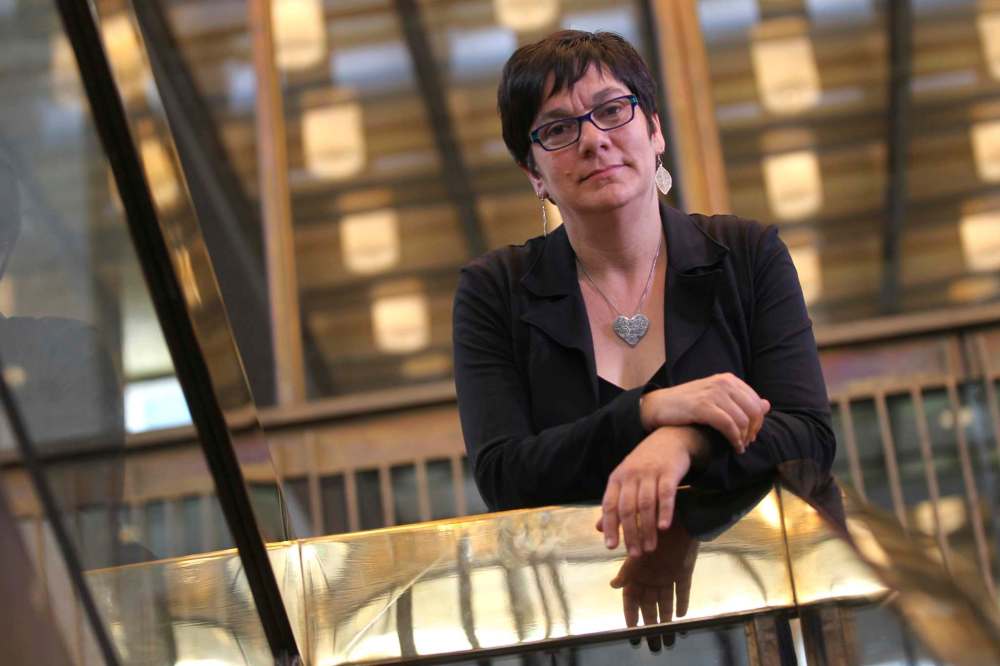
“People are going to say what’s on their minds,” shrugged Coun. Jenny Gerbasi (Fort Rouge–East Fort Garry). Gerbasi took part in the panel as Winnipeg’s deputy mayor and as chairwoman of the Federation of Canadian Municipalities.
“And there is a perception, which we sometimes get: you run for office because you want to make the world a better place. But it’s hard for things to change. It’s a long journey, especially the work people do on housing. It’s one of the most difficult sectors. It’s slow. It’s hard to make progress and it’s hard to make systemic change.”
Ottawa is expected to announce its $40-billion bundle of spending and tax incentives for a national housing strategy, the first in a generation, before Christmas.
Meanwhile, some 35,000 Canadians couch-surf, bed down in temporary shelters or on the streets on any given night, according to figures cited at the conference.
In Winnipeg, according to the latest numbers, that includes 1,727 people — 75 per cent of them Indigenous, which is nearly twice the national average (37 per cent of the country’s homeless are reported to be Indigenous).
More than a thousand experts, front-line workers, policy planners, decision makers and some 50 people without a roof over their heads are in the city to take part in the national gathering to end homelessness. It began Wednesday, and ends Friday.
Just outside the meeting rooms, dozens of the city’s CEOs and executives prepared to sleep Thursday night under the York Avenue canopy at the RBC Convention Centre to raise $200,000 and break a $1-million goal set five years ago.
The Downtown Winnipeg BIZ teamed with End Homelessness Winnipeg to reach the $1 million goal this year. The proceeds go to create jobs for the homeless.
“I think people do get frustrated,” Gerbasi said. “We didn’t get into much of the good things that are coming forward, like the national housing strategy and other things.
“No one is saying the problems are solved. We have racism. We have homelessness. There’s a lot of good work that’s been done… since that (Maclean’s) cover and it’s work Winnipeg can be proud of,” Gerbasi said after the panel discussion.
Iqaluit Mayor Madeleine Redfern, who joined Gerbasi on stage, made no bones about the fact some Nunavut civic policies contribute to that region’s homeless crisis.
“What I’ve noticed is there are systemic structural issues that contribute to homelessness,” Redfern said. “Like (the northern) travel policy.”
Under that policy someone apprehended for being impaired while travelling in southern Canada gives up the right to a plane ticket home. “Is it appropriate to cancel their ticket so they can’t go home? No, it’s not,” Redfern said emphatically.
Also on stage Thursday was Leigh Bursey, a 30-year-old city councillor from Brockville, Ont.
The first to admit his brand of plain-spoken pugilistic politics breaks the mould of small-town-conservative Ontario, Bursey is now in his second term in office.
He recalled the turning point for him was a winter day in 2010, when he stood at a transit stop ankle-deep in snow and so frustrated with his life of poverty, he decided to change the system he was angry at.
No one was more shocked than Bursey when he was elected to Brockville’s council. He was a man who made do with $60 a week for groceries to feed his family, and owned one old suit blazer for dressy occasions.
“I’m surprised I’ve done as well as I have, but I think people are generally appreciative of someone who’s principled. I’m not afraid to go to work. I’m not afraid to ask questions that make people uncomfortable,” Bursey said.

He told delegates frustrated with red tape or politicians to challenge stereotypes and stigma.
“So if you want me to believe that’s a fair argument, that corporate taxes create jobs for… people, but not that fellow down the street, struggling with an addiction and making a —damned effort? You want me to believe he’s the one that has somehow become public enemy No. 1? That challenges my moral integrity.”
The conference was organized around the twin themes of Indigenous people — including the sentiment of “nothing about us, without us” — and the need to take action on homelessness in keeping with calls for reconciliation.
“The fact is that human equity is way more valuable than any dollar figure I could attach to it. When you believe in someone, it’s amazing what they can accomplish. I just spoke in front of a thousand people. I didn’t think I’d be doing that when I was standing at that bus stop,” Bursey politician said.
alexandra.paul@freepress.mb.ca
History
Updated on Friday, October 27, 2017 12:22 AM CDT: adds edits