

Feds see red over Manitoba’s green plan
Advertisement
Read this article for free:
or
Already have an account? Log in here »
To continue reading, please subscribe:
Monthly Digital Subscription
$1 per week for 24 weeks*
- Enjoy unlimited reading on winnipegfreepress.com
- Read the E-Edition, our digital replica newspaper
- Access News Break, our award-winning app
- Play interactive puzzles
*Billed as $4.00 plus GST every four weeks. After 24 weeks, price increases to the regular rate of $19.95 plus GST every four weeks. Offer available to new and qualified returning subscribers only. Cancel any time.
Monthly Digital Subscription
$4.99/week*
- Enjoy unlimited reading on winnipegfreepress.com
- Read the E-Edition, our digital replica newspaper
- Access News Break, our award-winning app
- Play interactive puzzles
*Billed as $19.95 plus GST every four weeks. Cancel any time.
To continue reading, please subscribe:
Add Free Press access to your Brandon Sun subscription for only an additional
$1 for the first 4 weeks*
*Your next subscription payment will increase by $1.00 and you will be charged $16.99 plus GST for four weeks. After four weeks, your payment will increase to $23.99 plus GST every four weeks.
Read unlimited articles for free today:
or
Already have an account? Log in here »
Hey there, time traveller!
This article was published 30/10/2017 (3096 days ago), so information in it may no longer be current.
OTTAWA — The federal Liberals are bracing for a battle with Manitoba over its recently released Green Plan, which will fall behind Ottawa’s targets in 2020.
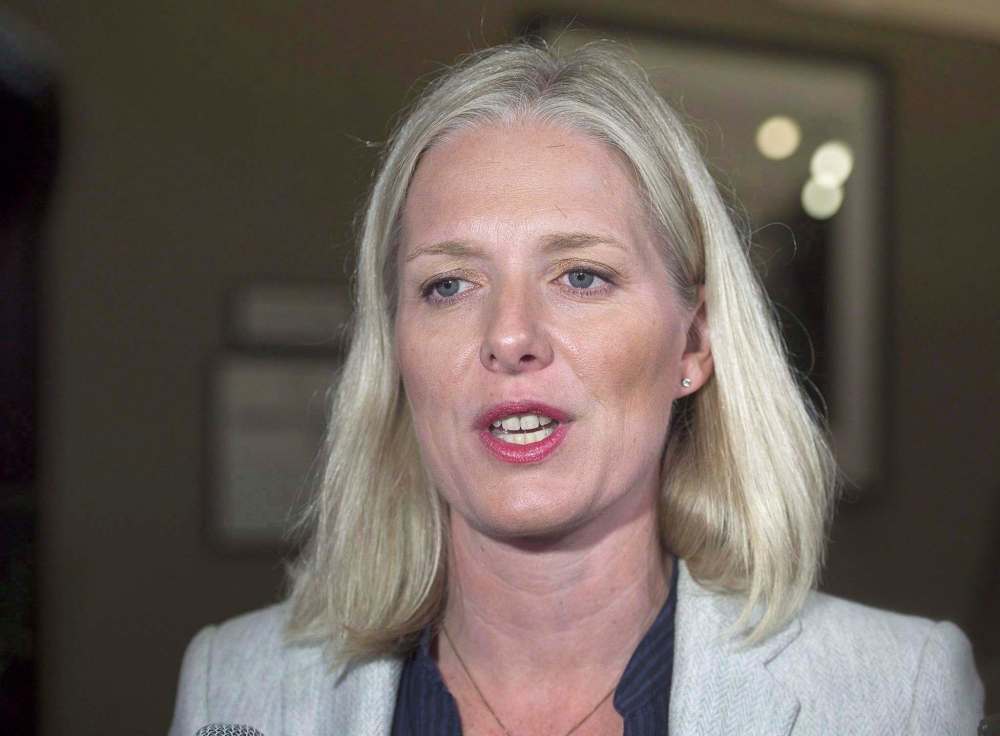
“Manitoba’s approach is good for the first two years,” federal Environment Minister Catherine McKenna told reporters Monday. “After that, they will have to go up.”
Last Friday, Manitoba Premier Brian Pallister said his government would impose a flat $25 tax per tonne of carbon starting next year and not changing through to 2022.
That diverges from the federal plan, which calls for a carbon price of at least $10 per tonne in 2018, and rising by $10 each year to reach $50 per tonne in 2022. The province has asked the feds to hold off on enforcing those annual levies until a 2022 review. Pallister claims his Climate and Green Plan will reduce greenhouse gases more than the federal targets.
The federal government says it will enforce those targets on provinces that go rogue, presuming the federal Liberals are re-elected in 2019. With a provincial vote in 2020, that would mean newly re-elected Liberals waging a war on Manitoba’s Progressive Conservatives in the run up to a provincial vote.
On Friday, provincial Sustainable Development Minister Rochelle Squires will discuss the plan with McKenna at a Vancouver meeting of environment ministers. She said Manitoba is focused on achieving “meaningful reductions in carbon emissions,” not raising taxes.
“We believe that Manitobans will decide what Manitoba will do,” she said when asked about the prospect of Ottawa dictating future terms of a carbon-pricing plan.
Squires deflected a question on whether she is concerned Manitoba taxpayers might face the worst of both worlds – pay a higher upfront tax now and still have to cough up $50 a tonne within five years.
“We’re focused on reducing carbon emissions and moving towards that low-carbon economy. And if Ottawa is fixated on taxes, that’s their agenda,” she responded.
Provincial Opposition Leader Wab Kinew said he remains concerned the provincial government has not revealed its plans for how revenues from a carbon tax would be spent. The province should ensure revenues go to address climate change while lending a hand to low-income Manitobans who would find it challenging to pay the increased tax, he said.
Kinew reiterated concerns that under Pallister’s watch Manitobans will be facing years of high hydroelectric rate increases that will provide no incentives for them to make environmentally sustainable choices.
It’s a prospect Conservative environment critic Ed Fast laments.
“The province of Manitoba has been forced to impose a carbon tax because of the heavy-handed approach of [Prime Minister] Justin Trudeau,” said the Vancouver-area MP. “You can’t tax your way to a clean environment.”
Fast would not comment about the Manitoba plan, but said the Tories would cancel Ottawa’s levy if elected. The Conservatives have proposed matching Canada’s targets to those followed by major emitters such as China and the United States, and investing in climate-change adaptation for the North.
Elmwood-Transcona MP Daniel Blaikie said the NDP isn’t impressed by the federal Liberals chasing a target similar to the government of Stephen Harper, and the Green Plan lacking concrete targets.
“In the Manitoba context, it’s shaping up to be a bit of a fake debate. You’ve got two governments, neither of which have a real plan,” said Blaikie, noting both plans are posturing if they don’t steer the levy revenues to directly cut down on carbon emissions.

“We’re not going to reduce greenhouses gas emissions through inertia.”
Pallister’s plan came only after an expert legal opinion said that Ottawa was within its rights to impose a carbon tax on provinces that didn’t do it themselves. Saskatchewan’s outgoing premier is still holding out on a carbon tax, and some Atlantic provinces haven’t specified how they intend to meet that target.
Earlier this month, the environment commissioner said Canada is on track to once again miss an international emissions target by a long shot for the fifth time since 1992. An audit found most federal departments also don’t have plans in place to deal with how climate change would affect federally owned bridges, roads and airports.
The commissioner will start measuring the effectiveness of the federal carbon levy once it comes into effect.
dylan.robertson@freepress.mb.ca