Mustang: a history of greatness
Ford has staying power when it comes to keeping fans of one its most popular models
Advertisement
Read this article for free:
or
Already have an account? Log in here »
To continue reading, please subscribe:

Digital Subscription
One year of digital access for only $205*
- Enjoy unlimited reading on winnipegfreepress.com
- Read the E-Edition, our digital replica newspaper
- Access News Break, our award-winning app
- Play interactive puzzles
*First annual payment billed as $205.00 + GST for one year. This annual subscription will automatically renew at $233.00 + GST every 52 weeks (10% off the regular annual price of $259.35). Offer available to new and qualified returning subscribers only. Cancel any time.
To continue reading, please subscribe:
Add Free Press access to your Brandon Sun subscription for only an additional
$1 for the first 4 weeks*
- Enjoy unlimited reading on winnipegfreepress.com
- Read the E-Edition, our digital replica newspaper
- Access News Break, our award-winning app
- Play interactive puzzles
*Your next Brandon Sun subscription payment will increase by $1.00 and you will be charged $17.95 plus GST for four weeks. After four weeks, your payment will increase to $24.95 plus GST every four weeks.
Read unlimited articles for free today:
or
Already have an account? Log in here »
Hey there, time traveller!
This article was published 24/11/2017 (3220 days ago), so information in it may no longer be current.
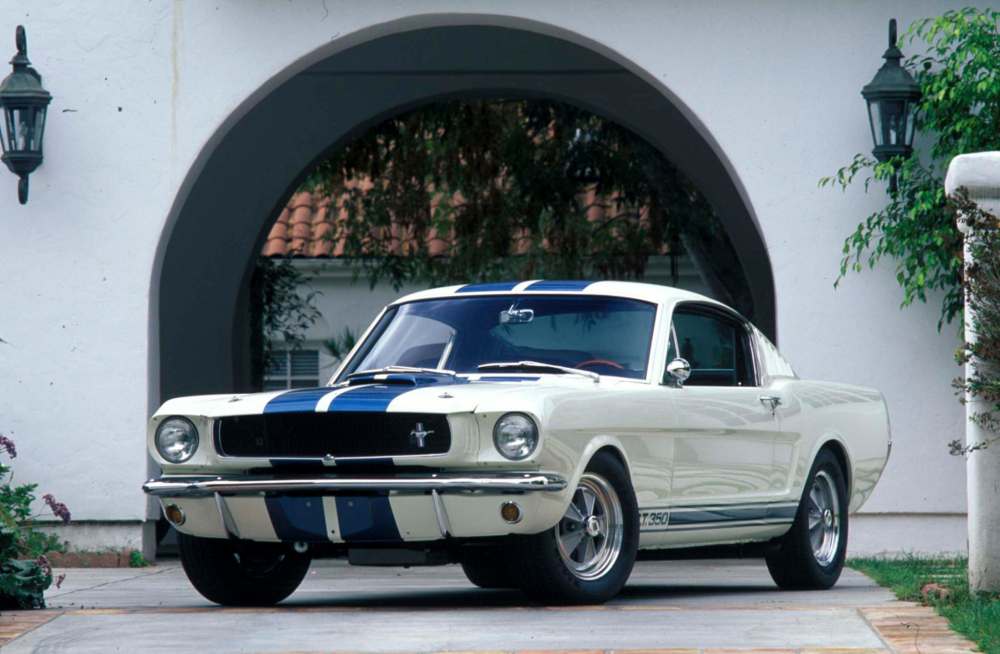
First generation: 1965-73
The first production Mustang was unveiled April 17, 1964 at the World’s Fair in Flushing Meadows, New York. Although officially a 1965 model, Mustang fans refer to the early production versions as 1964 1/2 models due to the early launch.
The initial lineup included hardtop and convertible variants, with the sleek fastback version debuting in the summer of 1964, also as a 1965 model.
Thanks to the tremendous popularity of the Mustang a new class of vehicles dubbed “pony cars” was born. The competition soon followed with a new stable of sporty but affordable coupes with long hoods and short rear decks — including the Chevrolet Camaro, Pontiac Firebird, AMC Javelin, the revamped Plymouth Barracuda and the second generation Dodge Challenger.
The first Mustang model wasn’t initially branded as being particularly powerful, but when Carroll Shelby got his hands on a 1965 Mustang Fastback and tuned its 289 V-8 engine to 306 horsepower, enthusiasts and Ford took note.
The first real refresh of the first generation Mustang took place in 1967 with a slight increase in size. Although popularity waned, Mustang grew even bigger in size again in 1969 and again in 1971.
By the end of the original generation, in 1973, with a number of restyles having taken place, the Mustang was a well-established model with many available variants. Engine options throughout the first generation Mustangs ranged from the 170-cubic-inch straight-six engine all the way up to the fire-breathing 428-cu.-in. Cobra Jet V-8.
Attend any local car show nowadays and you’re sure to spot more than a few first generation Mustangs on display. These are the most desired Mustang models out there and continue to be very popular among collectors and enthusiasts.
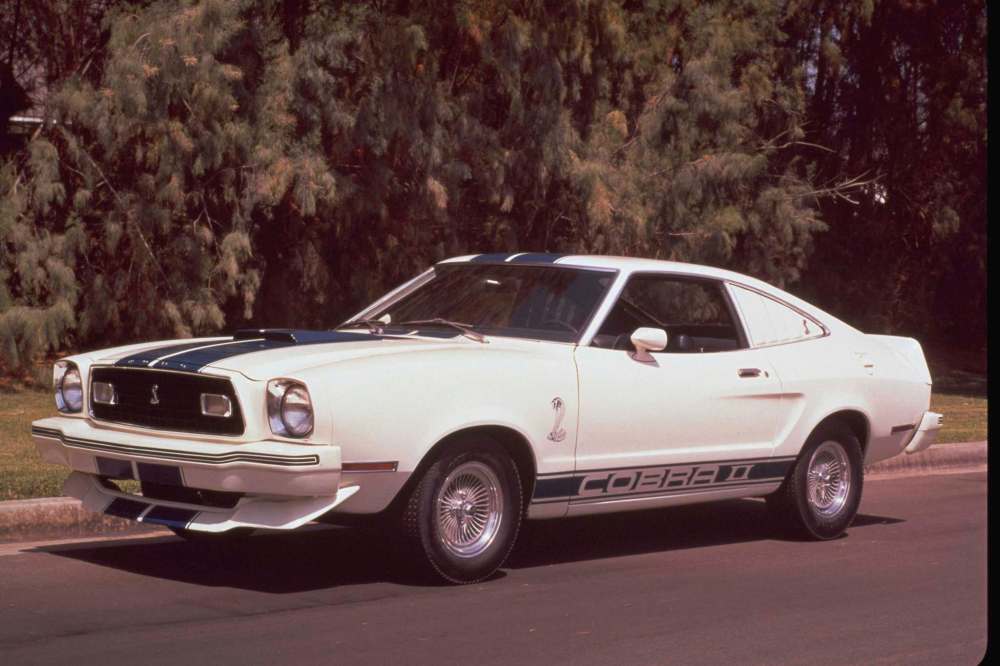
Second generation: 1974-78
Coming out as the Mustang II, the second generation Mustang actually shared a platform with the infamous Ford Pinto. Although the base model ran a four-cylinder engine, buyers could still opt for a 2.8-liter V-6.
These all-new Mustangs were a total departure from the previous models with a shorter wheelbase and radically different body style. Only coupe and hatchback fastback models were offered.
Thanks to an oil crisis — no V-8 engine was initially offered. A 302 cu.-in. V-8 was once again optional in 1976.
The graphics and spoilers on the 1976 Mustang II King Cobra model may have screamed speed, but the smog-controlled 302 engine, drinking fuel from two-barrels and breathing through a single exhaust pipe, did little to live up to the cars racy appearance.
Although second-generation Mustang II models aren’t held with particular regard by most Mustang collectors, they were indeed popular sellers — when first introduced in 1974 the Mustang II sold three times better than the 1973 Mustang.
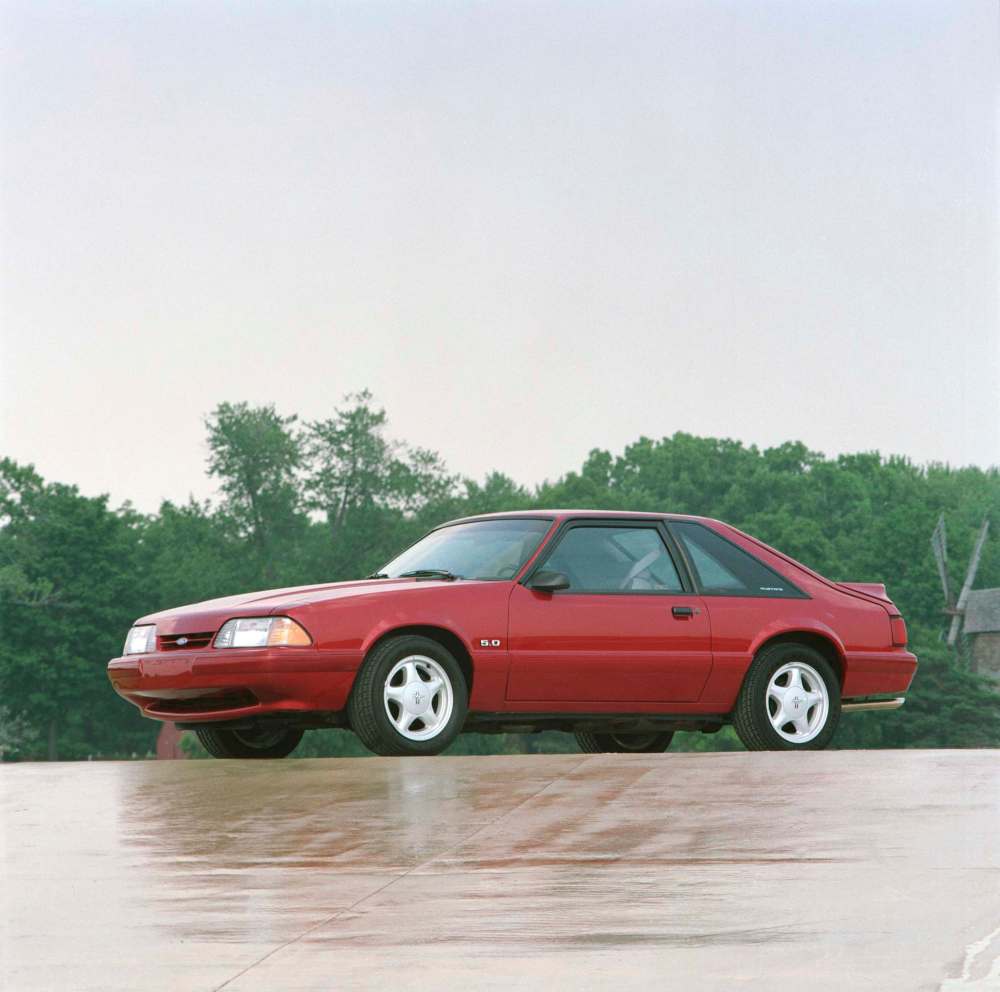
Third generation: 1979-94
For 1979, Ford updated the Mustang’s platform and styling, but the idea of a small coupe was maintained. A four-cylinder engine was found in the base model, but Ford later added a turbo four-cylinder engine and the 302-cu.-in. was again offered — now branded as a 5.0 liter.
The convertible returned for 1983. A smaller V-8 engine was briefly offered, but by 1986 the 5.0L V-8 engine equipped with fuel-injection was the hot ticket. Thanks to good looks and decent performance these Fox Body Mustangs caught the attention of a new generation of car enthusiasts.
These cars were easy to maintain and modify, and became a favourite at drag strips throughout North America. Fox Body Mustangs are still popular today, both at cars shows and at the drag races.
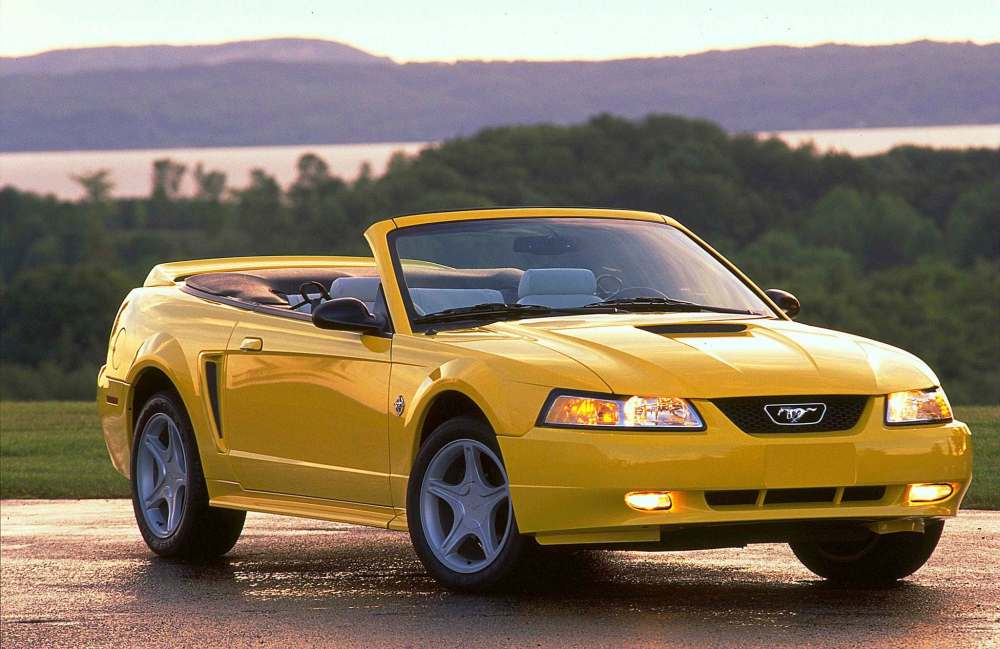
Fourth generation: 1995-2004
For 1994, the Mustang’s fourth-generation, Ford went with a curvy design that was a big departure from the previous generation’s square body.
The new Mustang was relatively well-received and sold better than the outgoing model, but never caught on with enthusiasts like the previous Fox Body Mustang.
Ford initially offered a base 3.8-litre V-6 engine and the optional 5.0-litre V-8 continued to roar. A new 4.6-Litre V-8 engine replaced the 5.0 in 1996.
In 2003 a special Mach I Mustang variant featured a supercharged 4.6 double-overhead cam engine that produced 390 horsepower and offered a glimpse into Mustang’s fast future.
Fifth generation: 2005-14
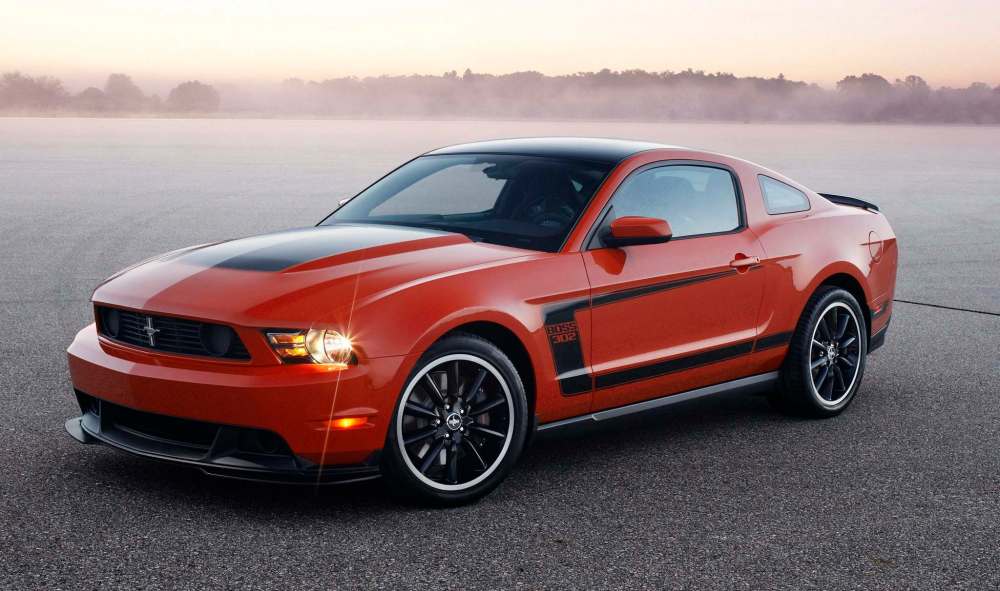
Ford hinted at big changes for the 2005 fifth generation Mustang, resulting in huge interest in the car. When the new Mustang was finally introduced in Nashville, Tenn. during the celebration of the Mustang’s 40th anniversary, it didn’t disappoint.
Retro styling clearly influenced by the original Mustang and a host of modern suspension, braking and performance enhancements brought Mustang back into the spotlight with a bang. Although the competion may claim they already had their eyes on a resurgence, the popularity of the fifth generation Mustang likely lead to the return of the Chevrolet Camaro and the Dodge Challenger.
The fifth-generation Mustang saw numerous performance variants and more than a few of these models are destined to become highly collectbile.
A prime example is the 2007 Shelby GT500 — built completely in-house at Ford’s Flatrock, Mich. plant, these beauties feature engine, suspension and styling cues added by Ford’s Special Vehicle Team (SVT).
Powered by a supercharged version of the 5.4-liter Modular motor — these cars rooled off the line with 500 horsepower under the hood.
Sixth generation: 2015-present
For its sixth generation, Ford droped the retro style and went after a more sleek look. The round headlights were replaced in favour of casings molded into the fenders.
The entire car was drastically modernized from the chassis up, with improvements including a new independent rear suspension that dramatically improved handling over the previous model.
Although it will likely be a few years again before the seventh generation Mustang arrives, Ford continues to tweak the Mustang annually and this latest refresh may just be what Mustang fans have been waiting for.
willy@freepress.mb.ca