

Neurotoxin linked to dementia found in Lake Winnipeg’s algae blooms
Advertisement
Read this article for free:
or
Already have an account? Log in here »
To continue reading, please subscribe:

Digital Subscription
One year of digital access for only $205*
- Enjoy unlimited reading on winnipegfreepress.com
- Read the E-Edition, our digital replica newspaper
- Access News Break, our award-winning app
- Play interactive puzzles
*First annual payment billed as $205.00 + GST for one year. This annual subscription will automatically renew at $233.00 + GST every 52 weeks (10% off the regular annual price of $259.35). Offer available to new and qualified returning subscribers only. Cancel any time.
To continue reading, please subscribe:
Add Free Press access to your Brandon Sun subscription for only an additional
$1 for the first 4 weeks*
- Enjoy unlimited reading on winnipegfreepress.com
- Read the E-Edition, our digital replica newspaper
- Access News Break, our award-winning app
- Play interactive puzzles
*Your next Brandon Sun subscription payment will increase by $1.00 and you will be charged $17.95 plus GST for four weeks. After four weeks, your payment will increase to $24.95 plus GST every four weeks.
Read unlimited articles for free today:
or
Already have an account? Log in here »
Hey there, time traveller!
This article was published 29/11/2017 (3235 days ago), so information in it may no longer be current.
A toxin known to contribute to dementia in people after long-term dietary exposure is being produced by algae in Lake Winnipeg, a University of British Columbia study says.
The study found neurotoxin BMAA (beta-Methylamino-L-alanine), which is believed to contribute to neurodegenerative disorders, in Lake Winnipeg’s blue-green algae blooms.
That’s not a surprise, said Susan Murch, study leader and a professor of chemistry at the UBC’s Okanagan campus.
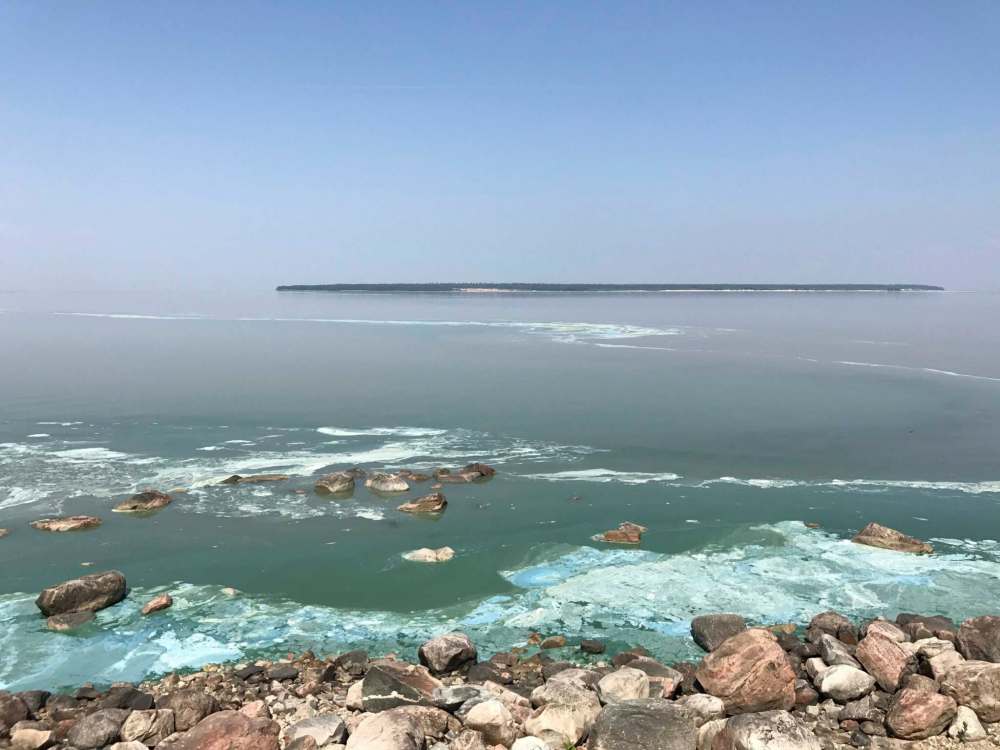
The neurotoxin BMAA has been showing up in algae blooms for 50 years in bodies of water such as the Caspian Sea north of Iran, off the Florida coast and waterways from China to Massachusetts. It’s becoming part of the accepted literature of lakes with algae, Murch said.
The next step is to study how much of the neurotoxin is getting into aquatic life, particularly commercial fish, to determine whether BMAA bioaccumulation represents an increased risk factor for neurodegenerative disease in the region, Murch said.
In the Baltic Sea, the neurotoxin has been found in mussels, clams and small fish. On the coast of Florida, it has been found in shrimp and crab.
Research on BMAA is too new to say whether there is a safe or unsafe level of consumption of the toxin.
“I would be careful not to extrapolate too far. We’re not talking about shutting down the commercial fishery, Murch said.
“It’s a developing story. There are many groups around the world working on it in different ways.”
Scientists have discovered a strong link between BMAA and ALS (Lou Gehrig’s Disease) and Alzheimer’s, she noted.
Studies with mice, rats, and monkeys in 2015 and 2016 showed low dosages of BMAA over a long period develops plaque in brains similar to the plaque in Alzheimer’s patients, Murch said.
Another study in 2013 showed BMAA kills brain neurons.
The neurotoxin has likely been in Lake Winnipeg algae for many decades but there could be more now as algae blooms are getting larger and lasting longer due to climate change, Murch said.
Studies point to overflow sewage from cities, agricultural run-off, septic fields and destruction of wetlands as contributing nutrients that feed algae blooms.
Weather is also a factor. Cold, blustery years can prevent formation of blooms. Algae prefers hot and calm conditions.

BMAA was found in the highest concentration in the centre of the north basin, the deepest and lowest-nitrogen zone of the lake.
The Lake Winnipeg Research Consortium conducted sampling for the study.
“Everyone should be concerned about water quality regardless of where they live or where their water comes from,” said Dr. Karen Scott, science program co-ordinator with the consortium.
However, Scott cautioned that Murch’s study looked at BMAA in algae, not in whole water samples.
Scott added that more algae does not necessarily equate to more BMAA being produced. She maintained more study is needed into the spread of BMAA into other food webs.