Stepping up
Filmmaker finds hope in the haunted but humane souls of outreach workers at Toronto community clinic

Advertisement
Read this article for free:
or
Already have an account? Log in here »
To continue reading, please subscribe:
Digital Subscription
One year of digital access for only $1.44 a week*
- Enjoy unlimited reading on winnipegfreepress.com
- Read the E-Edition, our digital replica newspaper
- Access News Break, our award-winning app
- Play interactive puzzles
*Billed as $5.77 plus GST every four weeks. After 52 weeks, price increases to the regular rate of $19.95 plus GST every four weeks. Offer available to new and qualified returning subscribers only. Cancel any time.
To continue reading, please subscribe:
Add Free Press access to your Brandon Sun subscription for only an additional
$1 for the first 4 weeks*
- Enjoy unlimited reading on winnipegfreepress.com
- Read the E-Edition, our digital replica newspaper
- Access News Break, our award-winning app
- Play interactive puzzles
*Your next Brandon Sun subscription payment will increase by $1.00 and you will be charged $17.95 plus GST for four weeks. After four weeks, your payment will increase to $24.95 plus GST every four weeks.
Read unlimited articles for free today:
or
Already have an account? Log in here »
Hey there, time traveller!
This article was published 30/11/2017 (3139 days ago), so information in it may no longer be current.
‘Patience is a virtue,” someone says in this timely, intelligent and important Canadian documentary. It’s a throwaway remark — a cliché, really — directed at someone who’s trying to hustle him out of a room.
The film itself, however, is a carefully crafted confirmation of the real truth of that statement. Shot over a five-year period in Toronto’s Regent Park neighbourhood, closely looking at the interconnected issues of addiction and homelessness, The Stairs is an observational documentary that demonstrates the virtue of patience.
Assured first-time filmmaker Hugh Gibson has spent time with his subjects, and it shows. This is not misery tourism. It’s not a sensationalized exposé of hot-button social topics. It’s a deep, often difficult journey that reveals the very human face of addiction and recovery.
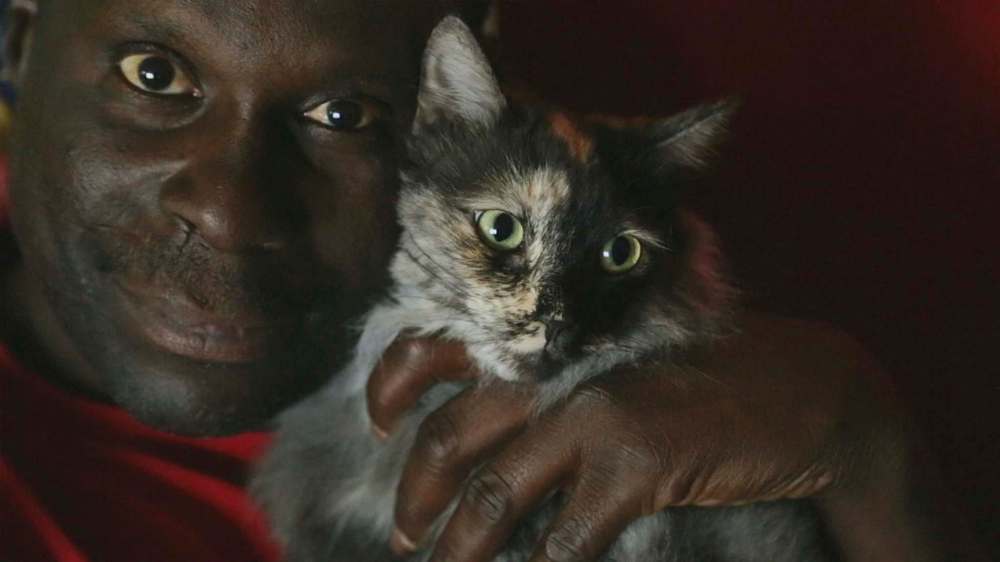
The film centres on three peer outreach workers at a community health centre — Marty, Greg and Roxanne. They, themselves, are dealing with some of the same issues — addiction, trauma, violence, unstable housing — as the people they help.
Gibson can occasionally be heard off-camera, but mostly he structures the documentary to give his subjects the time and space they need to tell their own stories.
And what stories they are.
Gregarious Marty describes being shot in the leg during a drug deal and heading to his girlfriend’s apartment to get high before calling a cab to go to the emergency ward.
The wary Greg speaks about a painful family history and an estranged son. “I am not well-received,” he comments dryly.
Roxanne, a former sex worker who suffers from severe PTSD, relates a euphemistically described “bad date.”
Gibson mostly lets these very specific stories stand on their own.
Just because he avoids a predetermined narrative doesn’t mean the film is formless, however. Fluidly combining scenes of everyday life with long sequences of talk, The Stairs gradually nudges viewers toward a connected constellation of subjects, including policing and the justice system, mental health issues, community resources and family support (or lack thereof).
A recurring theme is the connection between addiction and homelessness. What might seem at first like background shots of the city are actually real-time documentations of social housing being torn down as gentrified condos go up.

The stairs of the title refer to the sometimes filthy stairwells of high-rise tenements. Marty describes them as his onetime home — his bedroom, his living room, his bathroom — before he got into his own small subsidized space. They are also the metaphorical steps — way more than 12 — that he is climbing, trying to get out of the cycle of addiction and relapse.
“There’s none of them happy endings,” he says at one low point. “You’re a recovering addict for the rest of your life, so where’s the happy ending?”
Maybe that sounds grim. But while The Stairs is an unflinching look at ongoing problems with no easy solutions, it never falls into outright despair.
Marty with his restless energy, Greg with his bursts of rueful self-awareness and Roxanne with her untouchable strength are far more than their addictions. Compassionate and intimate, the film finds its hope in the complicated humanity of its subjects.
alison.gillmor@freepress.mb.ca
Studying at the University of Winnipeg and later Toronto’s York University, Alison Gillmor planned to become an art historian. She ended up catching the journalism bug when she started as visual arts reviewer at the Winnipeg Free Press in 1992.
Our newsroom depends on a growing audience of readers to power our journalism. If you are not a paid reader, please consider becoming a subscriber.
Our newsroom depends on its audience of readers to power our journalism. Thank you for your support.
The Stairs
Directed by Hugh Gibson
Cinematheque
14A
95 min.
★★★★ stars out of five
Studying at the University of Winnipeg and later Toronto’s York University, Alison Gillmor planned to become an art historian. She ended up catching the journalism bug when she started as visual arts reviewer at the Winnipeg Free Press in 1992.
Our newsroom depends on a growing audience of readers to power our journalism. If you are not a paid reader, please consider becoming a subscriber.
Our newsroom depends on its audience of readers to power our journalism. Thank you for your support.
Advertisement Advertise With Us
Advertisement Advertise With Us