

Free speech on campus not endangered
Advertisement
Read this article for free:
or
Already have an account? Log in here »
To continue reading, please subscribe:
Monthly Digital Subscription
$1 per week for 24 weeks*
- Enjoy unlimited reading on winnipegfreepress.com
- Read the E-Edition, our digital replica newspaper
- Access News Break, our award-winning app
- Play interactive puzzles
*Billed as $4.00 plus GST every four weeks. After 24 weeks, price increases to the regular rate of $19.95 plus GST every four weeks. Offer available to new and qualified returning subscribers only. Cancel any time.
Monthly Digital Subscription
$4.99/week*
- Enjoy unlimited reading on winnipegfreepress.com
- Read the E-Edition, our digital replica newspaper
- Access News Break, our award-winning app
- Play interactive puzzles
*Billed as $19.95 plus GST every four weeks. Cancel any time.
To continue reading, please subscribe:
Add Free Press access to your Brandon Sun subscription for only an additional
$1 for the first 4 weeks*
*Your next subscription payment will increase by $1.00 and you will be charged $16.99 plus GST for four weeks. After four weeks, your payment will increase to $23.99 plus GST every four weeks.
Read unlimited articles for free today:
or
Already have an account? Log in here »
Hey there, time traveller!
This article was published 01/12/2017 (3050 days ago), so information in it may no longer be current.
Free speech and academic freedom on Canadian university campuses are often talked about as though they’re rare species: endangered, threatened, extinct.
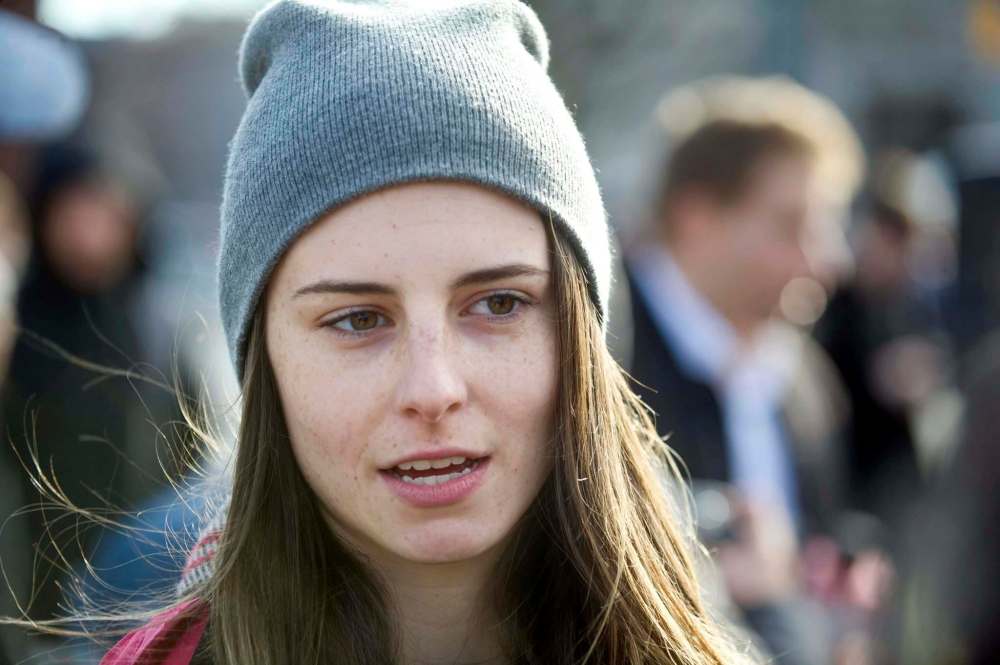
During the past week, the campus-freedom debate reached a rolling boil after Lindsay Shepherd, a 22-year-old teaching assistant at Wilfrid Laurier University, got in trouble for showing a clip from TVO’s The Agenda in her class. The segment featured a panel discussion in which controversial University of Toronto Prof. Jordan Peterson opposed the use of gender-neutral pronouns.
Ms. Shepherd was reprimanded by the university — which later apologized after her furtive recording of the meeting went public — and she’s since become a cause célèbre.
Earlier this year, Mr. Peterson took to YouTube to argue that Bill C-16 would violate his freedom of speech by “forcing” him to address transgender people by the “made up” pronouns they have chosen.
Bill C-16, passed in June, amended the Canadian Human Rights Act and Criminal Code of Canada to include gender identity and gender expression as prohibited grounds for discrimination and violence. The Agenda let Mr. Peterson explain his objections as part of a panel that also included arguments in favour of using gender-neutral pronouns.
The Laurier issue has been divisive. On one side are people who believe that Ms. Shepherd was censored and treated unfairly, and that this issue signals the death knell for free speech on campus. On the other side are activists and students, many of them LGBTTQ*, who believe Mr. Peterson’s views are transphobic and don’t belong in a classroom.
During the past few days, high-profile members of Canada’s media have devoted plenty of ink and pixels to heralding Shepherd’s bravery for standing up to an institution and decrying her unfair treatment by both the university and the public.

But imagine what it might be like for a trans person navigating a gender-pronoun debate, and having people — the most vocal often being those with no skin in the game — treat pronouns like an intellectual exercise. Imagine seeing a YouTube-famous university professor go on TV to debate your humanity.
This is the part where pundits huff about “political correctness run amok.” It is worth considering that hard-won gains for trans rights have been achieved partly because when such notions were considered controversial and in need of freely spoken defence, it was in idea-embracing arenas such as college campuses that their cause was championed. There’s a small irony in the suggestion that a group whose cause was advanced by free speech now stands accused of opposing it.
At what point does someone’s free speech contribute to someone else’s oppression? When gender-neutral pronouns are dismissed as “faddish,” as one national newspaper columnist called them, or when people are fighting harder for the sanctity of traditional grammar than for human rights, it raises the question: what, exactly, are we debating — and why?
When trans people ask to be called by a preferred pronoun, they are asking for basic human dignity. Dehumanization is often the first step toward violence; after all, it’s easier to abuse a thing than it is to abuse a person. Refusing to call someone by their preferred pronouns — and arguing about why gender-neutral pronouns are “made up” — not only dehumanizes trans people, it silences them.
Ms. Shepherd, meanwhile, amassed 19,000 Twitter followers in a matter of days. On Saturday, she spoke at a free speech rally at Laurier. She stood on a platform and used a microphone.