

Manitoba pushes for whole pot pie
Advertisement
Read this article for free:
or
Already have an account? Log in here »
To continue reading, please subscribe:

Digital Subscription
One year of digital access for only $205*
- Enjoy unlimited reading on winnipegfreepress.com
- Read the E-Edition, our digital replica newspaper
- Access News Break, our award-winning app
- Play interactive puzzles
*First annual payment billed as $205.00 + GST for one year. This annual subscription will automatically renew at $233.00 + GST every 52 weeks (10% off the regular annual price of $259.35). Offer available to new and qualified returning subscribers only. Cancel any time.
To continue reading, please subscribe:
Add Free Press access to your Brandon Sun subscription for only an additional
$1 for the first 4 weeks*
- Enjoy unlimited reading on winnipegfreepress.com
- Read the E-Edition, our digital replica newspaper
- Access News Break, our award-winning app
- Play interactive puzzles
*Your next Brandon Sun subscription payment will increase by $1.00 and you will be charged $17.95 plus GST for four weeks. After four weeks, your payment will increase to $24.95 plus GST every four weeks.
Read unlimited articles for free today:
or
Already have an account? Log in here »
Hey there, time traveller!
This article was published 11/12/2017 (3228 days ago), so information in it may no longer be current.
OTTAWA — Manitoba will push the federal government to transfer all of the sin taxes collected from recreational marijuana into provincial coffers, the Free Press has learned.
“This is a federal policy, with a federal timeline, with provincial obligations and responsibilities,” provincial Finance Minister Cameron Friesen said.
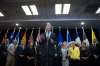
On Sunday evening, federal Finance Minister Bill Morneau hosted his colleagues from the provinces and territories for a working dinner before a lengthy meeting today examining everything from pension reform to equalization payments.
It’s the looming July 2018 deadline for legalizing recreational marijuana — and an anticipated $1 billion in nationwide tax revenue — that is gaining the most attention.
In November, Ottawa proposed an excise tax (more commonly known as a sin tax) of 50 cents per gram for the federal government, plus up to 50 cents for provinces. That would be in addition to the 13 per cent charged for GST and PST. For example, an $8 gram of cannabis would cost between $9.54 and $10.04 in Manitoba after all taxes are factored in.
A month prior, at a closed-door meeting with premiers, Prime Minister Justin Trudeau had hinted at splitting the excise tax between Ottawa and the provinces.
That idea blindsided Manitoba Premier Brian Pallister. “I don’t think anyone thought they were serious about it,” he said hours after the Oct. 3 meeting.
On Sunday, Morneau said the federal Liberals had some flexibility on how excise tax revenues would be split.
Speaking on behalf of the provinces, Ontario Finance Minister Charles Sousa called the proposed equal split “a non-starter,” but said most provinces had not presented a specific offer.
Friesen said Manitoba wants 100 per cent of tax revenues going to provincial coffers to account for roadside testing and public-awareness campaigns.
“We hope there’s a strong desire on all of our partners to stand together (and) speak with one voice,” he said.
“We have to stand together as provinces.”
Morneau is pushing for a two-year agreement that could be revisited after more data are collected, Friesen said. “There will be costs, and no guarantees that revenues will cover them.”
For ministers such as B.C.’s Carole James, it’s unclear why Ottawa should keep any revenue from marijuana sales.
“Before we even get to talking about sharing, we want to hear about what responsibilities the federal government’s taking on to justify taking any of the percentage,” James said.
“Certainly, from our perspective the formula put out by the federal government is a no-go. That’s very clear.”
Sousa wants Morneau to explain how the Trudeau government plans to earn its share.
“I want to know what the feds are going to put in — what they’re going to pay for,” Sousa said in an interview.
“I want us to have unity around Canada on this issue and I definitely want to see more because we’re bearing more of the costs.”
The added expenses likely to land with the provinces are expected to include public-awareness campaigns, beefed-up policing, busier court systems and increased road safety efforts.
Friesen said Colorado is still tabulating whether that state’s January 2014 legalization has helped the economy. Data suggest a boost in both tourism and motor-vehicle accidents, and researchers say they’re not sure how much either are linked to marijuana.
Friesen said Manitoba is reluctantly preparing for the July legalization for cannabis. “We believe the whole process is rushed; there is no backing down from the timeline.”
Sousa said most provinces are committed to the Canada Day deadline. “We have a tremendous amount of illicit activity already occurring,” he said, adding that cannabis-industry players “are pushing the envelope, anticipating legalization.”
Morneau hinted that cities might get some cash from the sin tax. He said he’d spoken with big-city mayors about marijuana taxes, including on Saturday with Winnipeg Mayor Brian Bowman, who has fretted over an uptick in costs for police and paramedics.
Liberal MP Bill Blair, who is helping steer the government’s Cannabis Act, said that “all three levels of government have significant responsibilities” and thus would need tax revenue, but he also said the feds need cash for regulation and research.
Friesen seemed lukewarm towards Ottawa reaching out to municipalities. “Clearly, those conversations are best had at the provincial level.”
He also admitted that Manitoba hasn’t figured out whether it supports applying a sin tax to medicinal marijuana. Ottawa said on Nov. 10 that GST, PST and the sin tax should be the same for medicinal marijuana, to avoid trafficking as well as people giving false medical information to score a cheaper deal.
“Every jurisdiction is trying to wrap its mind around the costs,” said Friesen, adding the province has received a large amount of correspondence of letters about the issue. Medicinal marijuana users currently pay both PST and GST on their purchases.
Also on the table Sunday and Monday will be the three-year review of the Canada Pension Plan and the federal government’s proposed tweaks to the formula behind equalization payments.
Equalization is designed to help poorer provincial governments provide public services that are reasonably comparable to those in other provinces.
On Sunday, Ottawa released the 2018-19 equalization payments for the federation’s so-called “have-not” provinces. The same six will receive cash through the $18.9-billion federal program: Quebec, Manitoba, Nova Scotia, New Brunswick, Prince Edward Island and Ontario.
At $11.7 billion, Quebec will once again receive by far the biggest payment from Ottawa. It will be an increase of nearly $700 million compared to this year.
Ontario, which has seen its economy improve in recent years, will receive $960 million next year — down nearly $500 million from this year.
The “have” provinces, which won’t receive any funds through the program, will once again be B.C., Alberta, Saskatchewan and Newfoundland and Labrador.
The formula is also based on a three-year moving average of economic growth, so a province’s have- or have-not status can lag economy-altering events.
— with files from The Canadian Press
dylan.robertson@freepress.mb.ca
Related Articles
Pot-revenue split strictly guesswork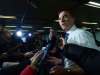
Advertisement Advertise With Us
Advertisement Advertise With Us
History
Updated on Monday, December 11, 2017 6:28 AM CST: Adds photo