

MacDon steps into spotlight after $1.2-billion sale
Advertisement
Read this article for free:
or
Already have an account? Log in here »
To continue reading, please subscribe:
Monthly Digital Subscription
$1 per week for 24 weeks*
- Enjoy unlimited reading on winnipegfreepress.com
- Read the E-Edition, our digital replica newspaper
- Access News Break, our award-winning app
- Play interactive puzzles
*Billed as $4.00 plus GST every four weeks. After 24 weeks, price increases to the regular rate of $19.95 plus GST every four weeks. Offer available to new and qualified returning subscribers only. Cancel any time.
Monthly Digital Subscription
$4.99/week*
- Enjoy unlimited reading on winnipegfreepress.com
- Read the E-Edition, our digital replica newspaper
- Access News Break, our award-winning app
- Play interactive puzzles
*Billed as $19.95 plus GST every four weeks. Cancel any time.
To continue reading, please subscribe:
Add Free Press access to your Brandon Sun subscription for only an additional
$1 for the first 4 weeks*
- Enjoy unlimited reading on winnipegfreepress.com
- Read the E-Edition, our digital replica newspaper
- Access News Break, our award-winning app
- Play interactive puzzles
*Your next Brandon Sun subscription payment will increase by $1.00 and you will be charged $17.95 plus GST for four weeks. After four weeks, your payment will increase to $24.95 plus GST every four weeks.
Read unlimited articles for free today:
or
Already have an account? Log in here »
Hey there, time traveller!
This article was published 16/12/2017 (3071 days ago), so information in it may no longer be current.
Typically when a locally owned manufacturing company that ranks among the largest employers in the city is sold, there is lots of hand-wringing over concern about the flight of jobs and capital and corporate control.
But when it was announced that MacDon Group of Companies was sold to Guelph, Ont.-based Linamar Corp. for $1.2 billion, that was not the reaction at all.
One reason might be because both parties have already made it clear that the 1,400-person ag equipment manufacturer will continue to operate in Winnipeg exactly as it has.
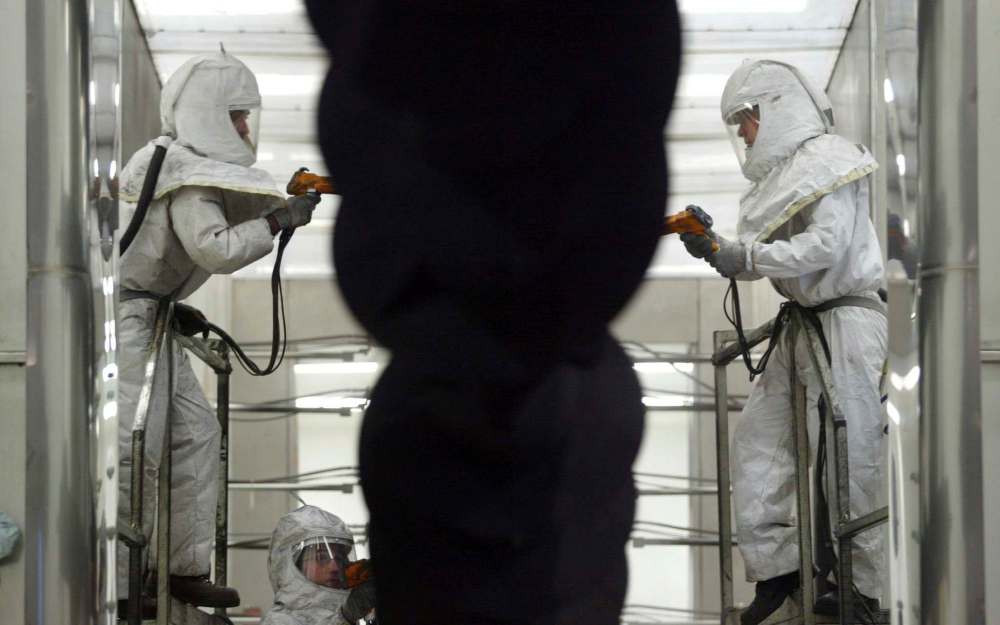
Several senior industry officials point out the obvious issues about privately owned companies of that size having trouble accessing the kind of capital they need for growth and that becoming part of Linamar Corp. and its $6-billion-per-year operation will likely lessen that challenge for MacDon.
But another reason there was no hue and cry about the loss of another head office is that few outside the ag equipment business really knew much about who or what MacDon was.
For a province that has long been famous for having lots of “quiet money” emanating from a plethora of large family-owned private businesses, MacDon and the MacDonald family that owns it until the deal closes, are the poster child for that particular Winnipeg trait.
None of the MacDonald family or the current professional management team that has been running the company for the last half-dozen years have ever been part of the Business Council of Manitoba, whose membership is reserved for those who own and run only the largest companies in the city. (And at 1,400 employees and $600 million in annual revenue, MacDon was one of the five largest manufacturing companies in Winnipeg, along with New Flyer, Boeing, Kitchen Craft and Winpak.)
After spurning entreaties for many years, it was only a few years ago that MacDon finally joined Canadian Manufacturers and Exporters, an organization whose membership is almost a necessity for companies looking to ensure they are keeping pace with best practices.
One corporate finance veteran who’s had experience with MacDon said, “It’s like trying to get information from the Kremlin dealing with them.”
But clearly that ultra-private corporate culture has not hampered MacDon’s success (although one industry source said the family turned down what would have been a far more lucrative offer to sell the company a few years ago).
John Schmeiser, CEO of the Western Equipment Dealers Association, has nothing but good things to say about the harvesting equipment manufacturer.
“They are such good people and they have been so great to work with over the years,” he said. “Our dealers really love being MacDon dealers. Their desire to stay out of the public limelight is just their style. For whatever reason, they feel that worked for them.”
In a note to the Free Press, Stephen Ward, MacDon’s chief financial officer, said, “As you know, this is very uncharacteristic of us to be saying anything to you, but our world is changing in a big way from very private to very public.”
Ward went on to say that the plan is that very little will change for MacDon as it becomes the 60th facility — and the first in Western Canada — in Linamar’s sprawling global vehicle and parts manufacturing business.
“Linamar will operate MacDon as a ‘stand-alone’ company, similar to others that they have acquired,” Ward said. “Winnipeg will remain the head office for the MacDon Group of Companies; we will manufacture the same products that we currently sell worldwide… the product will continue to be branded ‘MacDon’ with the exception of the current products we build for Deere, Claas, AGCO and Krone, which will carry their brand names, just as they do today.”
In an interview with the Free Press, Linda Hasenfratz, Linamar’s CEO, said, “MacDon has a great team. They do an awesome job. Nobody is looking to disrupt that.”
In fact, most involved agree that Linamar’s deep presence in and exposure to the European and Asian markets will likely help generate even more business in those regions for MacDon.

There is also a general consensus that Linamar has bought its way into the sector as the cycle is on the upswing. Schmeiser said 2017 was a rebound year for agricultural equipment sales.
“I think they (Linamar) are seeing the same thing dealers and manufacturers see, that the two-year correction in the marketplace seems to be behind us right now,” he said. “There is an incredible amount of optimism for 2018.”
Let’s hope this doesn’t encourage other companies to clam up, but that optimism was shared by investors.
The MacDon deal caused Linamar’s stock to jump nearly 12 per cent on Friday.
martin.cash@freepress.mb.ca
History
Updated on Saturday, December 16, 2017 9:07 AM CST: Photo added.