Greek economic collapse a tragedy
Advertisement
Read this article for free:
or
Already have an account? Log in here »
To continue reading, please subscribe:

Digital Subscription
One year of digital access for only $205*
- Enjoy unlimited reading on winnipegfreepress.com
- Read the E-Edition, our digital replica newspaper
- Access News Break, our award-winning app
- Play interactive puzzles
*First annual payment billed as $205.00 + GST for one year. This annual subscription will automatically renew at $233.00 + GST every 52 weeks (10% off the regular annual price of $259.35). Offer available to new and qualified returning subscribers only. Cancel any time.
To continue reading, please subscribe:
Add Free Press access to your Brandon Sun subscription for only an additional
$1 for the first 4 weeks*
- Enjoy unlimited reading on winnipegfreepress.com
- Read the E-Edition, our digital replica newspaper
- Access News Break, our award-winning app
- Play interactive puzzles
*Your next Brandon Sun subscription payment will increase by $1.00 and you will be charged $17.95 plus GST for four weeks. After four weeks, your payment will increase to $24.95 plus GST every four weeks.
Read unlimited articles for free today:
or
Already have an account? Log in here »
Hey there, time traveller!
This article was published 16/12/2017 (3196 days ago), so information in it may no longer be current.
Although Yanis Varoufakis’s book was inspired by the financial crisis of 2015 in Greece, Adults in the Room has timely and urgent things to say to citizens anywhere in the world.
The book has been diversely described by critics as the greatest political memoir ever, as a cracking good detective story and as a hiss-and-tell approach to history. It’s a can’t-put-it-down tale of money, treachery and the abuse of power behind closed doors. Anybody interested in the future of money and the survival of democracy (the two are intimately connected) will want to read it.
Nevertheless, reaching Canadian readers may be the greatest challenge the book will face.
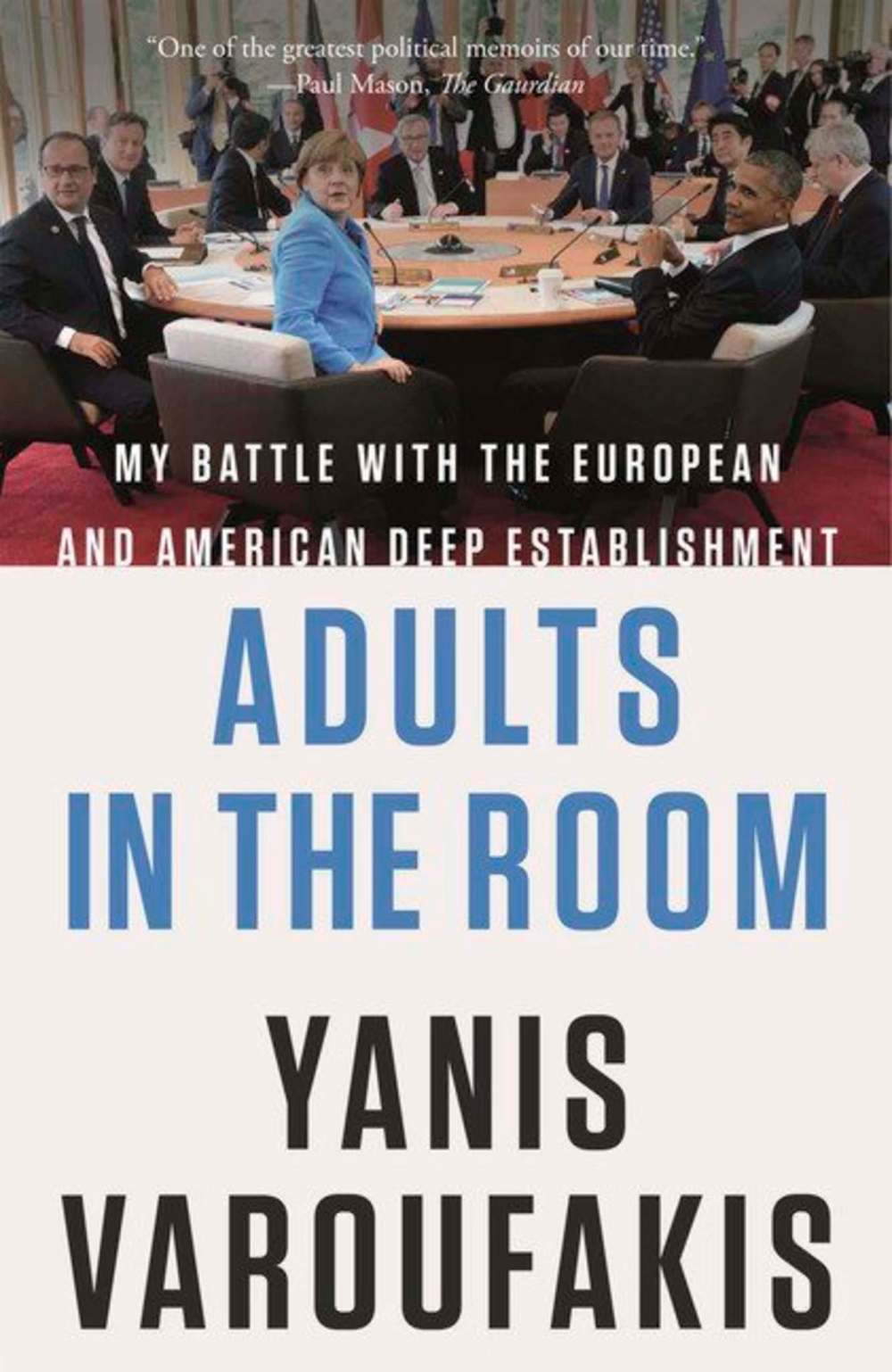
Unlike the Greeks (and, for that matter, unlike the Americans, French, Russians, Chinese, Cubans, Hungarians and so on), Canadians have not shown any serious revolutionary tendencies. As former Daily Show host Jon Stewart once quipped, when something truly unthinkable in our country reveals itself to Canadians, “There may be murmuring in the streets.” Explanatory theories abound: too much comfort, too much tolerance, too little political and financial literacy.
In Adults in the Room, Varoufakis, the former Greek minister of finance until his resignation in July 2015, painstakingly and colourfully documents his time spent with the most powerful people in the world, whom he calls “the deep establishment,” with a view to alert ordinary people as to what happens to the money they spend, save, invest or pay in taxes. It’s an ugly picture.
The financial collapse of Greece in 2015 was indeed a tragedy — one which Varoufakis, then the finance minister for the left-wing Syriza party, fought to have treated as a humanitarian disaster. It qualified: austerity imposed on Greece left hospitals without medicine, teachers without wages and pensioners without pensions.
Syriza appeared to support the humane renegotiation of the Greek debt and had campaigned on it, but ultimately broke its promise to the Greek people and surrendered to unlivable terms created by a group of lenders known to financiers as the troika: the International Monetary Fund (IMF), the EU and the European Central Bank. Media coverage of a critical six months of debate and demonstrations in 2015 left Greece globally vilified as a country of lazy, reckless spenders, tax cheats and endemic corruption.
Varoufakis tells a very different story. Adults in the Room is a contemporary version of the enduring Hans Christian Andersen tale The Emperor’s New Clothes. Today’s emperor, he writes, is a global network of profiteers which has no clothes, no heart and no ideas. Varoufakis has plenty of anecdotes to support this. In a private conversation, IMF head Christine Lagarde admitted she knew the devastating austerity applied to the Greek debt could not possibly work. Publicly, she continued to defend it because to do otherwise was political suicide. Similar anecdotes with financial leaders are backed up by cellphone recordings.
Varoufakis’s intimate descriptions of the realities of power are searing. In his experience, elected politicians have none; real power belongs to a network of billionaire owners whose need to remain in charge trumps everything. All public eloquence and rhetoric aside, the collateral pain of millions of ordinary people is merely invisible “at the top.” There are no adults there. Social justice is not on the agenda. Capitalism, the author offers, is filthy rich and intellectually bankrupt at the same time, a posture which he believes is not sustainable for much longer.
In Varoufakis’s hands, the story of the assassination of modern-day Greek society is not one of heroes and villains; it’s a Shakespearian tragedy, one he fully expects will be repeated in other vulnerable European countries.
Now teaching economics at the University of Athens, the writer has chosen to expose the international power structure and to act as a spark for a renewed democracy. Self-exiled from politics, he is co-founder of DIEM25, the Democracy in Europe Movement 2025, a cross-border, all-party coalition of democrats to safeguard the progressive solidarity of the European Union from imminent collapse.
Lesley Hughes is a Winnipeg-based writer.