Beware the misleading food label
Empty claims and buzzwords are all the rage in marketing
Advertisement
Read this article for free:
or
Already have an account? Log in here »
To continue reading, please subscribe:

Digital Subscription
One year of digital access for only $205*
- Enjoy unlimited reading on winnipegfreepress.com
- Read the E-Edition, our digital replica newspaper
- Access News Break, our award-winning app
- Play interactive puzzles
*First annual payment billed as $205.00 + GST for one year. This annual subscription will automatically renew at $233.00 + GST every 52 weeks (10% off the regular annual price of $259.35). Offer available to new and qualified returning subscribers only. Cancel any time.
To continue reading, please subscribe:
Add Free Press access to your Brandon Sun subscription for only an additional
$1 for the first 4 weeks*
- Enjoy unlimited reading on winnipegfreepress.com
- Read the E-Edition, our digital replica newspaper
- Access News Break, our award-winning app
- Play interactive puzzles
*Your next Brandon Sun subscription payment will increase by $1.00 and you will be charged $17.95 plus GST for four weeks. After four weeks, your payment will increase to $24.95 plus GST every four weeks.
Read unlimited articles for free today:
or
Already have an account? Log in here »
Hey there, time traveller!
This article was published 05/01/2018 (3202 days ago), so information in it may no longer be current.
In the quest for health, many of us search for products that have an edge over their competition. If something is proclaimed to be “organic” or “natural,” we often think it’s healthier for us. Marketers hope these on-pack words will influence our buying decisions.
Marketing can be misleading. Product packages can bear overinflated claims about health benefits to make foods sound more nutritious than they are. For years, consumers falsely believed claims such as “natural” and “no sugar added” meant a product was better for their health, but this is beginning to change. Shoppers are becoming savvier and are seeing right through marketing gimmicks such as these:
Food labelled as ‘natural’
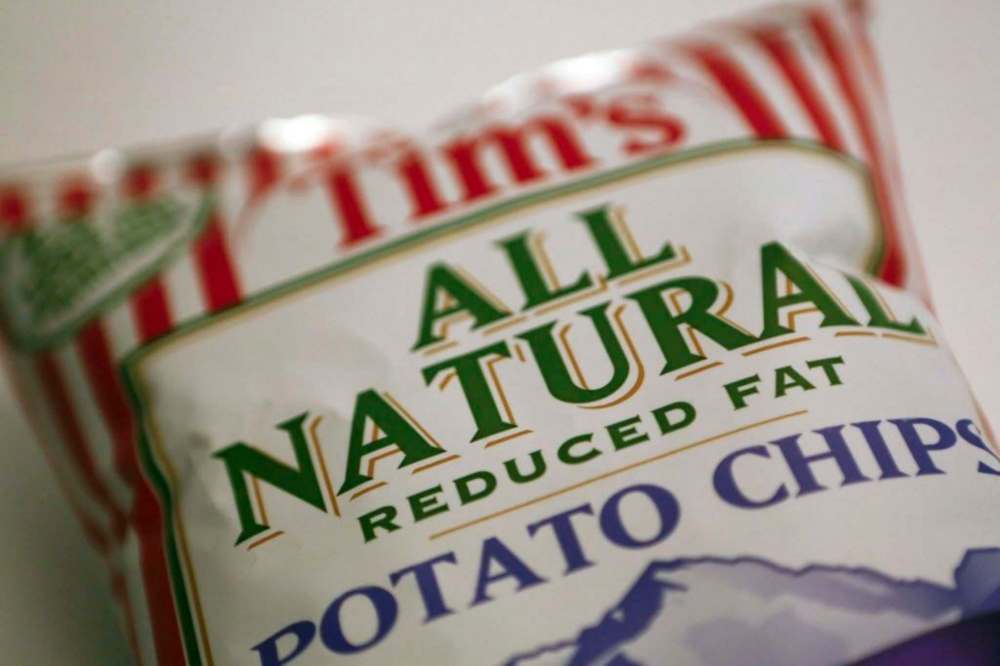
Market research company The Hartman Group says words such as “natural” and “clean” on food packages are increasingly being seen as “pretentious and neurotic” and will be used less often by food manufacturers. Consumers are realizing “natural” doesn’t mean very much. Products can be loaded with sugar or high-fructose corn syrup, but since those are made from sugar cane, beets or corn (all plants), they are still “natural.”
In the United States, citizen-led petitions have requested that the Food and Drug Administration (FDA) review the term “natural” and regulate its use. There is no formal FDA definition, but the agency is investigating whether and how it should define the term.
The Hartman Group says four out of five consumers have ambivalence or outright distrust of the “natural” claim. Real foods that are “natural” should be obvious — like apples or almonds. Consumers are increasingly becoming skeptical when processed foods have this label, because intuitively, it does not make sense.
Labelling what’s not there
“Wow,” my six-year-old said at the grocery store. “These chips have no cholesterol!” Sounds healthy, right? Hold on. Cholesterol is a waxy, fatlike substance that is found only in animal-based foods. So potatoes, oil and salt will never have cholesterol.
That’s not as bad as bottled water that is labelled as “non-GMO, gluten-free and kosher” (yes, this exists). Is this to distinguish it from all other bottled waters that are filled with wheat and pork? Please.
Companies advertise what’s “not” in their foods to exploit the knowledge gap that consumers have. It’s natural for a shopper to assume if a food “does not contain” something, that’s a good thing (even if they have no idea what it means). Marketers prey on consumer vulnerabilities, then charge a premium for products that never contained that “evil” ingredient in the first place.
According to Mintel’s 2018 Global Food & Drink Trends report, consumers are increasingly looking for “complete and total transparency from food and drink companies.” They want to know what’s in their food, not what’s missing. They’re curious about where food comes from, how it was grown and how it can afffect their health. They want food companies to deliver accurate information in an honest way.
“Health-washing” junk food
Kraft Dinner now comes in an organic version. Same with Doritos. “Organic” is a method of farming, not a health claim. Organic junk food is no healthier than products made from conventionally grown ingredients. So why bother creating these products? Perhaps they give permission to health-conscious consumers to give into junk-food cravings and feel less guilty about it.
Such words as “organic” and “GMO-free” appeared on almost 30 per cent of new product launches in the past year, compared with just 17 per cent of products a decade ago. Such labelling may be slowing down. According to the Hartman Group, “organic” is still seen as a symbol of quality, but its expansion into big brands making processed food has diluted the appeal and reduced trust in organic claims.
Fake “no sugar added” claims
This is a big one in the beverage world, where juice that contains as much sugar as soft drinks can claim “no sugar added.” It’s a nuanced term. What consumers should know is eight ounces of apple juice and eight ounces of cola have the same amount of sugar, about six teaspoons. It doesn’t matter if it’s natural or added sugar when it’s being guzzled in huge quantities.
A lawsuit against PepsiCo’s Naked Juice said the company misled consumers by featuring the “no sugar added” statement. Adjustments are being made. PepsiCo will proceed with label changes including reducing the text size on the “no sugar added” claim (which it still gets to make, for now) and including a statement saying the product is “not a low-calorie food.”
Where do all of the calories come from? Sugar.

Even the biggest consumer packaged goods companies are seeing consumer trust is waning. Pepsi is changing labels for more transparency. Nestlé and Campbell’s are severing ties with the powerful food industry trade group Grocery Manufacturers Association, which lobbies against consumer demands such as mandatory labelling of added sugar and GMO ingredients. Change is happening.
Company executives who listen to what consumers want will drive the shift toward honest labels.
As consumers, we need to keep pushing for honesty and transparency in marketing, because it seems to be working. Slowly.
Rosenbloom is a registered dietitian and president of Words to Eat By, a nutrition communications company specializing in writing, nutrition education and recipe development. She is the co-author of Nourish: Whole Food Recipes Featuring Seeds, Nuts and Beans.
— Washington Post