Put your heart into it
Cardiovascular health tops the list of reasons to start exercising (again)
Advertisement
Read this article for free:
or
Already have an account? Log in here »
To continue reading, please subscribe:

Digital Subscription
One year of digital access for only $205*
- Enjoy unlimited reading on winnipegfreepress.com
- Read the E-Edition, our digital replica newspaper
- Access News Break, our award-winning app
- Play interactive puzzles
*First annual payment billed as $205.00 + GST for one year. This annual subscription will automatically renew at $233.00 + GST every 52 weeks (10% off the regular annual price of $259.35). Offer available to new and qualified returning subscribers only. Cancel any time.
To continue reading, please subscribe:
Add Free Press access to your Brandon Sun subscription for only an additional
$1 for the first 4 weeks*
- Enjoy unlimited reading on winnipegfreepress.com
- Read the E-Edition, our digital replica newspaper
- Access News Break, our award-winning app
- Play interactive puzzles
*Your next Brandon Sun subscription payment will increase by $1.00 and you will be charged $17.95 plus GST for four weeks. After four weeks, your payment will increase to $24.95 plus GST every four weeks.
Read unlimited articles for free today:
or
Already have an account? Log in here »
Hey there, time traveller!
This article was published 15/01/2018 (3101 days ago), so information in it may no longer be current.
It felt like a cramp. That’s how Richard White describes a heart attack that began while he was working out in his basement in 2013.
“It wasn’t huge pain, but it was enough to get me to stop,” says the 55-year-old Winnipegger.
“I was pretty surprised it was a heart attack.”
Yet White had a 100 per cent blockage in one artery and 70 per cent in another major one.
Fortunately, the strength of his heart, from exercise, likely saved his life, his cardiologist told him.
“The fact that I was active was the reason I’m still here,” White adds.
So when he had the opportunity to join the Reh-Fit’s cardiovascular rehabilitation program afterward, he did not hesitate.
Eventually he bought a year-long membership at the fitness and wellness centre specializing in working with individuals with health issues (though many members are perfectly healthy).
For almost a year, White exercised almost daily, losing more than 30 pounds.
And then he stopped.
“I got kind of burned out… a week turns into two weeks and so on,” says the married father of two sons now in their 20s, adding he ended up not renewing his membership.
“I thought I could maintain it on my own, but over the course of the next year, I put the weight back on.”
Early in the new year, plenty of folks have a strong resolve to work out. It often lasts from a few weeks to even a year before dedication wanes, says Suzy Siemens, a fitness instructor and kinesiologist at Reh-Fit Centre.
“We often see people carry on for about a year — taking programs at first — and then they lose their motivation because they’re not part of a team anymore,” she says.
“The more you change it up and the more you get into programs and meet people, the easier it becomes to keep coming to the gym.”
While any exercise is generally a step in the right direction — such as walking the mall a few times a week during the winter — fitness facilities such as the Reh-Fit or the Wellness Institute at Seven Oaks General Hospital offer individuals who may have taken a long hiatus from regular exercise a safe, effective way to get back to a level of fitness they’ve not experienced in years, or even decades.
“The atmosphere is very supportive, so it’s not that you come here and you’re left on your own,” Siemens says about the Reh-Fit, which started out as a cardiac fitness centre.
“We have a whole system that integrates you into the facility.”
That includes access to personal trainers, physio- and athletic therapists, nurses and even doctors.
Regardless of where we go, however, what’s important is overcoming the initial inertia that often dissolves our best intentions, particularly on these cold winter mornings and evenings.
“It’s a hard transition to make if you’re not moving much,” she says. “Sometimes it takes a scare.”
That’s what got White back to the Reh-Fit after a few months off.
“I wasn’t so much scared myself from my heart attack, but I saw how it affected my family,” says White, who has had two siblings die from heart disease.
“I said to myself, ‘this is crazy. I’ve got to take care of myself better.’ “
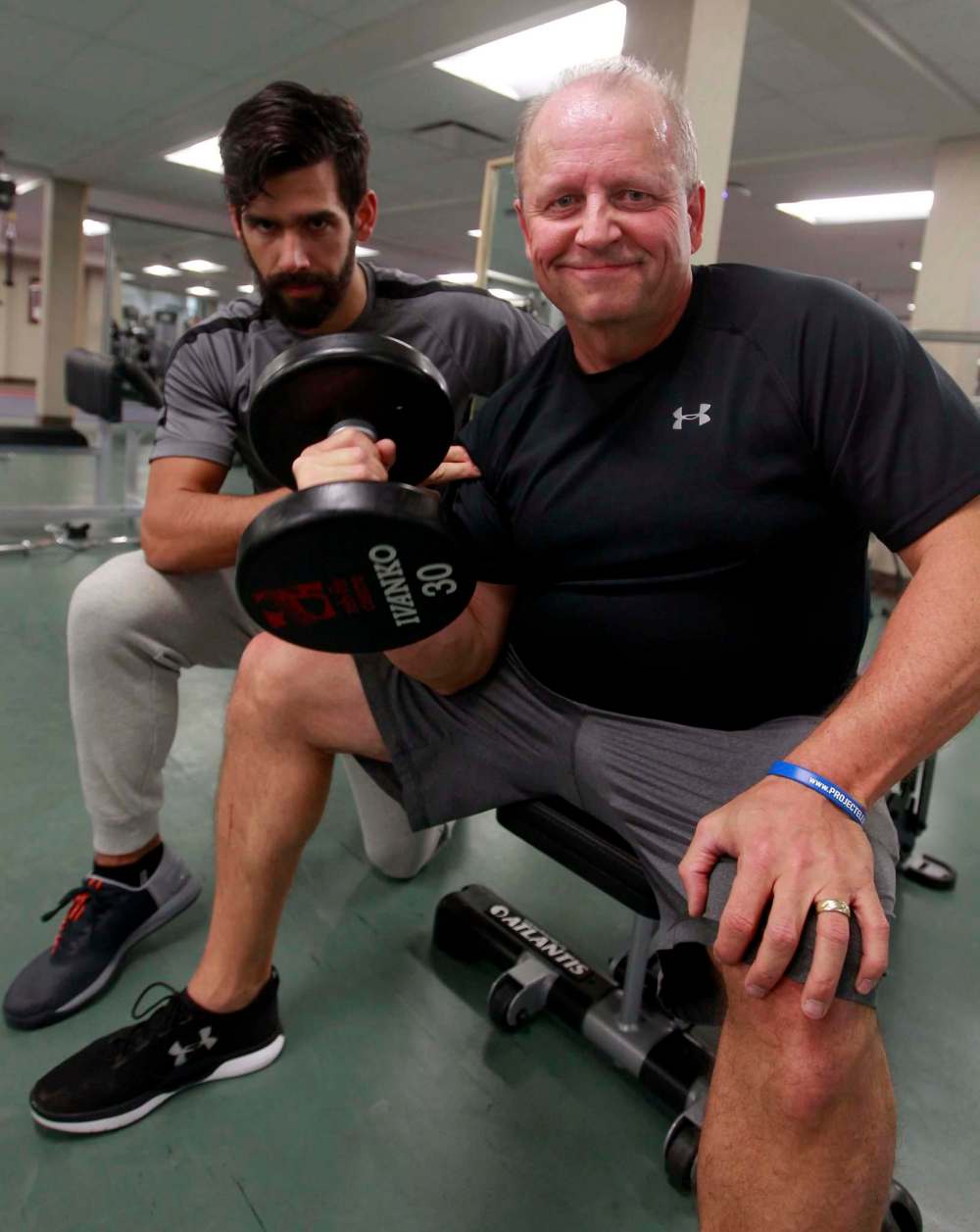
Today, White has lost the weight he gained back after quitting the first time. He now works out almost every day, except Sunday. Almost without fail he is at the Reh-Fit at six a.m. on a weekday — along with a handful of other dedicated individuals of varying ages and levels of fitness.
“What I’ve come to realize is there is no secret to any of this. You show up and do the work, and by work, I mean you do what you can do,” he says, adding the friends he’s made at Reh-Fit motivate him to get up early and go before work.
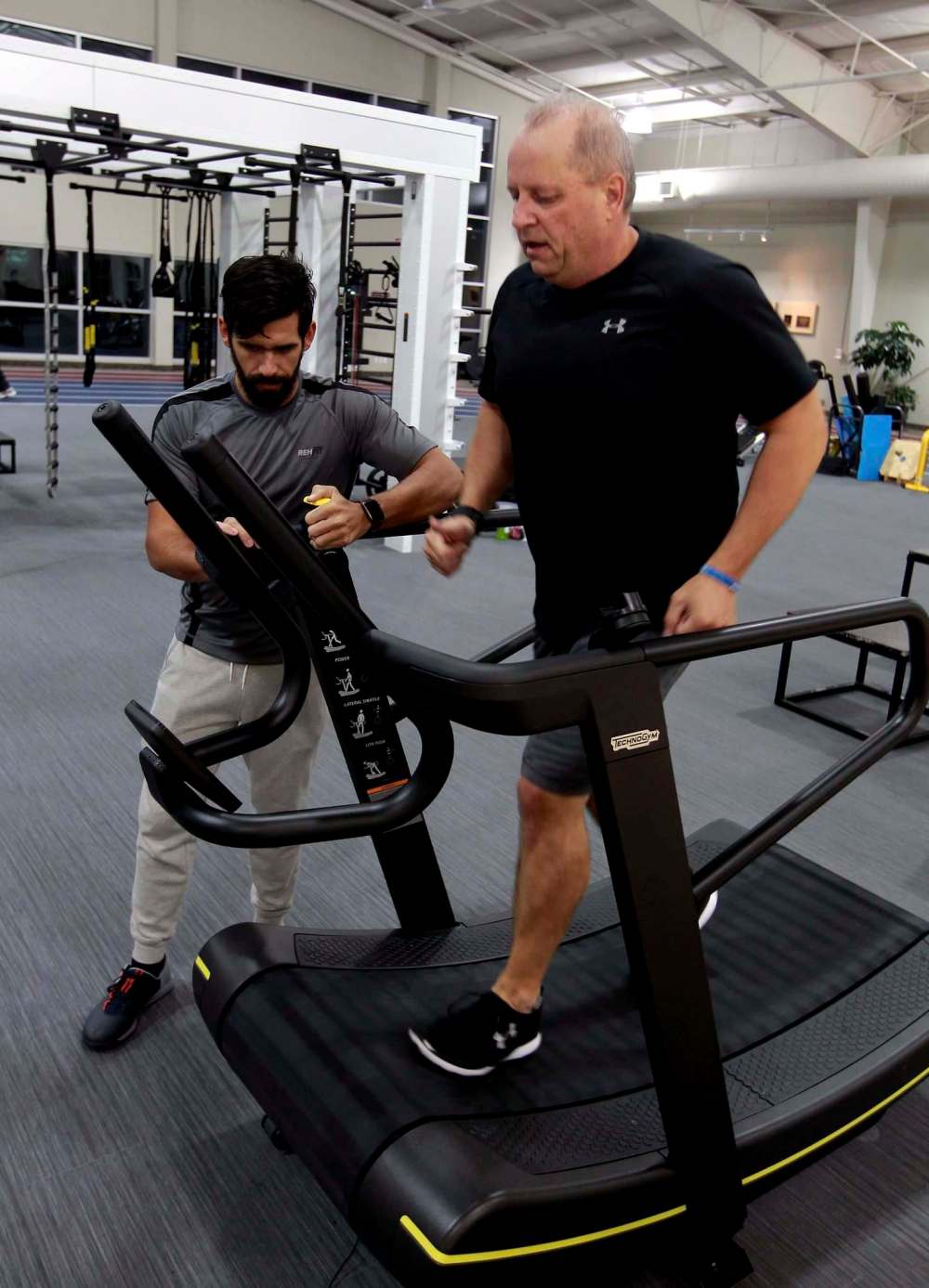
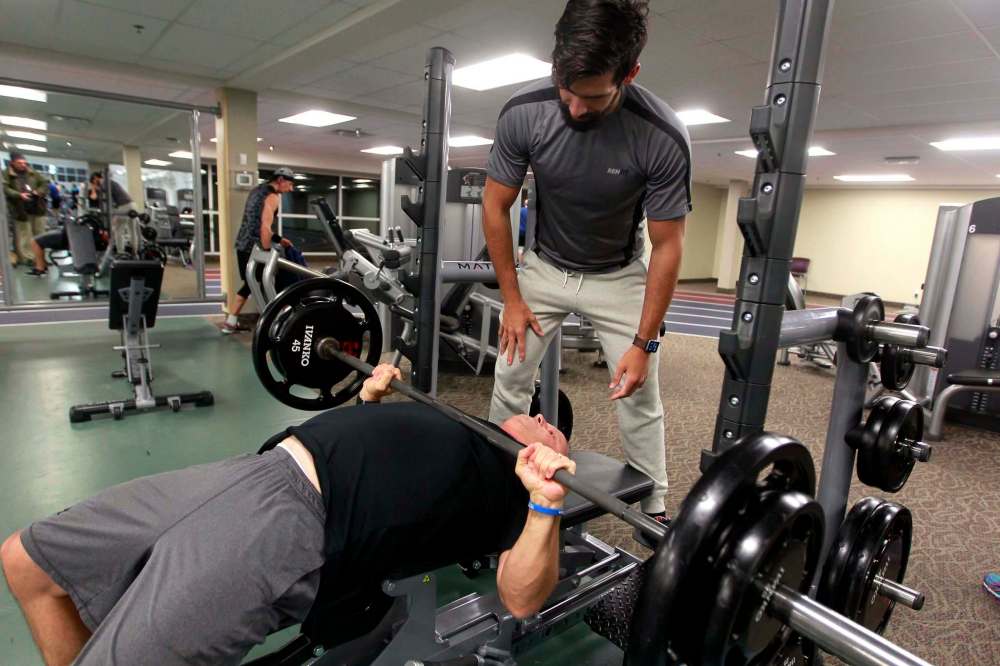
Between strength training on weights, and cardiovascular exercise such as jogging on the track, his morning routine takes about an hour and a half.
For people starting out, though, Siemens says the recommendation is 150 minutes of exercise a week.
“That should be at a moderate pace, like a brisk walk,” she says.
“And the beauty is the higher the intensity of the exercise, less time you have to exercise overall each week.”
For example, if you jog, you only may only need 75 minutes of exercise to get the same benefit as 150 minutes of walking.
And all that activity can ultimately have lifesaving benefits.
“The heart is a muscle, so as you exercise it, it becomes stronger,” Siemens says.
“You also develop more arteries to provide the blood supply.”
Both add up to a greater likelihood that you will survive a heart attack, she adds.
“(Cardiovascular exercise) is good for everyone because we tend to all get blockages in those arteries at some point with age.”
History
Updated on Monday, January 15, 2018 8:11 AM CST: Adds photos