A question of trust
Social media metrics becoming measuring stick for our trustworthiness, author argues
Advertisement
Read this article for free:
or
Already have an account? Log in here »
To continue reading, please subscribe:
Digital Subscription
One year of digital access for only $1.44 a week*
- Enjoy unlimited reading on winnipegfreepress.com
- Read the E-Edition, our digital replica newspaper
- Access News Break, our award-winning app
- Play interactive puzzles
*Billed as $5.77 plus GST every four weeks. After 52 weeks, price increases to the regular rate of $19.95 plus GST every four weeks. Offer available to new and qualified returning subscribers only. Cancel any time.
To continue reading, please subscribe:
Add Free Press access to your Brandon Sun subscription for only an additional
$1 for the first 4 weeks*
- Enjoy unlimited reading on winnipegfreepress.com
- Read the E-Edition, our digital replica newspaper
- Access News Break, our award-winning app
- Play interactive puzzles
*Your next Brandon Sun subscription payment will increase by $1.00 and you will be charged $17.95 plus GST for four weeks. After four weeks, your payment will increase to $24.95 plus GST every four weeks.
Read unlimited articles for free today:
or
Already have an account? Log in here »
Hey there, time traveller!
This article was published 27/01/2018 (3192 days ago), so information in it may no longer be current.
Two recent news stories perfectly illustrate economist Rachel Botsman’s argument in her new book, Who Can You Trust?: in late October, Amazon announced its “Amazon Key” service, which would see its drivers gain access to customers’ houses — in their absence — to drop off purchases. Barely a week later, Facebook suggested that, in order to prevent the spread of “revenge porn,” users should pre-emptively submit nude photos of themselves to the tech giant, the unique digital fingerprints of which would detect and prevent attempts by others to distribute them.
Botsman guides the reader on an enjoyably accessible, but cautiously skeptical, tour through this hugely transformative, but barely recognized, shift in our sometimes-irrational approach to trust. Among other things, this shift has unleashed the sharing economy (Uber negating the need to own a car, for example) and the increasing — and for some, unnerving — reliance on computers and robots to make decisions for us (such as autonomous vehicles negating the need for human drivers altogether).
An instructor at Oxford, Botsman is a widely recognized expert on the economics of trust who previously explored some of these themes in popular TED Talks and in the 2010 book What’s Mine Is Yours: The Rise of Collaborative Consumption, co-authored with American entrepreneur Roo Rogers.
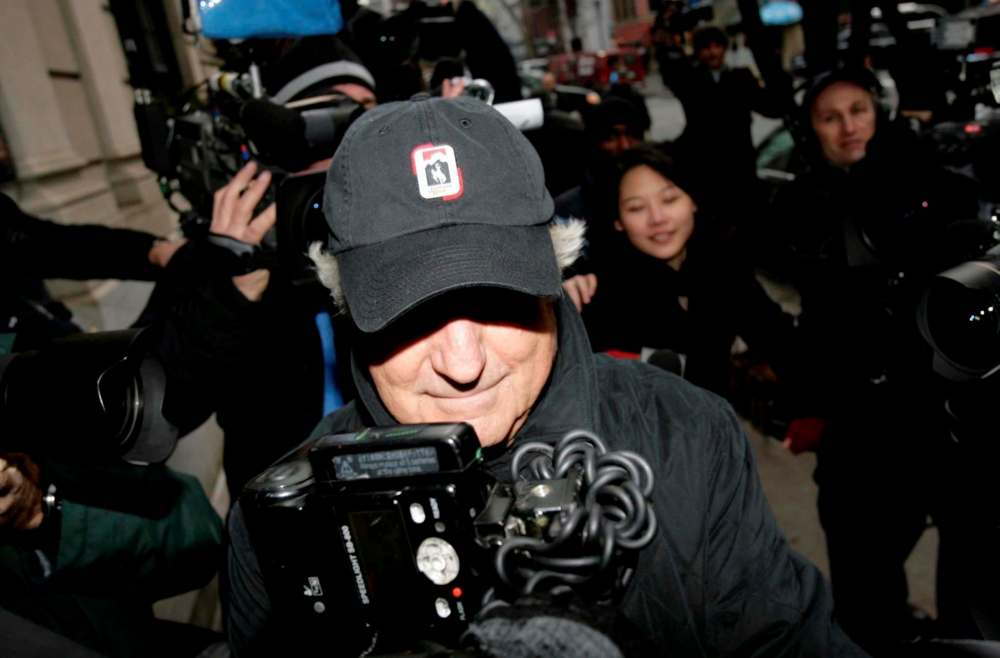
Botsman begins by distinguishing between trust (which she defines as a “confident relationship with the unknown”) and trustworthiness, and how our trust has often been abused or misplaced — most notoriously in the case of Bernie Madoff and investment banks prior to the 2008 financial meltdown.
As a result, instead of depending upon traditional institutions, such as governments, banks and newspapers, we are now using social media platforms to distribute trust to complete strangers.
She explains how we have, in the process, become products in a global economy of “likes” and starred ratings denoting our trustworthiness, be it as social agents whose personal preferences are sold to advertisers (Facebook), buyers and sellers (eBay), guests and hosts (Airbnb) or drivers and passengers (Uber).
She points out that not only can these regimes be gamed, but our fear of being ranked poorly ourselves can curtail our honesty regarding others in the system. Worse, they risk creating a society of mutual surveillance in which everyone is continually ranking each other to boost their own trustworthiness rankings.
Botsman shows how this dystopian outcome is already unfolding in China, where the government is well on its way to a 2020 launch of its disturbingly Orwellian “Social Credit System,” a massive trust ranking scheme which will grade all its citizens according their credit history, behaviour, preferences and personal relationships, with the resulting “trust score” then becoming the basis of all privileges and opportunities, including one’s education and career.

Not that there will be many career choices open to many of us: Botsman cites a 2013 report by two Oxford economists which estimates that, as early as 2030, 47 per cent of American jobs could be lost to computerization and automation via artificial intelligence (AI) or actual robots, whom we are trusting with more and more decision-making tasks.
The ultimate outsourcing of our trust appears to be emerging in the form of blockchains — tamper-proof, distributed (i.e. ownerless) digital ledgers that are capable of proving the provenance of everything from Bitcoin transactions to baby formula production to diamonds. Once they gain mainstream acceptance, Botsman warns, they have the potential to make obsolete almost every current intermediating profession and institution including banks, lawyers and real estate agents.
With our local networks of interdependence long since gone, expertise forsaken for filtered social media bubbles built around our preconceptions, and traditional institutions exposed as corrupt or rendered obsolete, we may find ourselves instead trusting our daily lives, commerce, livelihoods and governance to algorithms, AI and the immutable perfection of the blockchain.
Who Can You Trust is an excellent — and apparently trustworthy — primer to this fundamentally upturned society in which we may be spending the rest of our lives.
Michael Dudley is a librarian at the University of Winnipeg.

Who Can You Trust?: How Technology Brought Us Together and Why It Might Drive Us Apart
By Rachel Botsman
PublicAffairs, 336 pages, $35
Advertisement Advertise With Us
Advertisement Advertise With Us