

Refusing to accept defeat
Manitoba champion curler Leslie Wilson, competing at the Scotties, opens up about her battle with mental health

Advertisement
Read this article for free:
or
Already have an account? Log in here »
To continue reading, please subscribe:

Digital Subscription
One year of digital access for only $205*
- Enjoy unlimited reading on winnipegfreepress.com
- Read the E-Edition, our digital replica newspaper
- Access News Break, our award-winning app
- Play interactive puzzles
*First annual payment billed as $205.00 + GST for one year. This annual subscription will automatically renew at $233.00 + GST every 52 weeks (10% off the regular annual price of $259.35). Offer available to new and qualified returning subscribers only. Cancel any time.
To continue reading, please subscribe:
Add Free Press access to your Brandon Sun subscription for only an additional
$1 for the first 4 weeks*
- Enjoy unlimited reading on winnipegfreepress.com
- Read the E-Edition, our digital replica newspaper
- Access News Break, our award-winning app
- Play interactive puzzles
*Your next Brandon Sun subscription payment will increase by $1.00 and you will be charged $17.95 plus GST for four weeks. After four weeks, your payment will increase to $24.95 plus GST every four weeks.
Read unlimited articles for free today:
or
Already have an account? Log in here »
Hey there, time traveller!
This article was published 31/01/2018 (3173 days ago), so information in it may no longer be current.
PENTICTON, B.C. — It was the time in-between curling. The time after the last rock, the last grand slam, and one magical run to the 2017 Scotties final. It was also the time before the prize that glittered ahead, the Olympic trials.
Most years, Leslie Wilson met the spring with a patient anticipation. On long summer days, her thoughts drifted ahead to the next curling season, to the joys that happened when the air became crisp and the rocks roared.
However, in the sunlit spring of 2017, the Team Michelle Englot second was struggling.
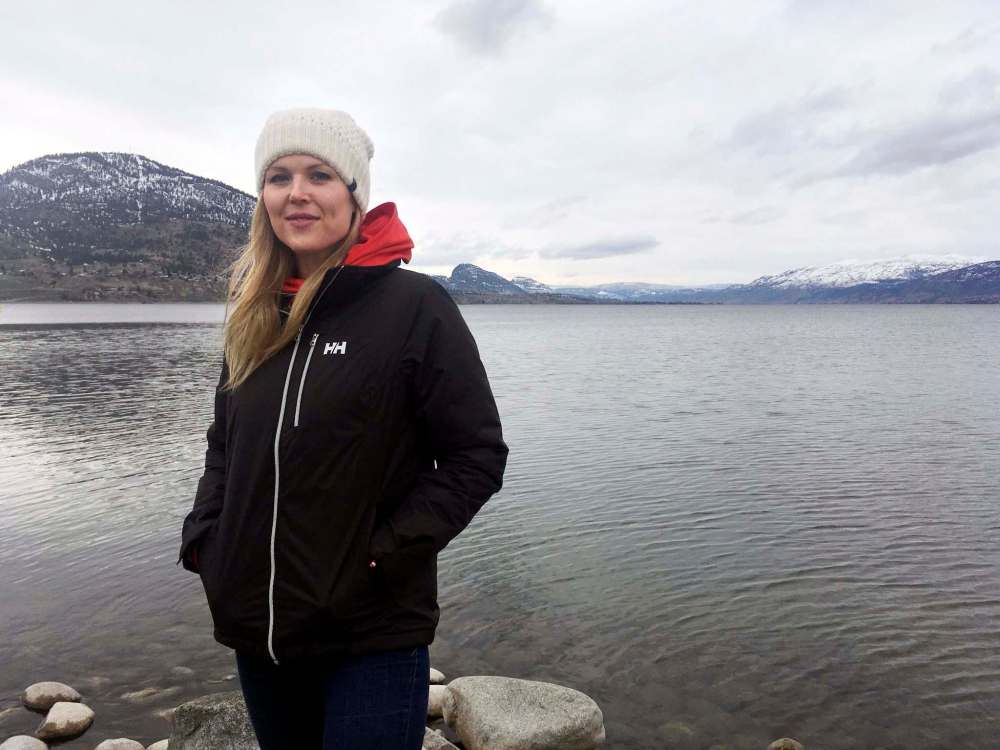
She had just wrapped one of the most thrilling campaigns of her on-ice career. The next season was even more promising: Englot’s squad had qualified for the Olympic trials, and earned invites to glossy, televised grand slam events.
Thinking about that, Wilson felt nothing. No, that’s not quite right: she felt a shot of dread, her stomach sinking.
“I just felt overwhelmed by the thought of all the travelling,” she says, now. “Looking ahead, it seemed daunting.”
The days seemed to grow darker. It wasn’t just the curling, either: that spring, other things Wilson loved also seemed to fall away. She is a social person and avid outdoorswoman, but now she retreated from friends and from nature.
“That was an alarm bell, for me,” she says.
It is morning in Penticton, in the middle of the 2018 Scotties round robin. A veil of snow glazes the mountains, hiding the sleeping wineries that splay over the hills. Outside Wilson’s hotel, Okanagan Lake glints like a silvered mirror.
Wilson, 38, slips into a chair by a café window. Her rink, Team Canada, has a Scotties game to play in a couple of hours, but for now, the soft-spoken curler sips a cappuccino and recounts those days when the world closed in.
She wants to talk about this. About how, in the crash of last summer’s depression, she almost quit and walked away from the sport that has filled her life since she was 12— and about how she got better.
This is not just about sharing her story. It is also a chance to light the path, for others to come.
“The more you say, ‘This is going on with me,’ the more people are like, ‘I’ve experienced the same,’” she says.
Partly, she says, the timing is right.
‘What people need to understand is, it’s not a choice. If you had diabetes, you would get treatment for it. This should be the same. And somehow, it’s not if it’s a mental health issue. To me, that doesn’t make sense.’
– Leslie Wilson
It is Bell Let’s Talk day, the annual sponsored fundraiser for mental-health charities in Canada. It is also, more broadly, always a good time to talk about mental health, in life and curling.
“What people need to understand is, it’s not a choice,” Wilson says. “If you had diabetes, you would get treatment for it. This should be the same. And somehow, it’s not if it’s a mental health issue. To me, that doesn’t make sense.”
That’s something she learned on her own journey. Wilson traces her depression to the 2006 Manitoba playdowns in Thompson, where she went to the final with a squad skipped by Kristy McDonald (then Kristy Jenion).
The whole way, Wilson struggled. At the time, she thought it was strange to be so crushed by round-robin games.
“From that time on, I thought I just couldn’t control my emotions,” she says. “Then I realized something’s not right.”
By 2009, while she was playing for skip Jill Thurston, it hadn’t gotten better. So Wilson gathered her strength and reached out to a doctor.
She was soon diagnosed with depression, started therapy, and began taking medication.
It all seemed to help. She began to feel better, and more settled. That year, she won her first buffalo jacket; she was a Manitoba curling champion.
Yet it was still difficult to talk to anyone about what she was feeling.
At first, Wilson didn’t even tell her longtime sweeping partner Raunora Westcott, who is also her sister-in-law and travel roommate. That has since changed.
Today, Westcott is one of Wilson’s steadiest supporters, a regular confidante and caring shoulder. As the years turned and the pressures of curling mounted, Westcott saw how the seasons took an increasing toll on her friend.
“She might not think it, or believe it, but she’s one of the strongest people out there,” Westcott says. “It’s just a matter of supporting her to actually believe in herself… even just letting me talk things through with her, I think that helps.”
Last summer, it came to a head, magnified by what was on the line. The team’s hopes were so high, but Wilson found herself fixating on the upcoming stresses, getting lost in anxiety that can go hand-in-hand with depression.
It’s hard to articulate those feelings now, she says. They only make sense when you’re in it.
“I had something so special and great coming up,” Wilson says. “That’s what was so hard for me. The team’s excited about it and people in the community are excited about it. But I couldn’t access those feelings at that time.”
Once again at a crossroads, Wilson reached out for help. With the support of her husband, friends and mental-health professionals, she emerged from depression and prepared to join Team Englot for the 2017-18 season.
Today, she credits sports psychologist Louis Svenningsen with a big part of her recovery: “He really helped me turn my anxiety around on the ice,” she says. “If it wasn’t for him, I may not have stuck with the game in my late 20s.”
Now, Wilson hopes opening up about her experiences can help others in, and outside of, her sport.
If one in five people is affected by mental health, she points out, that’s one person on a curling team. And mental-health struggles are not unique to curling, but the sport’s unique pressures work on the mind in their own ways.
Consider the very nature of the game. Almost more than any other sport, curling demands perfection: the ability to throw the rock at the perfect weight, to sweep it to the perfect place, and to be able to repeat it time and time again.
Yet for many people, depression has a way of turning life’s smallest mistakes into all-consuming failures.
So for Wilson, learning to be gentle with herself — on and after the ice — has become a crucial part of staying healthy.
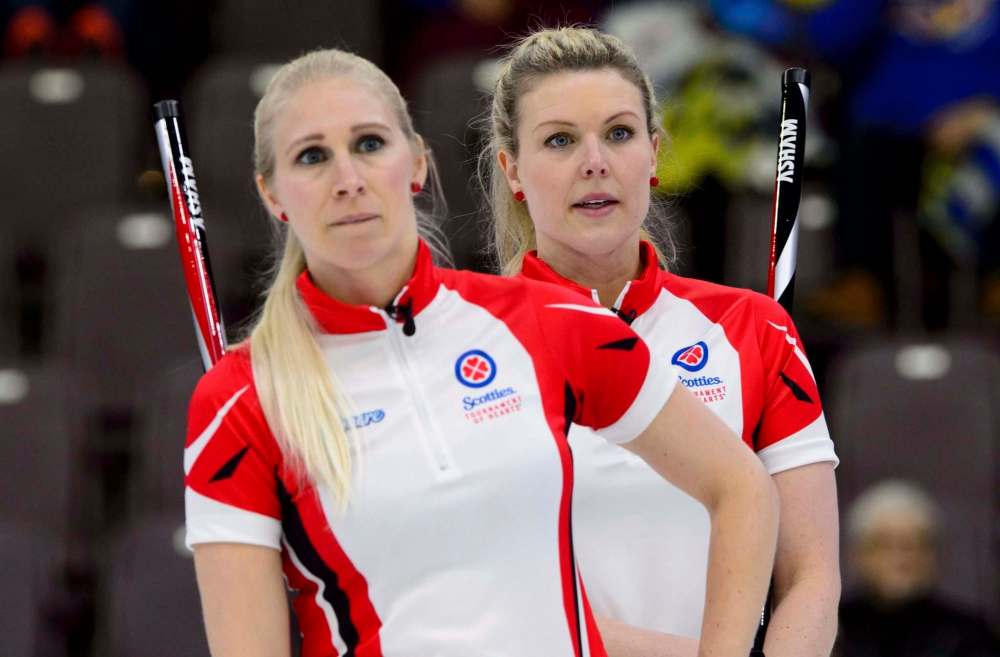
“This year, I just had to be real with myself,” Wilson says. “I had to say, ‘Sometimes, plan B is good enough.’ So it (the rock) didn’t curl up an inch more. At some point, it’s decent, and that’s all you need sometimes.”
One day, she thinks, she’d like to speak more about mental health and sport, especially to young people. But for now, she is here at the 2018 Scotties, and having a great time. That might not have happened, if she hadn’t reached out.

“If you ever get to a point where you’re feeling really anxious, or depressed, and something isn’t right, seek help,” she says. “Thank goodness I did, because I wouldn’t be experiencing the things I am now and it’s pretty cool being here.”
The round robin here is almost over; the homestretch battle for playoffs is just around the corner.
But whatever happens here, and wherever curling takes Wilson after, this much is true: Team Englot must be so proud of her.
“I am,” Westcott says. “If she can help other people who are going through the same things, that’s awesome.”
melissa.martin@freepress.mb.ca
Melissa Martin
Reporter-at-large
Melissa Martin reports and opines for the Winnipeg Free Press.
Every piece of reporting Melissa produces is reviewed by an editing team before it is posted online or published in print — part of the Free Press‘s tradition, since 1872, of producing reliable independent journalism. Read more about Free Press’s history and mandate, and learn how our newsroom operates.
Our newsroom depends on a growing audience of readers to power our journalism. If you are not a paid reader, please consider becoming a subscriber.
Our newsroom depends on its audience of readers to power our journalism. Thank you for your support.
Melissa Martin
Reporter-at-large
Melissa Martin reports and opines for the Winnipeg Free Press.
Every piece of reporting Melissa produces is reviewed by an editing team before it is posted online or published in print — part of the Free Press‘s tradition, since 1872, of producing reliable independent journalism. Read more about Free Press’s history and mandate, and learn how our newsroom operates.
Our newsroom depends on a growing audience of readers to power our journalism. If you are not a paid reader, please consider becoming a subscriber.
Our newsroom depends on its audience of readers to power our journalism. Thank you for your support.
Related Articles
McEwen well on way to full recovery




Advertisement Advertise With Us
Advertisement Advertise With Us