

Getting confessional
Writing music can be like 'act of desperation,' says lead singer

Advertisement
Read this article for free:
or
Already have an account? Log in here »
To continue reading, please subscribe:
Monthly Digital Subscription
$1 per week for 24 weeks*
- Enjoy unlimited reading on winnipegfreepress.com
- Read the E-Edition, our digital replica newspaper
- Access News Break, our award-winning app
- Play interactive puzzles
*Billed as $4.00 plus GST every four weeks. After 24 weeks, price increases to the regular rate of $19.95 plus GST every four weeks. Offer available to new and qualified returning subscribers only. Cancel any time.
Monthly Digital Subscription
$4.99/week*
- Enjoy unlimited reading on winnipegfreepress.com
- Read the E-Edition, our digital replica newspaper
- Access News Break, our award-winning app
- Play interactive puzzles
*Billed as $19.95 plus GST every four weeks. Cancel any time.
To continue reading, please subscribe:
Add Free Press access to your Brandon Sun subscription for only an additional
$1 for the first 4 weeks*
*Your next subscription payment will increase by $1.00 and you will be charged $16.99 plus GST for four weeks. After four weeks, your payment will increase to $23.99 plus GST every four weeks.
Read unlimited articles for free today:
or
Already have an account? Log in here »
Hey there, time traveller!
This article was published 01/03/2018 (2958 days ago), so information in it may no longer be current.
It’s just a few hours before the first show of Dashboard Confessional’s North American tour in Vancouver, and frontman Chris Carrabba is trying to shake some pre-performance jitters.
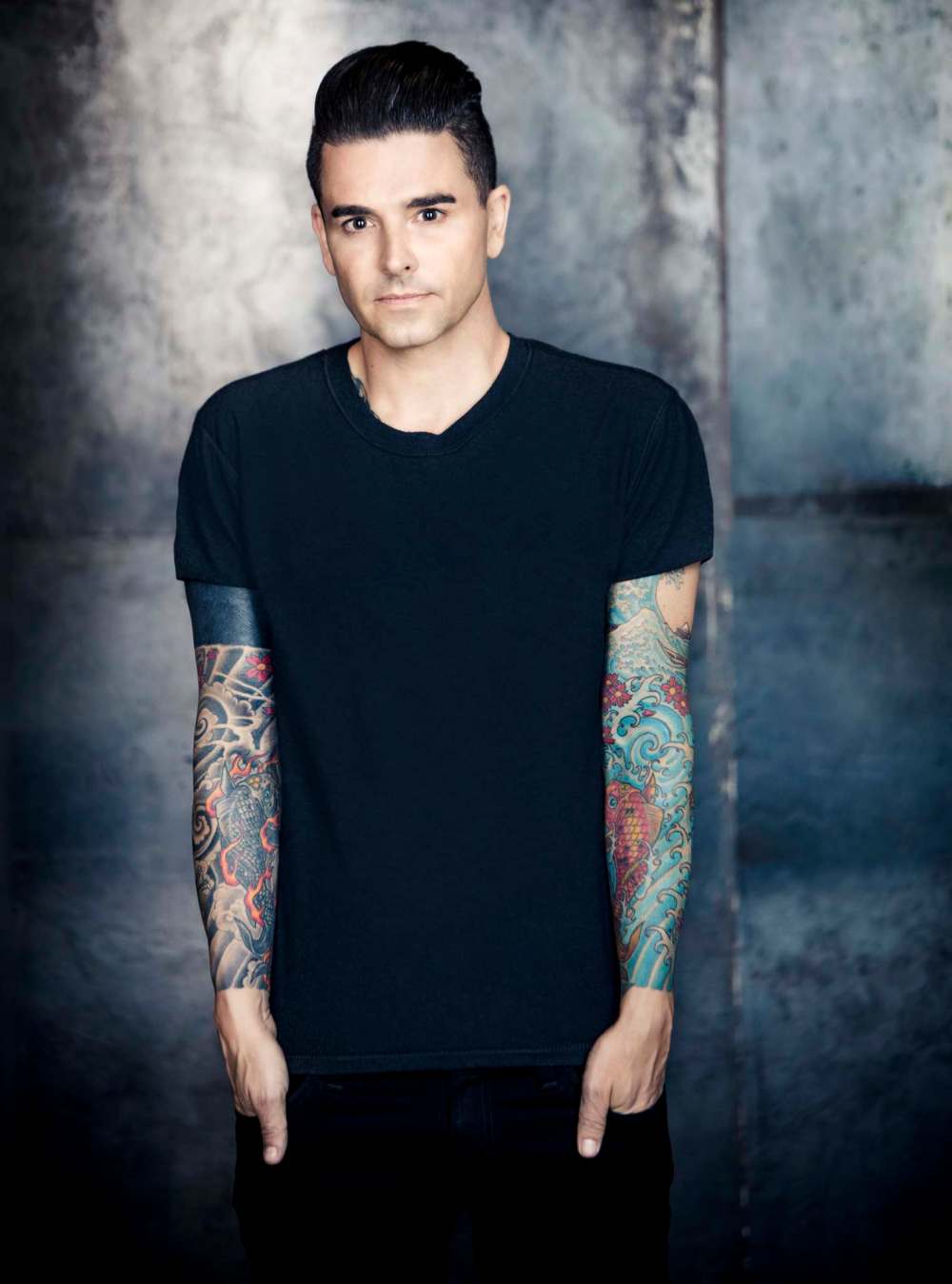
“Can I be honest? I’m pretty nervous,” he chuckles over the phone.
Though the Boca Raton-bred band — who went on hiatus in 2011 — has played quite a few shows together since their reunion in 2015, their current tour is in support of their new album, Crooked Shadows, which is their first collection of new music in nearly nine years.
And it’s been even longer since Dashboard Confessional was in the true limelight — they hit peak popularity in the early to mid-2000s, when a slew of “emo” and indie-rock groups began taking over the charts. Dashboard was, for a time, at the forefront of that wave. Their third record, 2003’s A Mark, a Mission, a Brand, a Scar, peaked at No. 2 on the Billboard charts, and the followup, 2006’s Dusk And Summer, was home to one of their most well-known singles, epic anthem Vindicated, the song that soundtracked a billion breakups.
So, a few nerves as they ease their way back into the game are warranted.
Carrabba took some time before the Vancouver show to talk about the new record, songwriting and why Crooked Shadows contains some of the most intimate work of his career.
Erin Lebar: Can we start at the beginning of the process for this record? I’m always curious about bands that take breaks. How do you know when it’s the right time to come back? How do you know it’s time to make new music?
Chris Carrabba: First, we knew it was time to come back and play and we did that for about three years. The whole time everybody and their mother was saying to make a new record. It made sense. But the thing you’re asking is how do you know when it’s time; I don’t know, but I do know when it’s not the time and that’s when any piece of it feels forced.
So the beginning of the process for this one was me fighting the urge to write new songs just because I was excited that we were back together. And when I finally did write what would be like the first song on the long path to having a new record, I wrote the song and it just spilled out.
I woke up, had some coffee, went down into my basement where my studio is, wrote a song and it was clearly a Dashboard song, and I said to myself, ‘Chris, whatever you do, do not try to do this again tomorrow.’ Because I was afraid that in forcing it, I would push it away. But you know what I did, of course, was wake up the next day and immediately run downstairs to my guitar in the desperate hope that it would be another song, and it was.
So then I realized, ‘OK, stay out of my own way and let the songs come and don’t be foolish enough to try to edit as you go. Write more than you think you need to write and if there’s a real record there, you’ll know it, and if there’s not, there’s no law that says I have to put out new music.’
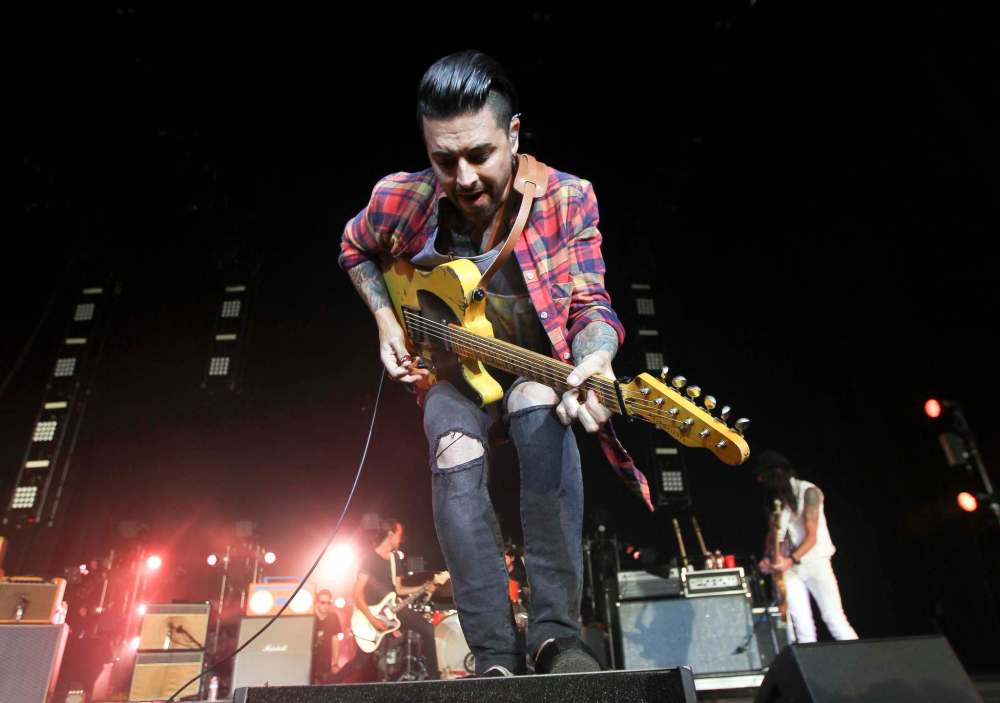
Erin: You mentioned that you wrote a song and it sounded like a Dashboard song — are you in a different headspace when you write for Dashboard as opposed to other projects?
Chris: Probably. But I wouldn’t know it if it was staring me in the face. I’m just there, or I’m not there. I don’t know how to get there and I don’t know how to stay there, it just doesn’t seem to be up to me.
Erin Lebar: You said you wrote many more songs than you needed for this record — what makes a song worthy of a spot on a nine-track album? Is there criteria you follow, or maybe a feeling you get when you know it’s going to be one of the keepers?
Chris Carrabba: I decided on nine because my first record running time was the same running time as this, but with 10 songs. And I believed that there’s a sense of urgency in a record of that length, so the criteria was how to painfully excise songs that I know are good, or great even, that I’m willing to say don’t make the album feel like a unified piece of work in any way.
And I think we wrote 60 songs; quite a lot of them were bad, but that’s all right. Quite a lot of them were good, and more than enough were great, by my estimation only, (laughs).
And then you just decide; I had to leave some on the cutting room floor, one in particular that I said, ‘There’s no way, there’s no record without this song.’ I was wrong, as it turned out; the record was better without that song, although that song might be the best one I’ve ever written.
Erin: There’s a phrase in regards to writing, ‘Murder your darlings,’ meaning sometimes your best stuff just doesn’t work, it just doesn’t fit, and it sounds like it’s the same thing for you.
Chris: I’m going to use that phrase, I’m going to remind myself of that phrase, that’s good.
Also, (Russian-born American singer-songwriter) Regina Spektor has that great lyric that says ‘You can write but you can’t edit,’ (from the song Edit) — there’s something special about that to me. You have a responsibility… if you want the difference between a great record and a spectacular record, you have to be able to edit.
Erin Lebar: Hand-in-hand with editing is sequencing, and I wanted to ask about opener, We Fight, and closer, Just What To Say, because both seem to have strong messages and points of view. Can you talk a bit about those tracks and why you chose them to bookend this record?
Chris Carrabba: In terms of We Fight, it’s an anthem in the tradition that we write anthems, it is about two things at once — it’s about the music scene we come out of, which is one that is homespun, bootstrap. I guess the way I would look at it is working class and it was progressive. It was a place where male and female fans were encouraged to be involved in the scene. Where gay people were accepted — it was just a non-issue — and that would go for race, or religion, or lack of religion or anything like that. And this was very unusual for that time.
The thing that it’s also about, tangentially, is the political climate in my country which I’m really dissatisfied with and has become regressive in a very disappointing way after having such a socially progressive leader to now having a dolt that seems to be incendiary above all things… and so it also encapsulates, in some measure, a call to arms that if we want change, it’s up to us, it’s not going to be handed to us. It’s up to us to take action.
So then Just What to Say is a wholly different animal. Just What To Say, I think it’s possibly my most personally revealing song I’ve ever written. I think it’s an admission of my many imperfections and maybe a slight bit of an apology to those who care enough about me to stand by me in spite of these imperfections, one being that I can be really unreliable if there’s a song at hand.
If there’s a song to be had, I won’t intend to leave you waiting for me at the movies or the bar, but I won’t realize I have because I’ve been sucked into this process of writing a song. Because songwriting to me is almost… as much as it is a craft, it’s an act of desperation somehow, on some level. You get a hint of what could be in the first steps of writing, and you chase it desperately and hope that you catch most of it and that’s all you ever catch.
Erin: Almost like an addiction?
Chris: It is an addiction and I’m pleasantly resigned to this addiction. But I have to give credence to those people who are close to me who just accept that this is the hardship sometimes. Just like leaving them to go on tour is a hardship on them and not physically being there with my friends when they need me, it’s a hardship.
It’s a sacrifice I’ve made, but I’ve made other people make this sacrifice and some of them have chosen to make it. This song is an apology and an expression of gratitude and a little insight into why it’s so necessary for me to do this and I hope that it makes them feel like it’s worth it, too.
Erin Lebar: Do you feel like the sacrifices have been worth it? You guys have been in this band for nearly 20 years now, are you content with how things have unfolded?
Chris Carrabba: Well, yeah, it’s 18 years in and this is still our job. That’s pretty unheard of for a band that’s not world famous, you know what I mean? We call ourselves show-biz middle-class. (laughs)

And we love what we do and we get to do it — I mean, what more could you want in life?
This interview has been condensed and edited for length.
erin.lebar@freepress.mb.ca
Twitter: @NireRabel
Our newsroom depends on a growing audience of readers to power our journalism. If you are not a paid reader, please consider becoming a subscriber.
Our newsroom depends on its audience of readers to power our journalism. Thank you for your support.
Concert preview
Dashboard Confessional
Saturday, 8 p.m.
Burton Cummings Theatre
Tickets $40, available at Ticketmaster
Our newsroom depends on a growing audience of readers to power our journalism. If you are not a paid reader, please consider becoming a subscriber.
Our newsroom depends on its audience of readers to power our journalism. Thank you for your support.
Advertisement Advertise With Us
Advertisement Advertise With Us
History
Updated on Thursday, March 1, 2018 12:44 PM CST: Corrects ticket price