Farm in the cellar
Early sprouts of a microgreens business emerge, and its tasty shoots can be found on Manitoba menus

Advertisement
Read this article for free:
or
Already have an account? Log in here »
To continue reading, please subscribe:

Digital Subscription
One year of digital access for only $205*
- Enjoy unlimited reading on winnipegfreepress.com
- Read the E-Edition, our digital replica newspaper
- Access News Break, our award-winning app
- Play interactive puzzles
*First annual payment billed as $205.00 + GST for one year. This annual subscription will automatically renew at $233.00 + GST every 52 weeks (10% off the regular annual price of $259.35). Offer available to new and qualified returning subscribers only. Cancel any time.
To continue reading, please subscribe:
Add Free Press access to your Brandon Sun subscription for only an additional
$1 for the first 4 weeks*
- Enjoy unlimited reading on winnipegfreepress.com
- Read the E-Edition, our digital replica newspaper
- Access News Break, our award-winning app
- Play interactive puzzles
*Your next Brandon Sun subscription payment will increase by $1.00 and you will be charged $17.95 plus GST for four weeks. After four weeks, your payment will increase to $24.95 plus GST every four weeks.
Read unlimited articles for free today:
or
Already have an account? Log in here »
Hey there, time traveller!
This article was published 17/03/2018 (3045 days ago), so information in it may no longer be current.
The first clue is the smell. It’s a rich, loamy scent, the kind that signals growing things, the kind that seems out of place in a dingy basement.
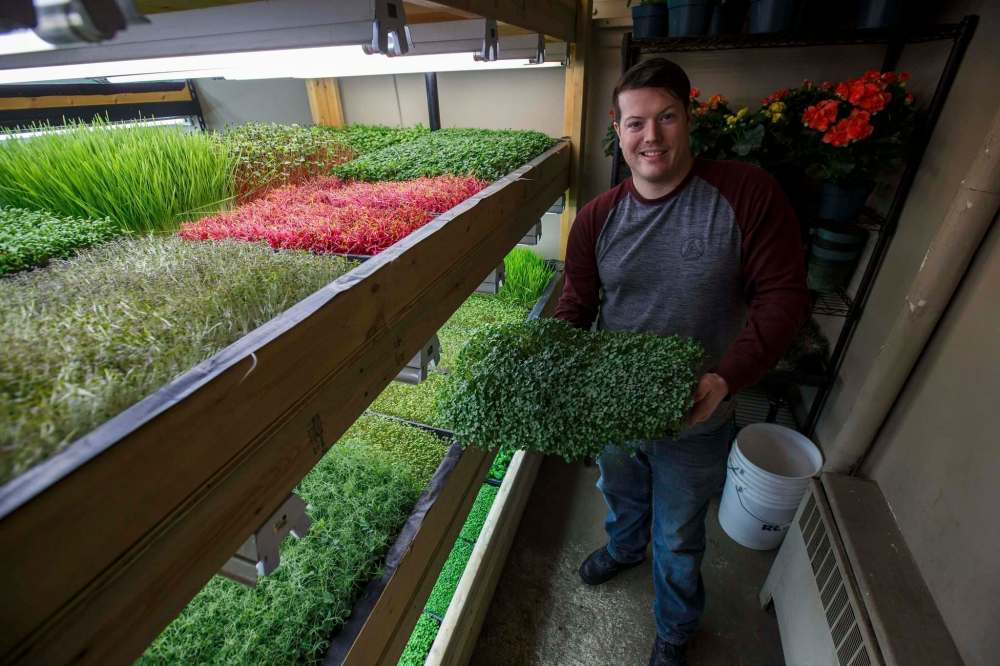
As you head down the stairs of the back-lane entrance of 539 Osborne St., the aroma grows stronger until, after a few twists of hallway, you wind up in a bright room filled with the gurgling sound of running water.
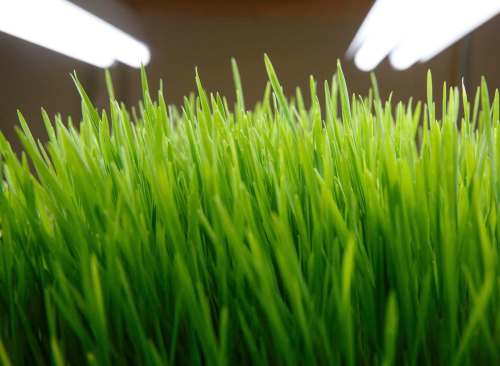
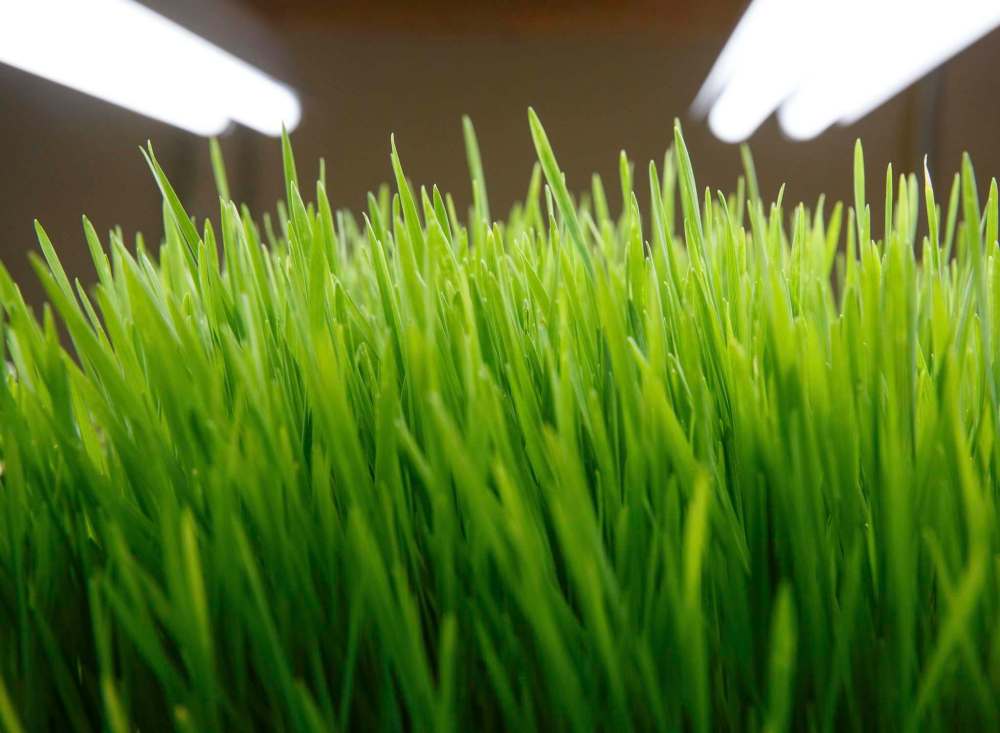
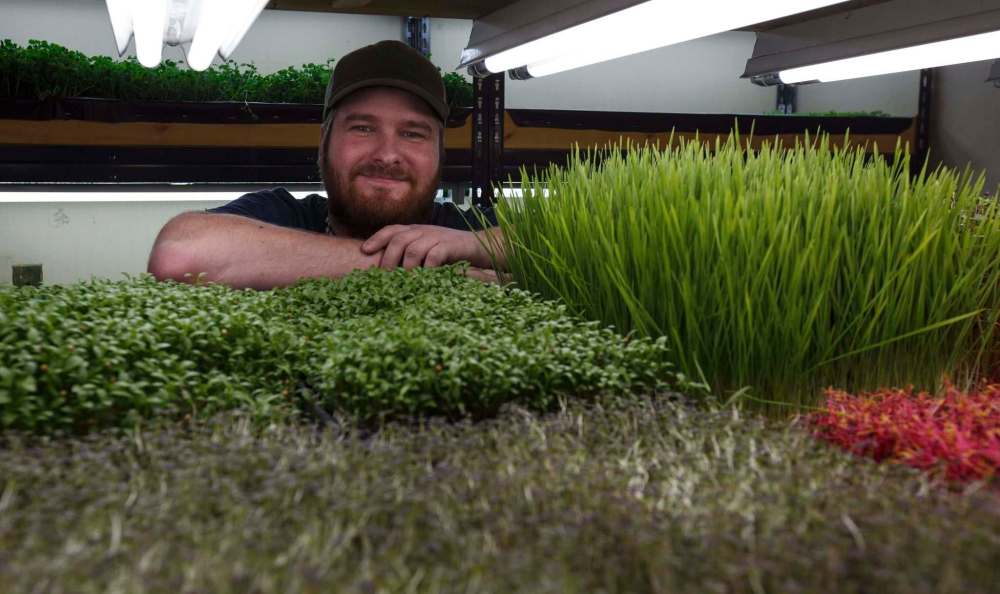
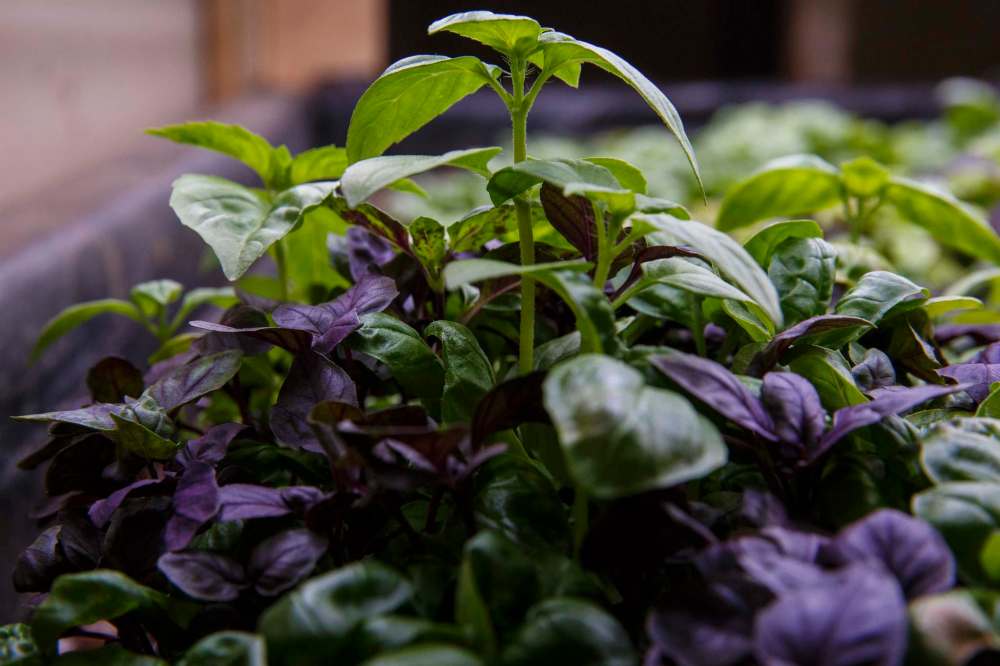
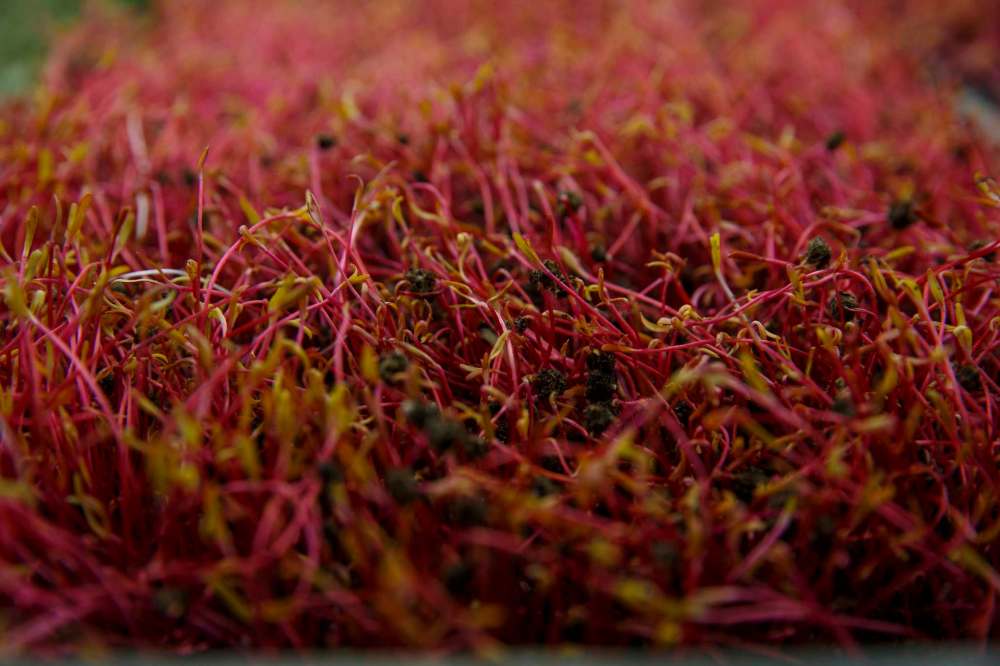
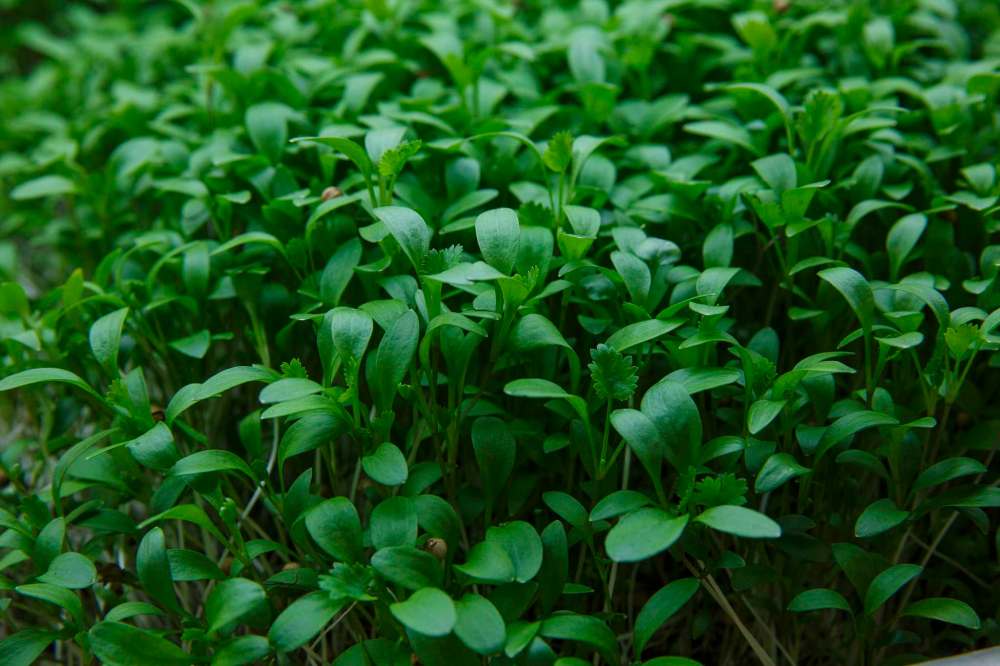
The small space is filled with shelves of plants so green, they seem lit from within. Trays of cilantro and sweet basil sit next to red mustard, radishes, broccoli, purple cabbage, green peas and the taller stalks of wheatgrass and barleygrass.
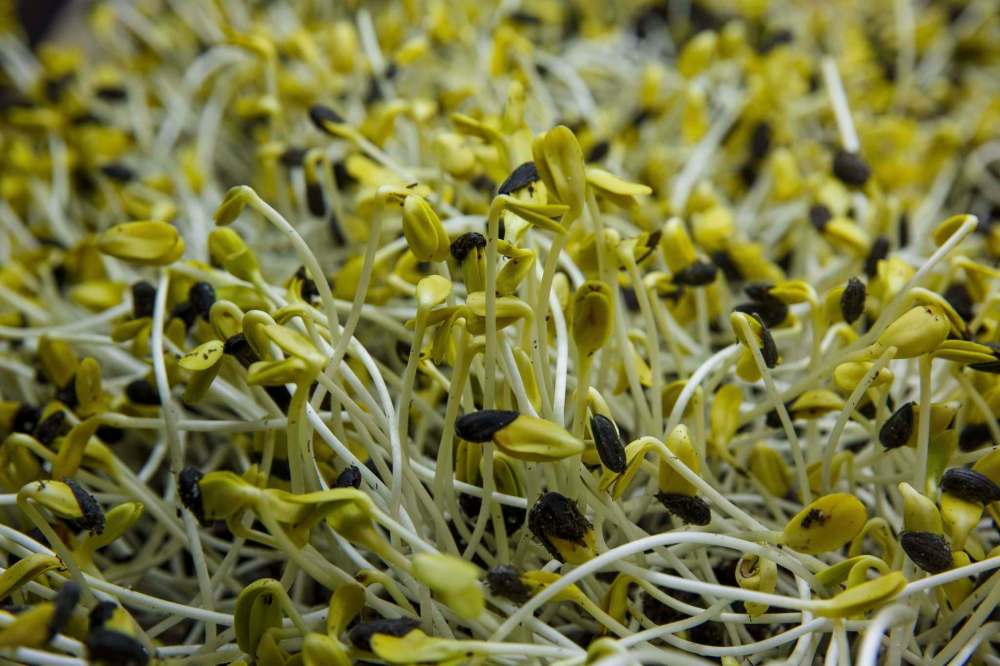
Breaking up the green are a couple of squares of vibrant pink Swiss chard and the tangled yellowish sprouts of sunflowers. On neighbouring shelves are pots of golden-pink begonias.
This is the home base of Fresh Forage. Run by Joel Weber and Jeff Penniston, it grows more than 60 varieties of microgreens, as well as a line of edible flowers.
“I was doing commercial farming outside the city and the volatility of farming is… when things are good, it’s very good; when things are bad, it’s very bad,” says Weber, 30, of his entry into the world of hydroponic growing. “There’s no in between. I wanted to move away from that volatility and that agricultural sector but still utilize my growing skills in a different area.”
Using an urban vertical farming system — stacked shelving units fed by an irrigation system that floods the trays of seedlings and then drains the water for re-use — Fresh Forage specializes in microgreens, which fall somewhere between a sprout and a full-grown plant.
Microgreens are harvested at what’s called the cotyledon growth stage, when they have just a few small leaves. Cotyledon, also called the seed leaves, access the stored nutrients in the seed, feeding it until the true leaves develop and begin photosynthesis.
“You’re utilizing the majority of nutrients from the seed; you’re harvesting it before it makes a fundamental change where it’s taking nutrients from the environment,” Weber says, explaining that growing microgreens requires no fertilizer.
Microgreens aren’t just grown-up sprouts: Sprouts are germinated in water; microgreens germinate in soil or peat moss. With sprouts, you eat the stem and seed (think of a bean sprout). With microgreens, you eat the leaves and stems — it’s like a seedling version of a mature plant, with all the flavour and more of the nutrients.
Some, such as cilantro and basil, just look like tiny versions of their adult selves. Others, like broccoli and cabbage, bear no resemblance at all to full-grown vegetables; they’re just tender leaves on tangled, spindly stalks.
It takes about 14 to 21 days to go from seed to microgreen. The seeds — certified organic and non-GMO — are sourced in Canada and sterilized before germination. Then they are planted in regular potting soil — “the same stuff that you’d go to the greenhouse and buy to put your indoor plants in,” Weber says.
“That’s about it: just add water and light,” he says, gesturing at the rows of custom-made LED bulbs bathing the plants in their harsh glow.
Of course, it’s not quite as easy as that, Weber admits.
“Microgreens are tricky to do at home,” he says. “Most gardeners will tell you that sprouting is the most tricky part of growing a plant because it is the most susceptible to everything: it’s easy to overwater, easy to dry out, it’s easy to have mould and fungus take it over…
“You need to have the proper amount of airflow over it. People like to dabble in it but most realize it’s just easier to buy them.”
One of Fresh Forage’s biggest customer bases are Winnipeg chefs, who relish the ability to serve something fresh, green and local to diners, especially during winter months when root vegetables dominate. The taste of microgreens can be quite intense, so a little goes a long way.
“On the culinary side, it’s a great way of adding flavour and colour to a plate,” Weber says. “A good chef will use it for its colour and look as a garnish; a great chef will actually incorporate it into the flavours and notes of the dish.”
Microgreens are also popular with health-conscious consumers. Studies done by the USDA’s research services showed microgreens contained levels of vitamins and carotenoids that were about five times higher than their mature-plant counterparts — and it’s easier (and more palatable) to add a handful of broccoli microgreens to a smoothie than a whole head of the stuff.
After some back and forth between Public Health, which covers restaurants, and Manitoba Agriculture, Food and Rural Initiatives, which monitors such things as beekeepers and fish hatcheries, the company — which is essentially a small farm that packages its own products — was given a permit by the latter department to operate as a microgreen-processing facility, the first of its kind in Manitoba.
Fresh Forage won’t be in this cramped basement for long; plans are in place to move to a larger, 1,700-square-foot space on Lagimodiere Boulevard in May and then to an even bigger facility after that, where they hope to hire more staff. The first location will be a testing ground for new technologies the two have been working on.
“You walk in and it will be sea of green,” Weber says.
“It’s going to be a game-changer,” Penniston agrees, revealing that they have been consulting with former NASA scientists about research that could lead the way to improved production.
“We’re already doing lots of new things,” says Weber of the company’s dedication to innovation, which includes plastic clamshell packaging that keeps the product fresher longer. “We’re trying to better and increase production, make it more efficient and sustainable. Our harvest techniques are cutting-edge — how we do it, when we do it.
“We’re trying out different ways to germinate the seed so you have close to 100 per cent germination — or as high as you can get — so that you don’t have seeds starting at different times. If you can get it all growing at the same time, you lower that risk of fungus and mould, because the seeds that don’t develop right away, they fall behind and they get overshadowed in the canopy and they start to break down and deteriorate.”
Fresh Forage is also involved with a recent pilot project undertaken by the Churchill Northern Studies Centre, which provides food, lodging and logistical support to scientists involved in sub-Arctic research. The centre recently started a hydroponic gardening project to service the northern community; Weber and Penn are sharing their expertise with growing microgreens.
“In December we reached out to them to see if we could collaborate,” Penniston, 34, says of the Churchill project, which is using Growcer growing systems — climate-controlled hydroponic technology housed in shipping containers — to grow kale, various lettuce varieties and herbs. “We’re going to be showing them how to do microgreens so they can offer them to restaurants and get them up even farther North.
The program is focused on leafy greens because larger, heavier vegetables are more susceptible to changes in nutrient levels. Microgreens are perfectly suited to the project, as they require no fertilizer, pack a nutritious punch into a small package and can be grown in mere weeks.

“They’re doing a home delivery pickup, so they get lettuce now,” Penniston says. “And in about a month, they’ll be able to get fresh microgreens with that delivery.”
Plans are also in the works for collaborations with local breweries, which will be doing select runs of beers flavoured with Fresh Forage’s herbs and greens.
For more information on Fresh Forage, visit the website at freshforage.ca, or call 204-761-8891.
jill.wilson@freepress.mb.ca
Twitter: @dedaumier
Jill Wilson is the editor of the Arts & Life section. A born and bred Winnipegger, she graduated from the University of Winnipeg and worked at Stylus magazine, the Winnipeg Sun and Uptown before joining the Free Press in 2003. Read more about Jill.
Jill oversees the team that publishes news and analysis about art, entertainment and culture in Manitoba. It’s part of the Free Press‘s tradition, since 1872, of producing reliable independent journalism. Read more about Free Press’s history and mandate, and learn how our newsroom operates.
Our newsroom depends on a growing audience of readers to power our journalism. If you are not a paid reader, please consider becoming a subscriber.
Our newsroom depends on its audience of readers to power our journalism. Thank you for your support.
Jill Wilson is the editor of the Arts & Life section. A born and bred Winnipegger, she graduated from the University of Winnipeg and worked at Stylus magazine, the Winnipeg Sun and Uptown before joining the Free Press in 2003. Read more about Jill.
Jill oversees the team that publishes news and analysis about art, entertainment and culture in Manitoba. It’s part of the Free Press‘s tradition, since 1872, of producing reliable independent journalism. Read more about Free Press’s history and mandate, and learn how our newsroom operates.
Our newsroom depends on a growing audience of readers to power our journalism. If you are not a paid reader, please consider becoming a subscriber.
Our newsroom depends on its audience of readers to power our journalism. Thank you for your support.
Related Articles
Microgreens farm Fresh Forage goes dark
Advertisement Advertise With Us
Advertisement Advertise With Us