

Future rinks on thinner ice
Long-term study tracks temperatures around world

Advertisement
Read this article for free:
or
Already have an account? Log in here »
To continue reading, please subscribe:
Monthly Digital Subscription
$1 per week for 24 weeks*
- Enjoy unlimited reading on winnipegfreepress.com
- Read the E-Edition, our digital replica newspaper
- Access News Break, our award-winning app
- Play interactive puzzles
*Billed as $4.00 plus GST every four weeks. After 24 weeks, price increases to the regular rate of $19.95 plus GST every four weeks. Offer available to new and qualified returning subscribers only. Cancel any time.
Monthly Digital Subscription
$4.99/week*
- Enjoy unlimited reading on winnipegfreepress.com
- Read the E-Edition, our digital replica newspaper
- Access News Break, our award-winning app
- Play interactive puzzles
*Billed as $19.95 plus GST every four weeks. Cancel any time.
To continue reading, please subscribe:
Add Free Press access to your Brandon Sun subscription for only an additional
$1 for the first 4 weeks*
*Your next subscription payment will increase by $1.00 and you will be charged $16.99 plus GST for four weeks. After four weeks, your payment will increase to $23.99 plus GST every four weeks.
Read unlimited articles for free today:
or
Already have an account? Log in here »
Hey there, time traveller!
This article was published 02/04/2018 (2945 days ago), so information in it may no longer be current.
Backyard hockey rinks have been good to Brant Nobel.
When Nobel was a young teen, he used to spend countless hours on the rink of a family down the street, where there lived a red-headed girl. Her name was Celia and they are now married with three children of their own.
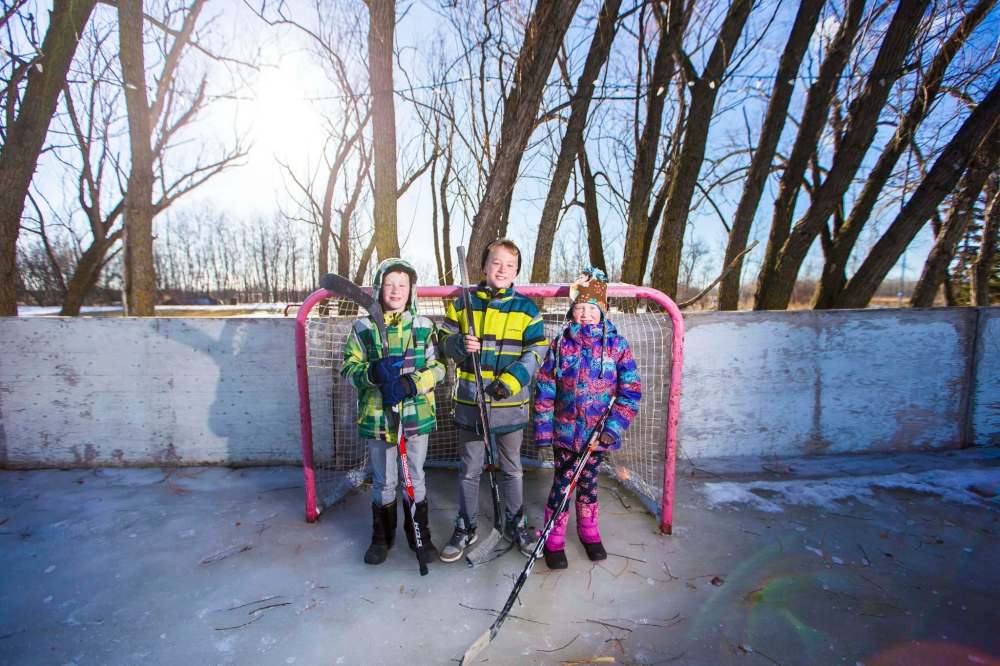
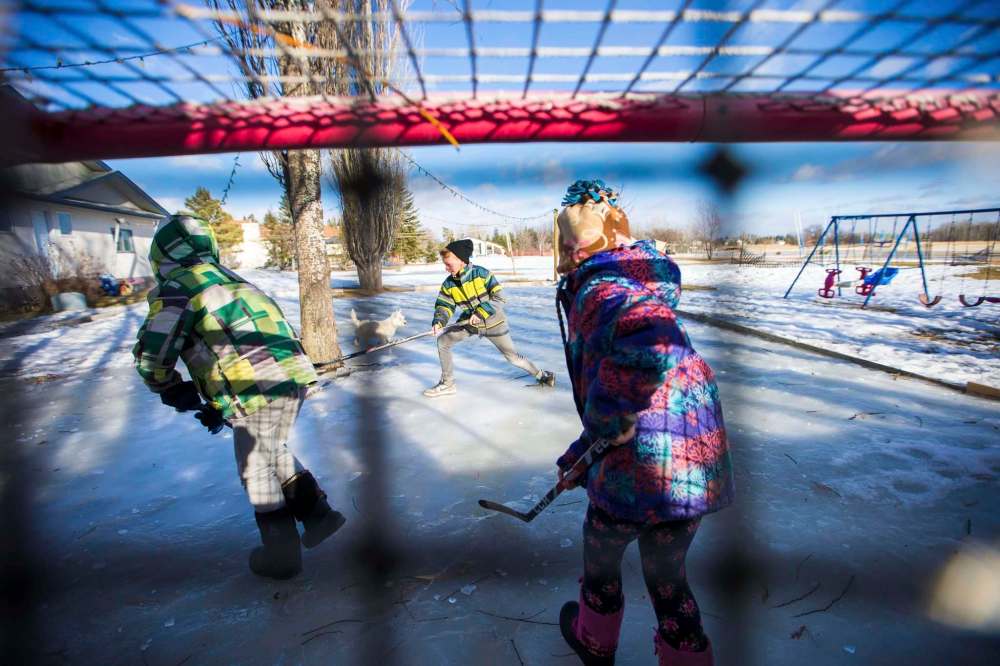
Not surprisingly, when the Nobel kids started getting older, Brant and Celia decided to build their own backyard rink, on the eastern outskirts of Winnipeg.
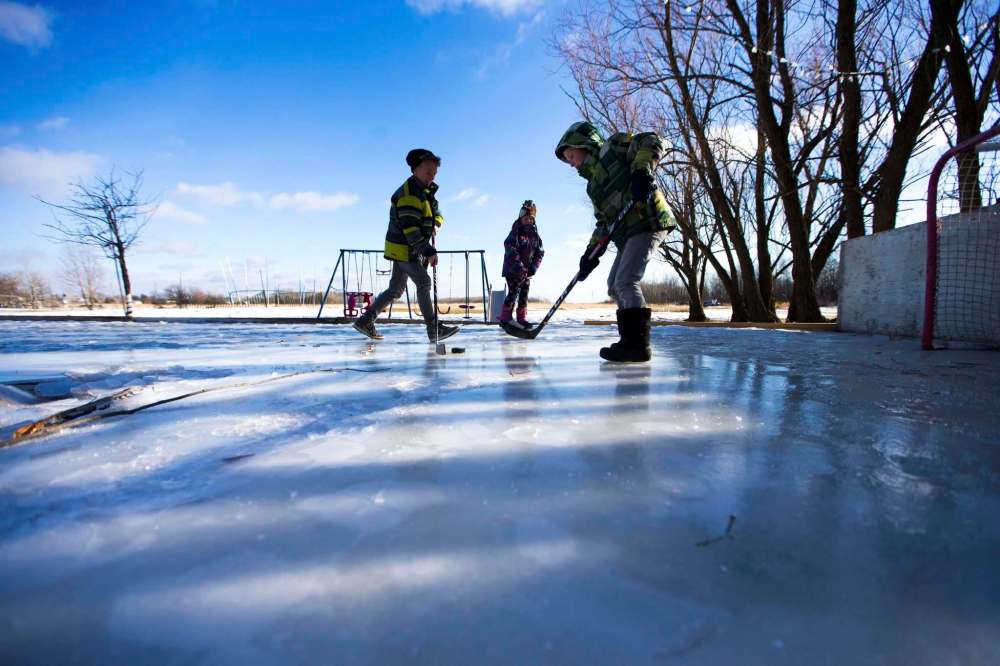
“It’s kind of a quintessential Canadian thing,” Celia reasoned.
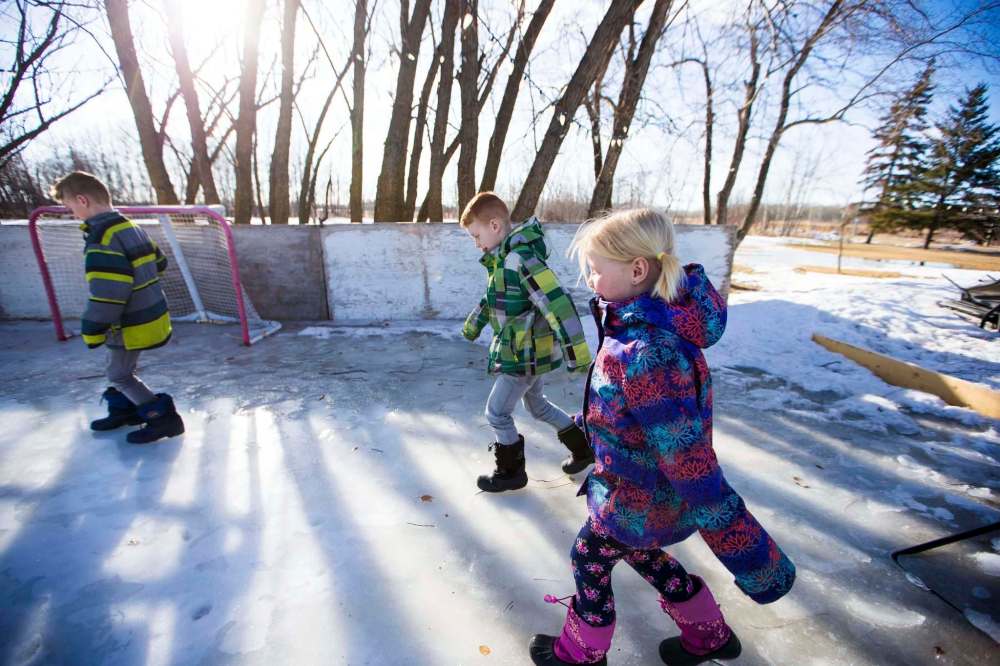
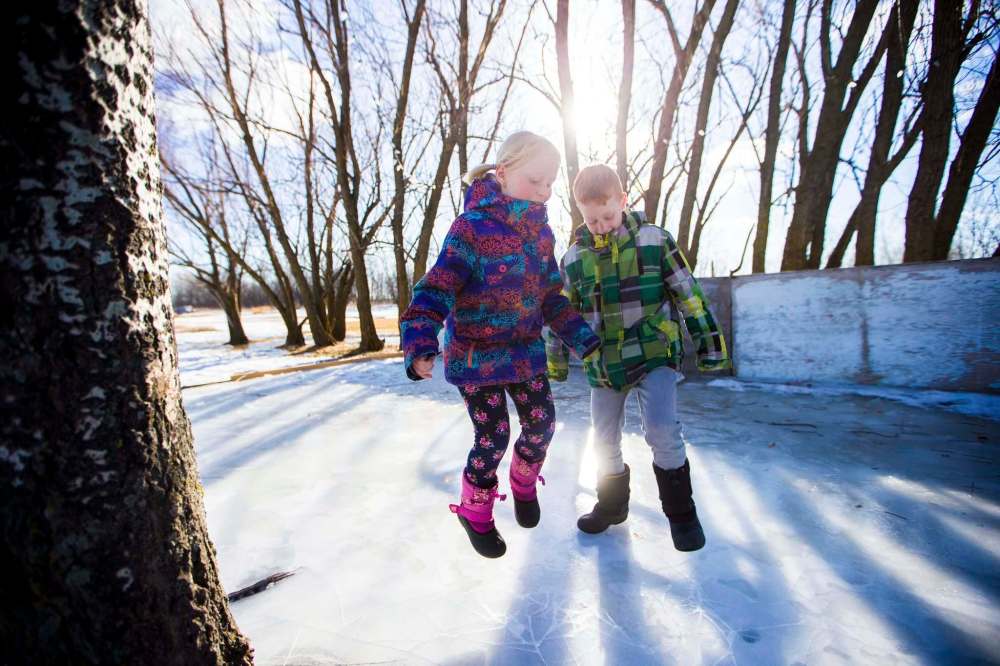
It’s not a large rink and there’s a tree in the middle — which serves as a hanging post for Christmas lights at night — but it works.
“What do you do in the winter other than go out and play hockey?” Brant said. “It’s something to look forward to. Can we put the ice in yet? This is what gets us excited for winter.”
What if there comes a time when the backyard rink — or all outdoor rinks, for that matter — become extinct?
For the last five years, three professors at Wilfred Laurier University in Waterloo, Ont., have been exploring a novel way to track climate change: they record the life expectancy of backyard hockey rinks from across North America. Not to mention a few rinks in Estonia and China.
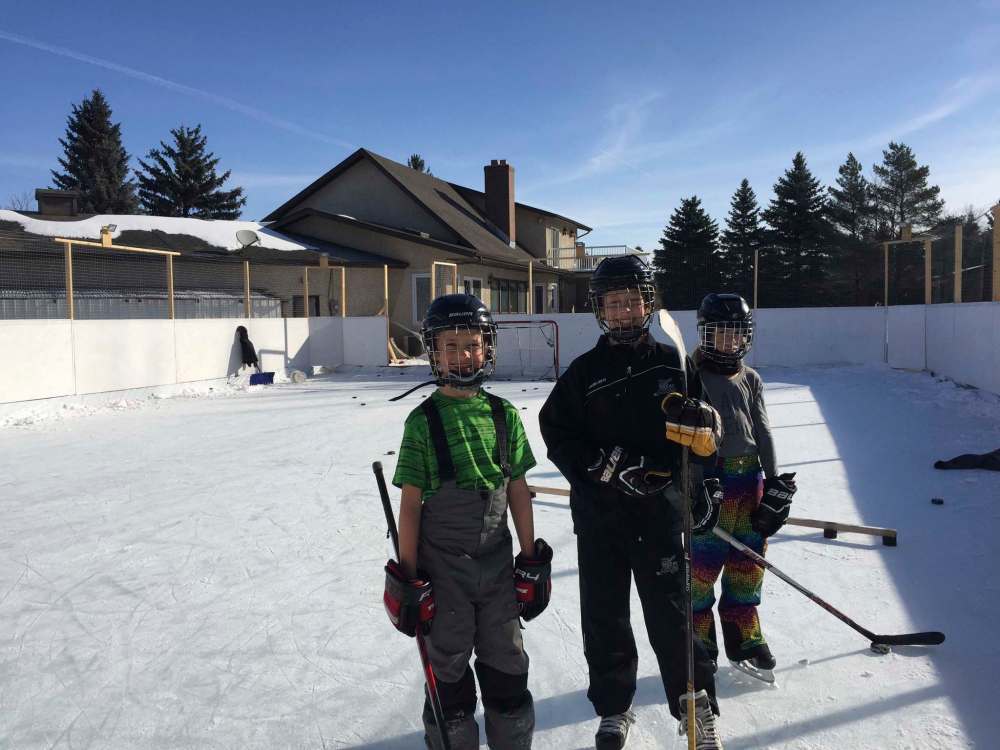
The program, called Rink Watch, started five years ago by recruiting backyard icemakers to sign up to the www.RinkWatch.org website. It’s a simple matter of reporting the location of the rink, and tracking how long it stays skateable throughout the winter.
It’s a long-term study, but Rink Watch has already drawn some early conclusions. First, the “magic number” for maintaining an outdoor rink is a temperature of -5 C. Then researchers punched the -5 C temperature into future climate change models up to the year 2100.
Their initial conclusion is that — on the Canadian Prairies, at least — the outdoor skating season will shrink by about 20 per cent over the remainder of the century.
“It’s actually better news than we thought given all the predictions of global warming and climate change,” said Robert McLeman, associate professor of geography and environmental studies. “We thought the decrease would be greater. So it’s sort of a good news story, I suppose.
“But it also means things will get more variable,” McLeman added. “For example, in any given winter (in Manitoba) there are on average 80 to 90 days that are cold enough for skating. That’s great, but it depends on how they fall. You want them to be continuous and not broken up by warm spells. And obviously, you want them earlier in the season so you can build the rink in the first place.”
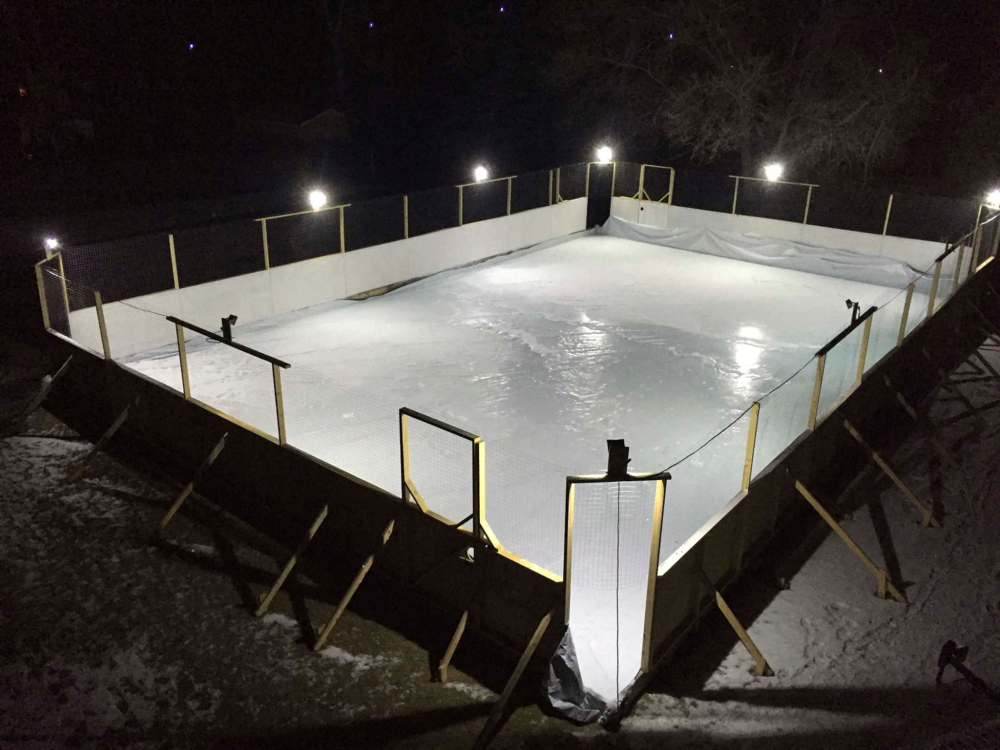
McLeman said that by 2100, there will be closer to 60 to 70 days of skating weather on the Prairies, or just over two months. In southern Ontario, however, the drop will be closer to 30 to 40 per cent from a current season that is already shorter than that of the Prairies.
According to the climate models, for example, a rink in Brantford, Ont. — home of Wayne Gretzky, who was famously taught by his father Walter on a backyard rink — would only be skateable for three to four weeks at the turn of the next century.
“It gets to the point where you’re asking, ‘Is anybody going to bother building an outdoor rink for three or four weeks?’ Because there’s a lot of work involved,” McLeman said. “And that’s kind of a tale of the future for Canada, especially here in the East. It’s going to be really tough to build a rink 50 to 75 years from now.”
The Nobel family signed up to Rink Watch a few years ago, but a couple of years of mid-January thaws put a halt to production. “I wasn’t super-motivated to put in a rink if it melts in early January,” Brant said.
This year, however, Caleb, 10, Adam, 8, Kyla, 7, spent hours on the Nobel rink and dad has plans to build an even larger surface in years to come.
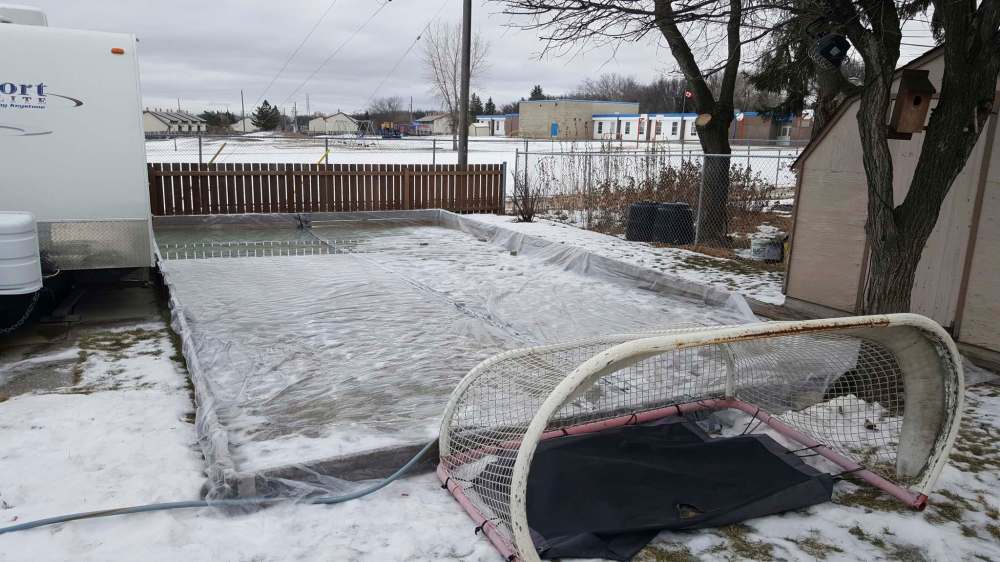
Meanwhile, in Brandon, Mike Glutek and Todd Gudz have been submitting data from their backyard rinks practically since the program began in 2013.
“I thought it was a good thing to do, if someone can use that information,” Glutek said. “It’s not hard to put in.”
Glutek has made a 16-foot by 32-foot rink in his backyard for more than a decade for his three kids, Megan, 17, Julie, 11, and Ryan, 7. “I started it for these guys to learn on,” he said. “Every year I ask if they want me to build a rink, and they say that want it. It’s easy for them to throw on the skates and walk out the back door. If it’s too cold they just walk in the house.”
Over time, Glutek, 43, said he’s noticed his rink will be skateable to mid-to-late March. It’s the time when it’s first skateable that often varies, from mid-to-late November to mid-December.
The thought of a season that might fall closer to four to six weeks, however, is not appealing — even if it’s almost 100 years from now.
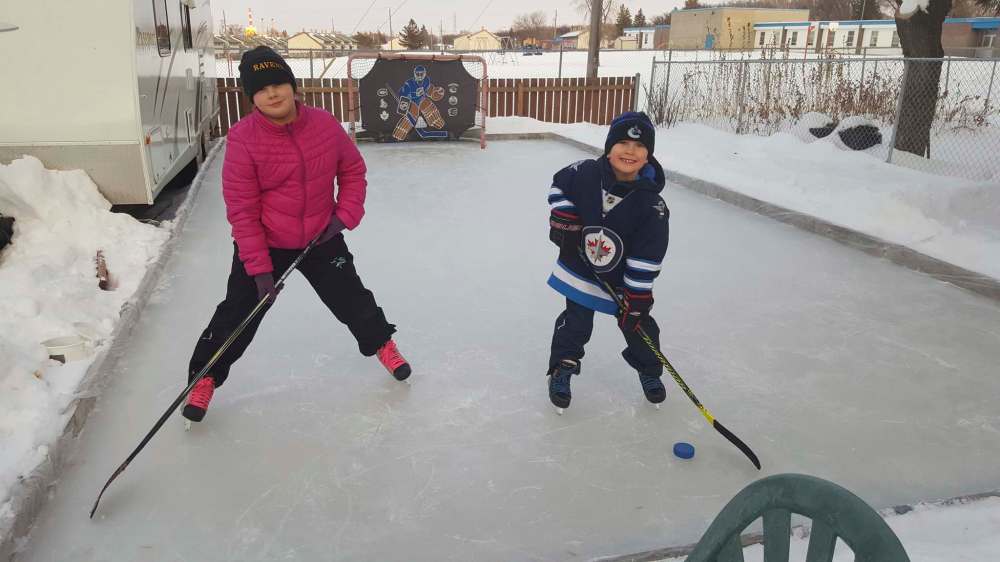
“Oh, man, that’s not good,” he said. “That’s a lot of time and money for four weeks. I almost look after the rink more than the sidewalk.”
Gudz has also been supplying Rink Watch with data for several years. As an irrigation contractor working in a seasonal occupation, Gudz took an interest in the project.
“It was a unique idea,” he said, “to kind of support (learning about) climate change in a fun way.”
Gudz also has three children (Jackson, 15; Karlyn, 12 and Mitchell, 10) and a 16-foot by 32-foot ice surface. There’s nothing he and wife Kerri Lynn enjoy more than opening the windows on a mild night and hearing the laughter of neighbourhood kids playing shinny in the backyard under the LED lights.
“It makes it worthwhile to have the kids out there enjoying it,” he said.
Gudz was pleasantly surprised that the initial projection from Rink Watch data was that the time a rink like his was skateable might only decrease 20 per cent over the next 80 years.
“That surprises me,” he said, noting that some predictions for climate change elsewhere in Canada and the U.S. are much more extreme. “That’s better than I expected.”
It’s worth noting that a forecast of temperatures well below 0 C this week, have Gudz and Glutek thinking about seeing how far into April they can keep their kids on the ice. In southern Ontario, however, the winter has been so mild, including some flooding, that most outdoor rinks were doomed by early February.
Regardless of the results, McLeman said one of the goals of Rink Watch is to raise awareness about climate change in a manner many Canadians can relate to — as opposed to submerged islands in the Pacific Ocean or polar ice caps melting in the Arctic.
“We knew that Canadians liked talking about the weather,” McLeman said. “And they liked talking about skating and hockey, so we thought this might be a neat way to get them interested in environmental science. I think it opens up a conversation.”

After gaining national media attention when the project started, more than 1,500 rinks have been used as data points during the last five years.
The next phase for Rink Watch researchers is to work back through temperature records to the 1950s, when backyard rinks in the suburbs began to sprout up in earnest.
“Now that we know what a good skating season looks like, we can sort of recreate those records using our computers and see where there’s been any sort of erosion over the last 50 to 60 years,” McLeman said.
randy.turner@freepress.mb.ca
Twitter: @randyturner15
Randy Turner
Reporter
Randy Turner spent much of his journalistic career on the road. A lot of roads. Dirt roads, snow-packed roads, U.S. interstates and foreign highways. In other words, he got a lot of kilometres on the odometer, if you know what we mean.
Our newsroom depends on a growing audience of readers to power our journalism. If you are not a paid reader, please consider becoming a subscriber.
Our newsroom depends on its audience of readers to power our journalism. Thank you for your support.