

The pen is mightier
Cannabis vape devices are a hit with consumers -- so why won't they be legal right after legalization?
Advertisement
Read this article for free:
or
Already have an account? Log in here »
To continue reading, please subscribe:
Digital Subscription
One year of digital access for only $1.44 a week*
- Enjoy unlimited reading on winnipegfreepress.com
- Read the E-Edition, our digital replica newspaper
- Access News Break, our award-winning app
- Play interactive puzzles
*Billed as $5.77 plus GST every four weeks. After 52 weeks, price increases to the regular rate of $19.95 plus GST every four weeks. Offer available to new and qualified returning subscribers only. Cancel any time.
To continue reading, please subscribe:
Add Free Press access to your Brandon Sun subscription for only an additional
$1 for the first 4 weeks*
- Enjoy unlimited reading on winnipegfreepress.com
- Read the E-Edition, our digital replica newspaper
- Access News Break, our award-winning app
- Play interactive puzzles
*Your next Brandon Sun subscription payment will increase by $1.00 and you will be charged $17.95 plus GST for four weeks. After four weeks, your payment will increase to $24.95 plus GST every four weeks.
Read unlimited articles for free today:
or
Already have an account? Log in here »
Hey there, time traveller!
This article was published 09/04/2018 (2974 days ago), so information in it may no longer be current.
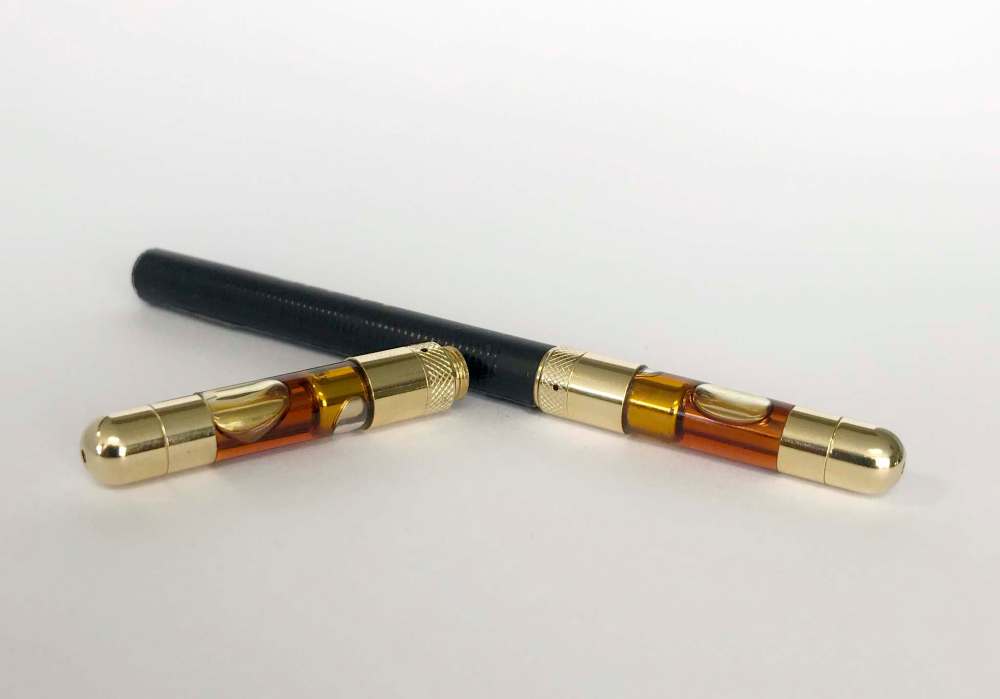
Imagine a sleek cannabis consumption device, no larger than a cigarette, that instantly turns potent cannabis oil into an inhalable vapour.
You don’t have to fuss with grinding up dried marijuana bud and packing it into a tight chamber, like normal vaporizers. You don’t have to worry about keeping the gadget clean, or even fiddling with any buttons. There’s no fire and no smoke.
Just suck at one end, and breathe in a cloud of steamy, almost odourless marijuana mist.
That device already exists: it’s called a vape pen. And even though they’re widely available in cannabis-friendly U.S. jurisdictions and on the Canadian black market, cannabis vape pens won’t be legally available in Canada until up to one year after marijuana legalization takes effect.
Super-discreet
A cannabis vape pen is essentially an e-cigarette, but for cannabis oil instead of nicotine oil. A rechargeable battery powers a heating element, which vaporizes cannabis oil contained in a replacable or refillable cartridge. (Disposable, limited-used vape pens are also available.)
“Vape pens are super-discreet, so unlike smoking cannabis there’s very little odour,” said Lisa Campbell, a cannabis portfolio specialist with Toronto-based liquor distributor Lifford Wine & Spirits, which is adding cannabis to its product mix.
Because vape pens avoid combustion by producing vapour instead of smoke, Campbell and others consider them a less-harmful alternative to smoking.
“It used to be something that was really not available on the Canadian market, it was more popular in legal (U.S.) states like Colorado, Washington, California… (but) even though it’s still a black-market product, it’s really being embraced, at least in Toronto, as a growing consumer trend.”
Consumer demand for cannabis vape pens has also grown on Canada’s West Coast over the past several years, according to Dana Larsen, director of the Vancouver Dispensary Society.
“They’ve been getting more and more popular, and I’ve seen more and more models out there,” he said.
But since vape pens are currently an unregulated product category, said Larsen, “you don’t know exactly what’s in there, and there might be leftovers or residues or things like that from the (oil) creation process which may or may not be so good for you — but they’re still very popular, and I think quite a safe way to use cannabis.”
When vape pens are eventually regulated under the government’s legal cannabis regime, added Larsen, “those kinds of products, I think, will be more popular than smoking a joint for a lot of people.”
Betting big
At least one vape pen manufacturer is already betting on a future in Canada’s legal cannabis market — but not until the products are regulated by the federal government.
Vancouver-based Dosist (formerly known as Hmbldt) currently manufactures and sells cannabis vape pens in California, where marijuana is legal for adult recreational use. Rather than labelling their pens with specific strains of cannabis, each pen contains an oil that’s said to provide a specific effect, like “bliss,” “sleep,” or “calm.” A recyclable Dosist pen with 200 controlled doses retails for US$100, and a 50-dose pen sells for US$40, Dosist president Josh Campbell said.
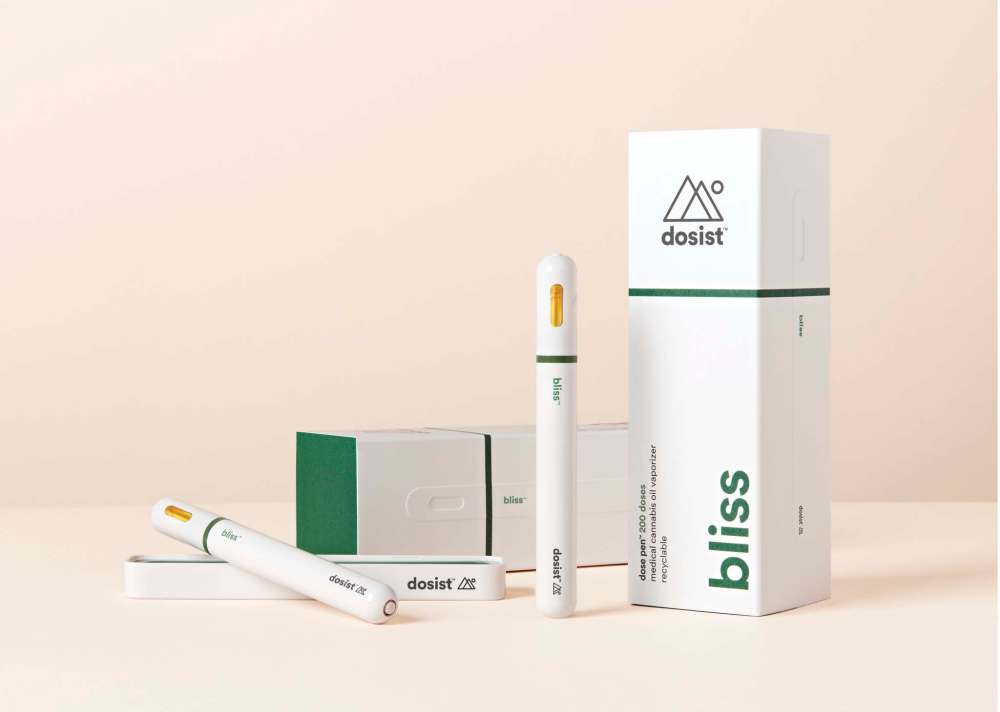
In order for vape pens to be legal for sale in Canada, said Campbell, government regulations will first have to allow for the sale of highly-concentrated, vaporizable cannabis oils.
“Unlike many players right now, we are not playing the grey market (in Canada),” he said.
“We’re waiting until we get the all-clear from every level of regulation, which is why we’re spending a lot of time in Ottawa meeting with MPs, meeting with senators, meeting with the Department of Justice, meeting with Health Canada, to show them the scientific research we’ve done, to show them our product and advocate for regulation and higher standards of care than they may have originally considered as part of the legislation.”
‘Careful study’
The federal government is currently developing regulations for cannabis vape pens and concentrated cannabis oils, a government spokeswoman told The Leaf News — but like the regulations for edibles, regulations for vape pens won’t be ready until up to a year after legalization.
“We have learned from U.S. states that have legalized and regulated access to cannabis that concentrates, including liquid vaping solutions that typically have potencies of 50 per cent to 60 per cent THC, present unique health and safety risks, and require careful study in order to develop appropriate regulatory safeguards,” the spokeswoman wrote in an email.
The federal government, she wrote, is considering “controls on the amount of THC in concentrates, as well as the need for measures to ensure that concentrates are appropriately packaged and labelled to support safe consumption by adults.”
Other areas of regulation could include rules “to address the use of solvents in manufacturing concentrates as well as considering issues regarding the presence of certain types of contaminants,” as well as rules around thinning and flavouring agents for vaporizable cannabis oils.
The government, wrote the spokeswoman, is well aware that cannabis vape pens are widely available on the black market, pointing to Health Canada’s 2017 Canadian Cannabis Survey. Twenty per cent of the respondents to that survey reported having used a cannabis vape pen in the past 12 months.
“The regulations for cannabis concentrates, including vaping products, will help to enable the availability of a greater range of quality-controlled product forms,” she wrote.
solomon.israel@theleafnews.com
@sol_israel
History
Updated on Wednesday, April 11, 2018 10:21 AM CDT: Corrects title of Dosist president Josh Campbell.