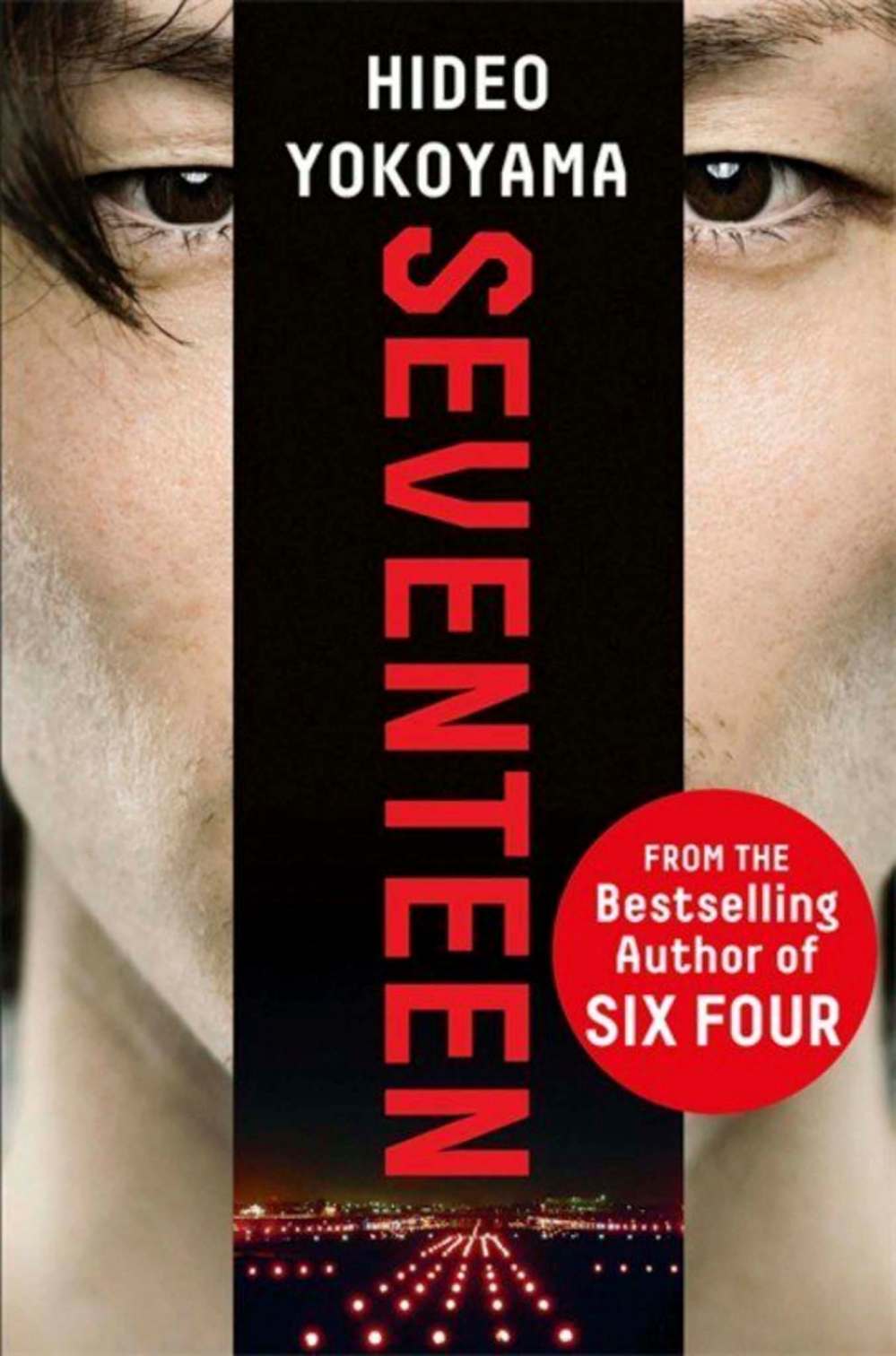
Japanese plane crash gets novel treatment

Advertisement

Advertise with us

Japanese novelist Hideo Yokoyama is new to English readers, but is a regular James Patterson in his home country. The one-time newspaper reporter has won every kind of Japanese-language mystery and crime fiction award in his two decades as a professional novelist.

Read this article for free:

or

Already have an account? Log in here »

To continue reading, please subscribe:

Subscribe and receive a limited-edition Free Press branded hat or tote.

Digital Subscription

One year of digital access for only $205*

  • Enjoy unlimited reading on winnipegfreepress.com
  • Read the E-Edition, our digital replica newspaper
  • Access News Break, our award-winning app
  • Play interactive puzzles

*First annual payment billed as $205.00 + GST for one year. This annual subscription will automatically renew at $233.00 + GST every 52 weeks (10% off the regular annual price of $259.35). Offer available to new and qualified returning subscribers only. Cancel any time.

To continue reading, please subscribe:

Add Free Press access to your Brandon Sun subscription for only an additional

$1 for the first 4 weeks*

  • Enjoy unlimited reading on winnipegfreepress.com
  • Read the E-Edition, our digital replica newspaper
  • Access News Break, our award-winning app
  • Play interactive puzzles
Start now

*Your next Brandon Sun subscription payment will increase by $1.00 and you will be charged $17.95 plus GST for four weeks. After four weeks, your payment will increase to $24.95 plus GST every four weeks.

Hey there, time traveller!
This article was published 05/05/2018 (3008 days ago), so information in it may no longer be current.

Japanese novelist Hideo Yokoyama is new to English readers, but is a regular James Patterson in his home country. The one-time newspaper reporter has won every kind of Japanese-language mystery and crime fiction award in his two decades as a professional novelist.

But this latest release — only his second novel to be translated to English, after 2016’s Six Four — hearkens to Yokoyama’s newsman roots, fictionalizing his own experiences as a local reporter in rural Japan during the 1985 Japan Airlines (JAL) disaster. A staggering 520 people died when a Boeing 757 crashed into the mountains — and it happened right on his doorstep.

Yokoyama aims to transport readers to that time and place, and to experience what he experienced. The decision to write a novel rather than a memoir was a good one; the emotional core is the same, but his well-realized characters and strong thematic throughline, even in translation, are what pull the whole thing together.
The path to clear and honest reporting is not a straightforward one, and in the chaos of the 1985 disaster it is more difficult still. Protagonist Yuuki, a grizzled crime beat veteran, is forced into the task of running the JAL crash desk, which he does initially with great ambivalence. The lone wolf reporter has demons, and leadership has been thrust upon him.

Yuuki is not the only one with darkness in his depths. He and his colleagues in the newsroom are less a team than a fluid conglomeration of alliances, rivals and reluctant allies. Virtually all of them are flawed heroes, clumsily striving for what amounts to a Platonic ideal: perfect journalistic truth.

Though the bulk of the text is set during that first critical week after the crash in August of 1985, the novel jumps forward 17 years (hence the title) in occasional brief flash forwards, and the dual storylines dovetail nicely, with the final 2002 passages acting effectively as epilogue for the main narrative. These also act as useful foreshadowing, though the reader is left guessing until the end how all the story threads will resolve.

The narrative prose is generally plain and unobtrusive, with dialogue most often moving the plot forward. As with any translation into English, and especially one from a non-Western culture, there are clunky moments, the translator perhaps over-explaining a literally foreign viewpoint with mixed results. The story and characters are compelling enough that these moments become less and less noticeable the further one reads.

The clearest trace evidence of Yokoyama’s crime fiction pedigree is in Yuuki’s layered character. He understands and empathizes with everyone, but that doesn’t mean he’s able to connect with them — not his longtime colleagues and not his teenage son.

Like a newsman version of Sam Spade or Philip Marlowe, Yuuki serves the people, but can’t seem to get along with them. Unlike those gritty icons of hard-boiled history, however, Yuuki is not, at his core, a misanthrope. He is trying to learn to connect and one cannot help but root for him.

To this day, the 1985 JAL 123 crash is the most deadly single aircraft accident in aviation history. For the families of the victims, the police, government employees, reporters, locals and the Japanese citizenry at large, it was a period in time they will remember for the rest of their lives. Yokoyama manages to give some sense of what it was like to live through such an overwhelming and all-consuming event.

It is often said a disaster is something people want to look away from but can’t. Yokoyama’s story, however, has a redemptive quality that readers can take away with them.

Joel Boyce is a Winnipeg writer and educator.

Report Error Submit a Tip

More Stories

Gaps in homecare leave Winnipeg man in perilous situation

Nicole Buffie 4 minute read Preview

Gaps in homecare leave Winnipeg man in perilous situation

Nicole Buffie 4 minute read Yesterday at 6:00 AM CDT

Tom Landy fears he won’t live long enough to receive adequate homecare.

The 49-year-old Winnipegger has spinal muscular atrophy, a degenerative disease, and requires 24-7 homecare, but gaps in his care leave him sitting in one spot for hours and lately he’s developed bed sores.

Landy was approved for around-the-clock care in June 2025, but staffing issues and an investigation into a homecare worker’s workplace injury have left him without help for periods of time throughout the day and forced his 76-year-old father to fill in.

“This is what they’re here for, to take care of me, and now it feels like I’m a burden,” he said from his home in the Maples.

Read
Yesterday at 6:00 AM CDT

Letters, July 29

7 minute read Preview

Letters, July 29

7 minute read Yesterday at 2:00 AM CDT

I was excited to see the cover of (the July 27) Free Press. However, it appears the Canadian Press reporter, Ian Bickis, missed key aspects of the story. Purpose Construction not only bought the lot: they built the home Mr. Bettcher now lives in using labour from the neighbourhood as a part of a trades-training program. And they helped build the financing model.

Read
Yesterday at 2:00 AM CDT

911: It’s a matter of life and death

Editorial 4 minute read Preview

911: It’s a matter of life and death

Editorial 4 minute read 2:00 AM CDT

Imagine the frustration and fear that would follow if you faced an emergency situation and the response to your desperate 911 call was … nothing.

For a number of Manitobans — too many, regardless of what the actual total turns out to be — this harrowing prospect has not been a hypothetical; rather, they have been failed by the 911 system that is supposed to provide an anytime/anywhere connection to critical police, fire or ambulance services.

The most recent occurrence was on July 22, when 911 service suddenly became unavailable to areas of Manitoba outside Winnipeg. According to Bell Canada, which provides 911 service in this province, the outage — which lasted from 1 p.m. to shortly after 4 p.m. — was caused by a “third-party cable cut” during construction near Winnipeg; a fibre optic line was severed, disrupting calls routed to the public safety answering point in Brandon. Nearly 90 emergency calls were affected, according to an official at the Brandon facility.

An alert sent out to some mobile customers during the event referred to “a province-wide 911 service disruption impacting Manitoba, excluding the City of Winnipeg,” and directed users to try 911 first, but if they were unable to get through, to “call your local 10-digit emergency numbers for fire, police and ambulance.”

Read
2:00 AM CDT

Saying goodbye to a friend I never met

Pam Frampton 5 minute read Preview

Saying goodbye to a friend I never met

Pam Frampton 5 minute read Yesterday at 2:00 AM CDT

Hedie Epp and I first connected over a column I wrote in October 2023 about my mother’s dementia. Now I find myself awash in sadness for the loss of this person I will never get to meet.

Read
Yesterday at 2:00 AM CDT

Leave lonely lake life and get back to busy

Maureen Scurfield 5 minute read Yesterday at 2:00 AM CDT

DEAR MISS LONELYHEARTS: I’m going crazy! My husband and I are living up at a lake for the first summer after buying a beautiful new cabin. I thought it was going to be heaven, but it’s been hell for me.

I’m not retired, but I’m able to work at my office job remotely for the summer. The problem is, I’m already lonely and bored while my husband is out fishing. My man goes off in the boat with his buddies in the early morning, often for the whole day and the early evening, too. Now he says he’s “in fisherman’s heaven” with his retired buddies who go explore the many great angling lakes around us.

If it goes on all summer and into early fall, and I’ll be out of my mind by then. Most of the other guys’ wives stay back in the city now. They learned early on it’s a drag to be a fisherman’s “widow.”

I called my boss this morning after my husband left to go fishing. My manager says they’re really busy right now, and could use me there ASAP. Yay! I can come back to the office as soon as I want, but I feel guilty about leaving my husband alone. What should I do?

What’s up

5 minute read Preview

What’s up

5 minute read 12:02 AM CDT

Summer Movie Night: JawsBarn Hammer Brewing Co., 595 Wall St.Today, 7 p.m.FreeIt was the first film to be marketed in North America on LaserDisc (in MCA DiscoVision, no less). The main character doesn’t have a name, but was dubbed Bruce by its co-stars. And a prosthetic arm made for the film didn’t look realistic enough, so a cast member was buried in the sand with only her arm sticking out.

Steven Spielberg’s 1975 film Jaws was a sensation upon release, overtaking The Godfather as the highest grossing film at the North American box office (a title it held until Star Wars was released two years later). The film follows the plight of a New England town terrorized by a massive great white shark, and the ragtag trio that set out to take down the beast after a series of attacks.

Tonight at Barn Hammer, you can revisit the film that had so many afraid to go in the water (and spawned Roy Scheider’s infamous line “you’re going to need a bigger boat” which, according to IMDb, he improvised).

The film gets going at 7:30 p.m., but pop by the brewery tap room beforehand for some pre-show trivia (such as the above nuggets). There will be happy hour-priced pints, a themed cocktail and even a candy bar for viewers of all ages to enjoy. Admission is free.

Read
12:02 AM CDT