Facebook fakes flourish
For those battling social media spoofs of themselves, it's nearly impossible to stay ahead
Advertisement
Read this article for free:
or
Already have an account? Log in here »
To continue reading, please subscribe:

Digital Subscription
One year of digital access for only $205*
- Enjoy unlimited reading on winnipegfreepress.com
- Read the E-Edition, our digital replica newspaper
- Access News Break, our award-winning app
- Play interactive puzzles
*First annual payment billed as $205.00 + GST for one year. This annual subscription will automatically renew at $233.00 + GST every 52 weeks (10% off the regular annual price of $259.35). Offer available to new and qualified returning subscribers only. Cancel any time.
To continue reading, please subscribe:
Add Free Press access to your Brandon Sun subscription for only an additional
$1 for the first 4 weeks*
- Enjoy unlimited reading on winnipegfreepress.com
- Read the E-Edition, our digital replica newspaper
- Access News Break, our award-winning app
- Play interactive puzzles
*Your next Brandon Sun subscription payment will increase by $1.00 and you will be charged $17.95 plus GST for four weeks. After four weeks, your payment will increase to $24.95 plus GST every four weeks.
Read unlimited articles for free today:
or
Already have an account? Log in here »
Hey there, time traveller!
This article was published 12/05/2018 (2997 days ago), so information in it may no longer be current.
Katie Greenman’s Facebook profile mirrors all the things the 21-year-old Texas college student loves: cute animals, exotic travel and left-leaning political issues, such as immigration reform and gun control.
But there is another Katie Greenman on Facebook — created by strangers and copying her full name, photos, hometown and old workplace — that shares only ideas celebrated by U.S. President Donald Trump, including an image showing Hillary Clinton in federal prison. The fake account’s profile picture: a selfie of the real Greenman, sunbathing.
“My gosh, what the heck? That’s scary,” Greenman said when a Washington Post reporter showed her the fake account. “That’s me, but I never posted any of this stuff.”
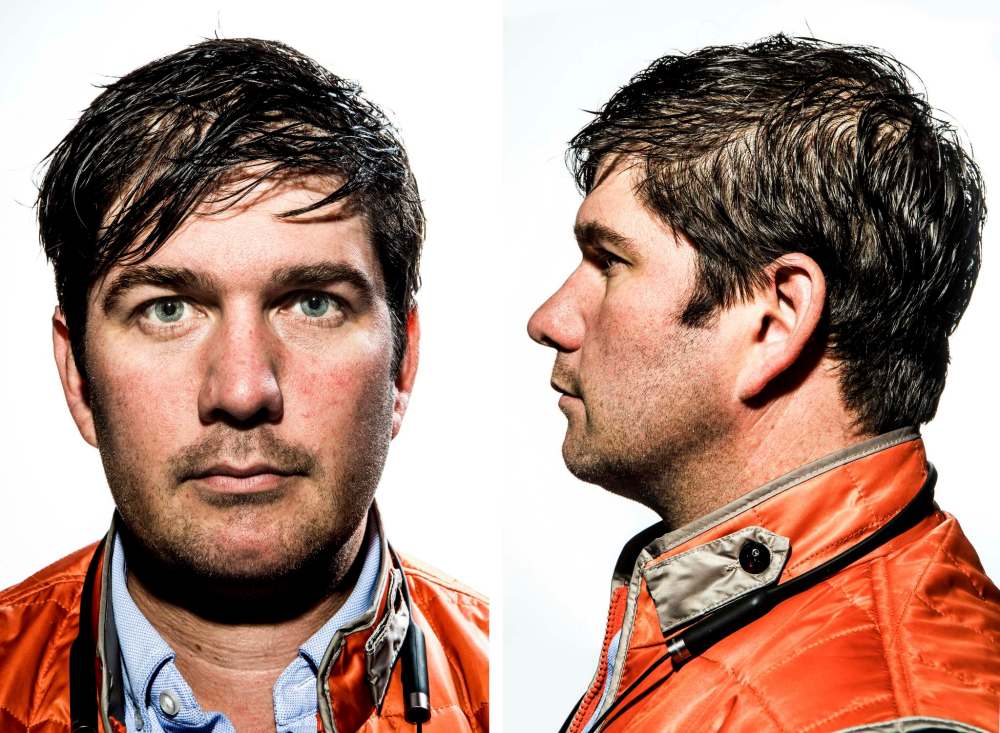
Facebook in December offered a bold solution for its worsening scourge of fake accounts: new facial-recognition technology to spot when a phoney profile tries to use someone else’s photos. The company is now pushing its users to agree to expanded use of their facial data, saying they won’t be protected from impostors without it.
But Greenman and other Facebook users who consented to that technology in recent months remain plagued by a horde of identity thieves.
After the Post presented Facebook with a list of numerous fake accounts, the company revealed that its system is much less effective than previously advertised: the tool looks only for impostors within a user’s circle of friends and friends of friends — not the site’s two-billion-user network, where the vast majority of doppelganger accounts are likely born.
Facebook has championed face recognition and other artificial-intelligence tools as its secret weapons to combat political propaganda, hate speech and misinformation.
But the fakes highlight how the company is struggling to use the technology to fulfil its most basic mission — connecting real people around the world.
The limited scale of Facebook’s central technical solution to the fake-account mess also suggests the site is failing in its pledge to protect users’ personal information, while still urging them to hand over more photos and consent to their broader use.
“We use new technologies to protect people on Facebook, and we’re often able to improve as we roll them out,” Facebook spokesman Matt Steinfeld said. “In the early days of this feature, we’re focused on alerting people to new and recent photos posted by their friends and friends of their friends. We hope to improve how we use this technology over time.”
Facebook disabled dozens of fake accounts after being notified by the Post, though others quickly rose in their place.
The number of what Facebook calls “undesirable” accounts is growing rapidly. The company estimates there were as many as 87 million fake accounts in the past quarter, according to financial filings — a dramatic jump over 2016, when an estimated 18 million accounts were fake.
Facebook explained the increase by pointing to “episodic spikes” in fake-account creation in countries such as Indonesia, Turkey and Vietnam. That estimate does not include duplicate accounts, which users sometimes create by accident or to have separate professional and personal profiles. Facebook estimated duplicates account for 10 per cent of its global user base.
Facebook’s failure to spot obvious counterfeit accounts has highlighted one of the company’s more embarrassing public ills.
Facebook has for years used facial-recognition technology to suggest who can be tagged in a user’s photo and sift through the 350 million images the company says are uploaded every day. In December, Facebook announced it would soon upgrade that technology with new features “to prevent people from impersonating others on Facebook,” adding, “We want people to feel confident when they post pictures of themselves on Facebook.”
The site is using that technological promise to encourage more users to consent to expanded facial-recognition rules. In its new privacy settings revealed last month, users are told, “If you keep face recognition turned off, we won’t be able to use this technology if a stranger uses your photo to impersonate you.” Facebook users who want to avoid impersonation but not have their name suggested for tagging in someone else’s photo are not allowed the choice.
But in the months since that feature was announced, scam profiles that took the names, photos and other information from legitimate accounts continued to spread. The company said profile-photo review began in mid-March and currently works only for a limited segment of a person’s social circle, “not random strangers.”
The company said the feature is reviewing only new accounts’ profile photos because of the large amount of computing power it would take to check every account. That means the tens of millions of existing fake accounts made before March won’t be caught.
Facebook’s rules forbid users from falsely representing themselves as someone else. The company could not estimate when it might expand the feature or how many impostor accounts had been spotted so far.
Some critics question why a US$500-billion company with so many top engineers still struggles to protect its users’ identities. Zach Elwood, a technical writer in Portland, Ore., who sleuths out Facebook fakes in his spare time, keeps a long spreadsheet of names and alerts users when he finds they’ve been impersonated. He uses no AI, he said, because he doesn’t need it: looking through Facebook groups, he says he can spot blatant fakes with just a few clicks.
“It’s kind of a cop-out to pretend there’s some high-tech solution needed for this,” he said. “I’m not anybody with any special knowledge. Anybody can go on there and find these things.”
It’s not always clear why or how a person was chosen for impersonation, or for what purpose the knock-off was made. The profiles tend to post links to dodgy websites, share spam, boost a group’s followers or lure other people into sharing information or sending money. Many of the fake accounts appear to be built by copying, or “scraping,” the photos and biographical details from users’ Facebook profiles.
Some telltale signs can give the fakes away: a username that doesn’t match the person’s real name; friends from a different country, including online-scam hot spots such as Macedonia and Nigeria; and recently created profiles with a lack of public posts or relationships.
But some of the impostors are more active than the real accounts. Mark Bright, a restaurant sommelier in San Francisco, had his name and photos co-opted for an impostor account that in the past six months has posted more regularly than he has. Even its username seems more authentic than his: his is “mark.bright.961,” while the fake’s is “Mark.Bright.001.”
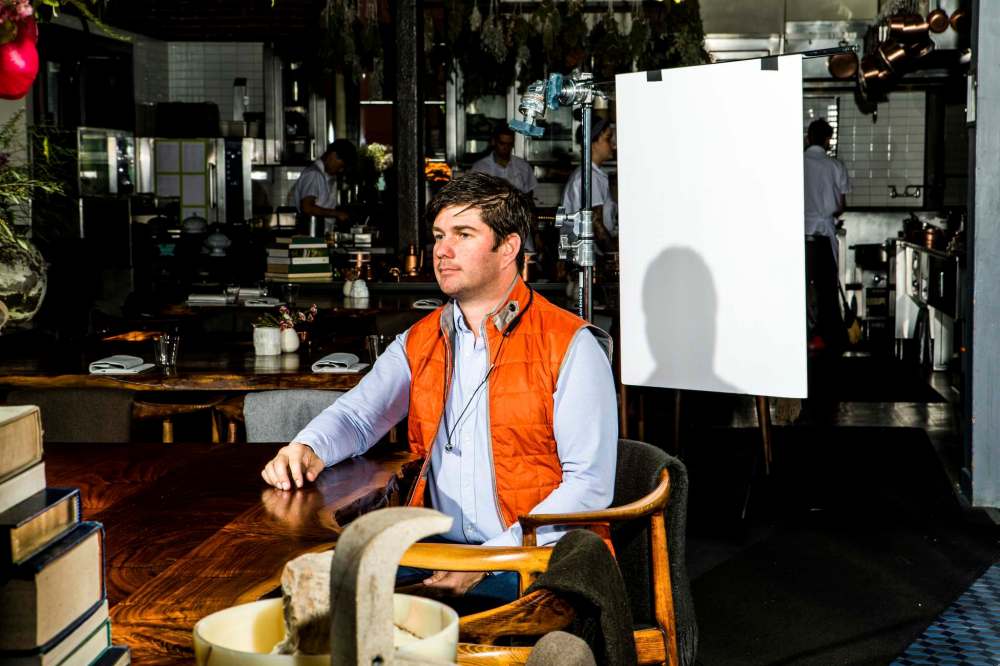
The impostor account appears to enjoy a rich and fulfilling social life, posting photos from Bright and his wife’s honeymoon, their trip to a Chicago Cubs baseball game and a portrait from his birthday party. In September, the fake account checked him into Distrito Federal, Mexico, where it said he was “feeling loved.”
But nearly all of the account’s activity has been devoted to sharing pictures, posts and tweets from or about the president’s daughter, Ivanka Trump. It was also a member of 14 groups for Trump devotees. “Do you love ivanka trump?” the fake Bright wrote in a post last month.
“Anybody who knows me would see the Trump thing and think ‘Bulls—. That’s not him,’” Bright, 35, said. “This just gives me a big feeling of insecurity. And honestly, it makes me want to take my account down.”
Analysts say the site could face an existential threat if unnerved users shy away from posting photos there for good. “There is some skepticism that they know where all of the fakes are,” said Brian Wieser, a senior analyst at Pivotal Research.
Because the doppelganger accounts speak out in Facebook’s most public venues, the profiles can gain followings, friends and enemies all their own. The fake account of Greenman, the Texas college student, is a member of Facebook groups such as “Trump’s New Generation.” It attracted dozens of fawning and profane commenters to the photos of her that the fake account had swiped. Several strangers engaged in political shouting matches or sparred for her approval.
The political nature of many of the sham accounts is a reminder of the distortive role that the world’s largest social network continues to play on American politics in the months leading up to the 2018 midterm election, two years after the presidential campaign shined a spotlight on its role in the viral spread of misinformation.
The frustration with Facebook can be resoundingly bipartisan. Terry Hestilow, a conservative U.S. army veteran in Texas who offers commentary on the news for his 8,500 Facebook followers, criticized the site last summer as complicit because it had done too little to combat fake accounts. He listed 60 scam profiles he said had used his old photos (“army uniform by helicopter,” “western hat in front of elephant”) and urged his followers to report them “until Facebook is forced by shame to remove them.”
“From this day forward, know that those criminals who continue to maintain pages pretending to be persons represented by stolen photos of me do so with the full knowledge, consent and support of Facebook,” he wrote.
Facebook’s inability to stop counterfeits has pushed some users to a breaking point. Steve Kalfman, a 28-year-old army engineer in Washington state, said scammers have created dozens of fake Facebook profiles in recent months by taking his name and photos, including of himself in uniform, at the gym or with his young daughter.
Kalfman suspects many of the profiles are used to fool women into handing over cash, since those “catfishing” victims often end up tracking him down to demand their money back. The fakes appeared to have a wide-ranging set of interests, lived in seven different states and were rich in concocted personalities: “I A Good Guy..Am Simple,cool But Hard To Get,” one phoney Kalfman said.
Kalfman started placing a signature watermark on all his photos, agreed to Facebook’s expanded facial-recognition tools and said he now spends time filing fake-account reports on about 10 profiles a week. But Facebook, he said, appears no closer to solving the problem beyond disabling an account here or there in a fruitless game of Whac-A-Mole.
“Whatever I report, they’ll make a new one the next day,” Kalfman said. Facebook has, in four cases, inadvertently disabled his real profile instead, making the problem even more frustrating. After the Post reported more than a dozen sham accounts stealing Kalfman’s name and photos to Facebook, the company erroneously disabled Kalfman’s real account, but left virtually all of the fakes intact.

“I don’t understand,” he said. “It’s pretty easy to tell that I’m the real one.”
By the time Facebook restored Kalfman’s real account the next day, another six fake Steve Kalfmans had already bloomed.
— Washington Post