

Income inequality worse than in 1970s: study
Report outlines way to reverse trend

Advertisement
Read this article for free:
or
Already have an account? Log in here »
To continue reading, please subscribe:
Digital Subscription
One year of digital access for only $75*
- Enjoy unlimited reading on winnipegfreepress.com
- Read the E-Edition, our digital replica newspaper
- Access News Break, our award-winning app
- Play interactive puzzles
*Billed as $5.77 plus GST every four weeks. After 52 weeks, price increases to the regular rate of $19.95 plus GST every four weeks. Offer available to new and qualified returning subscribers only. Cancel any time.
Monthly Digital Subscription
$4.99/week*
- Enjoy unlimited reading on winnipegfreepress.com
- Read the E-Edition, our digital replica newspaper
- Access News Break, our award-winning app
- Play interactive puzzles
*Billed as $19.95 plus GST every four weeks. Cancel any time.
To continue reading, please subscribe:
Add Free Press access to your Brandon Sun subscription for only an additional
$1 for the first 4 weeks*
- Enjoy unlimited reading on winnipegfreepress.com
- Read the E-Edition, our digital replica newspaper
- Access News Break, our award-winning app
- Play interactive puzzles
*Your next Brandon Sun subscription payment will increase by $1.00 and you will be charged $17.95 plus GST for four weeks. After four weeks, your payment will increase to $24.95 plus GST every four weeks.
Read unlimited articles for free today:
or
Already have an account? Log in here »
Hey there, time traveller!
This article was published 07/06/2018 (2909 days ago), so information in it may no longer be current.
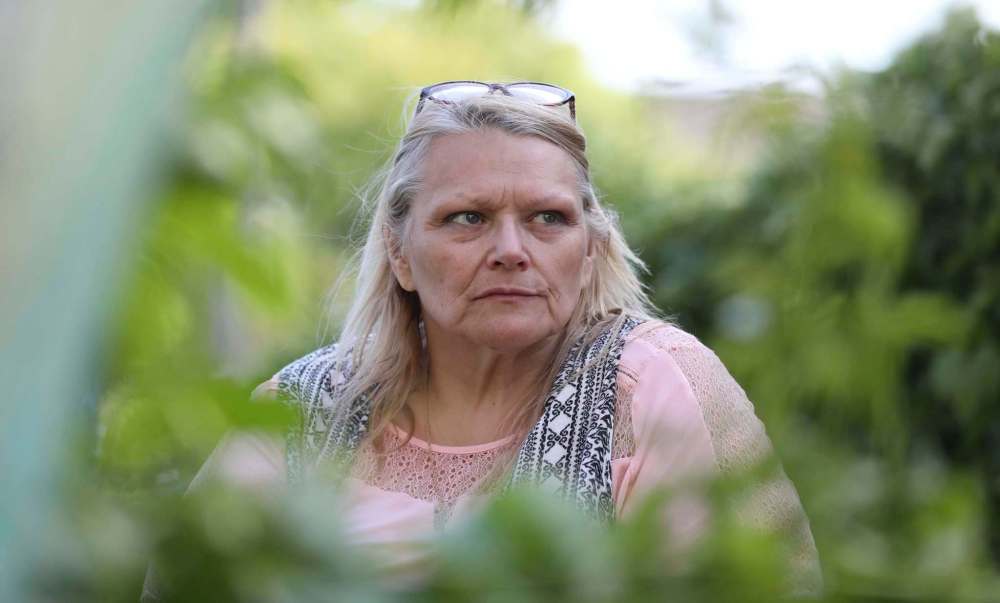
A new study shows income inequality in Manitoba is greater today than it was in the 1970s — and it’s no surprise to Dawn Foltz.
The 61-year-old Winnipegger was raised by a single mom on welfare and then became one herself and has had to rely on assistance.
“I remember my mom saying, ‘The rich are getting richer and the poor are getting poorer.’ Not much has changed,” Foltz said. “That’s the way things are now.”
Her opinion is backed up by a Canadian Centre for Policy Alternatives report that was released Wednesday night. Manitoba Inequality Update: Low-income Families Left Behind analyzed Statistics Canada income data from 1976 to 2014 for families with children under 18.
The study by University of Manitoba economist Ian Hudson and Benita Cohen of the U of M College of Nursing found family income in the lowest decile (10 per cent) fell by 11 per cent in Manitoba, while market income in the top decile grew by 44 per cent.
Manitoba families in the top 30 per cent saw their share of provincial income increase since the late 1970s, while the share of income going to the rest of the population shrank. It happened across Canada, with a slightly smaller gap in Manitoba, the survey found.
After taxes and transfers, the average income of the bottom 10 per cent of Manitoba families increased to $23,000 from $4,500. It was an improvement, but still below the poverty line of $28,000 for a couple with children and $24,500 for single parents.
People who rely on assistance and the working poor are barely keeping their heads above water with the rising cost of housing, food, transportation and utilities such as hydro and cable, said Foltz, who knows first-hand.
“You have to have the internet for your kids for school,” she said. “The internet is a necessity these days. It’s not a luxury.”
The new report backs her up there, too, including studies that show children from low-income families often don’t graduate high school on time and are less likely to access post-secondary education.
Foltz said getting to medical appointments costs more with rising bus fares, while services are being reduced or seem tougher to access.
“More and more things are being taken away,” and the resulting “squeeze” drives more people to drug abuse, she said. “They say, ‘Numb me out because I can’t handle what’s going on around me in my world.’”
People still get blamed for being poor and nothing changes, Foltz said.
“I’d like to work,” said Foltz, who has been sidelined by health issues, including diabetes, arthritis, irritable bowel syndrome and a liver disorder.
Until volunteering at the West Broadway Community Organization’s Good Food Club, she’s never had access to affordable, healthy nutrition, Foltz said. That’s taken a toll on her health and her economic potential, she said.

Foltz is not alone, the Manitoba income inequality study says. It points to federal data showing lower incomes cost the Canadian health-care system $6.2 billion annually.
Another effect of people being economically left behind is a lower life expectancy — as much as 15 to 17 years for some.
The situation can be reversed, the report says. From 1940 to 1980, inequality decreased with progressive income taxation, transfers to the poor, higher unionization rates and real minimum wage and higher unemployment insurance and social assistance.
The report warns cuts to health care, public education and post-secondary education in Manitoba will worsen the effect of income inequality. Bill 7, for instance, makes it more difficult for workers to unionize in Manitoba — and unionized workers made $6.23 more per hour than non-unionized workers in 2018, it says.
carol.sanders@freepress.mb.ca
Carol Sanders
Legislature reporter
Carol Sanders is a reporter at the Free Press legislature bureau. The former general assignment reporter and copy editor joined the paper in 1997. Read more about Carol.
Every piece of reporting Carol produces is reviewed by an editing team before it is posted online or published in print — part of the Free Press‘s tradition, since 1872, of producing reliable independent journalism. Read more about Free Press’s history and mandate, and learn how our newsroom operates.
Our newsroom depends on a growing audience of readers to power our journalism. If you are not a paid reader, please consider becoming a subscriber.
Our newsroom depends on its audience of readers to power our journalism. Thank you for your support.
Income inequality spectrum
Manitoba income inequality swings from $4,500 at the bottom, to $262,000 at the top.
The average market income of the lowest decile (10 per cent) of the population was $4,500 in Manitoba and $6,600 in Canada in 2014 — not nearly enough to meet basic needs.
At the other end of the spectrum, the average market income for a family in the top decile in Manitoba was more than $262,000.
The average market income of a Manitoba family was $92,000 ($104,000 in Canada).
By defining the average Manitoban as someone in the middle fifth and sixth deciles, their average income is $71,000 and $82,000, respectively.
— source: Canadian Centre for Policy Alternatives — Manitoba Inequality Update: Low-income Families Left Behind
Carol Sanders
Legislature reporter
Carol Sanders is a reporter at the Free Press legislature bureau. The former general assignment reporter and copy editor joined the paper in 1997. Read more about Carol.
Every piece of reporting Carol produces is reviewed by an editing team before it is posted online or published in print — part of the Free Press‘s tradition, since 1872, of producing reliable independent journalism. Read more about Free Press’s history and mandate, and learn how our newsroom operates.
Our newsroom depends on a growing audience of readers to power our journalism. If you are not a paid reader, please consider becoming a subscriber.
Our newsroom depends on its audience of readers to power our journalism. Thank you for your support.
Advertisement Advertise With Us
Advertisement Advertise With Us
History
Updated on Thursday, June 7, 2018 6:40 AM CDT: Adds photo