

Program seeks to help Indigenous men deal with childhood abuse and trauma

Advertisement
Read this article for free:
or
Already have an account? Log in here »
To continue reading, please subscribe:
Digital Subscription
One year of digital access for only $1.44 a week*
- Enjoy unlimited reading on winnipegfreepress.com
- Read the E-Edition, our digital replica newspaper
- Access News Break, our award-winning app
- Play interactive puzzles
*Billed as $5.77 plus GST every four weeks. After 52 weeks, price increases to the regular rate of $19.95 plus GST every four weeks. Offer available to new and qualified returning subscribers only. Cancel any time.
To continue reading, please subscribe:
Add Free Press access to your Brandon Sun subscription for only an additional
$1 for the first 4 weeks*
- Enjoy unlimited reading on winnipegfreepress.com
- Read the E-Edition, our digital replica newspaper
- Access News Break, our award-winning app
- Play interactive puzzles
*Your next Brandon Sun subscription payment will increase by $1.00 and you will be charged $17.95 plus GST for four weeks. After four weeks, your payment will increase to $24.95 plus GST every four weeks.
Read unlimited articles for free today:
or
Already have an account? Log in here »
Hey there, time traveller!
This article was published 11/07/2018 (3028 days ago), so information in it may no longer be current.
Masculinity, trust, emotional awareness and self-care were all on the agenda when a group of men took their seats around a sharing circle at the John Howard Society.
In 14 closed-group sessions held in Winnipeg this spring, seven Indigenous men in their early 20s to early 60s talked about the childhood trauma they each experienced and learned ways to move past it, finding an audience of others who understood what they were going through.
The Healing Program for Indigenous Men is the first of its kind at the John Howard Society of Manitoba, which received federal funding to run the program as part of a three-year pilot project focused on helping men cope with childhood sexual abuse and trauma. A second group of seven men began the program this week, after the first group completed its sessions in May.
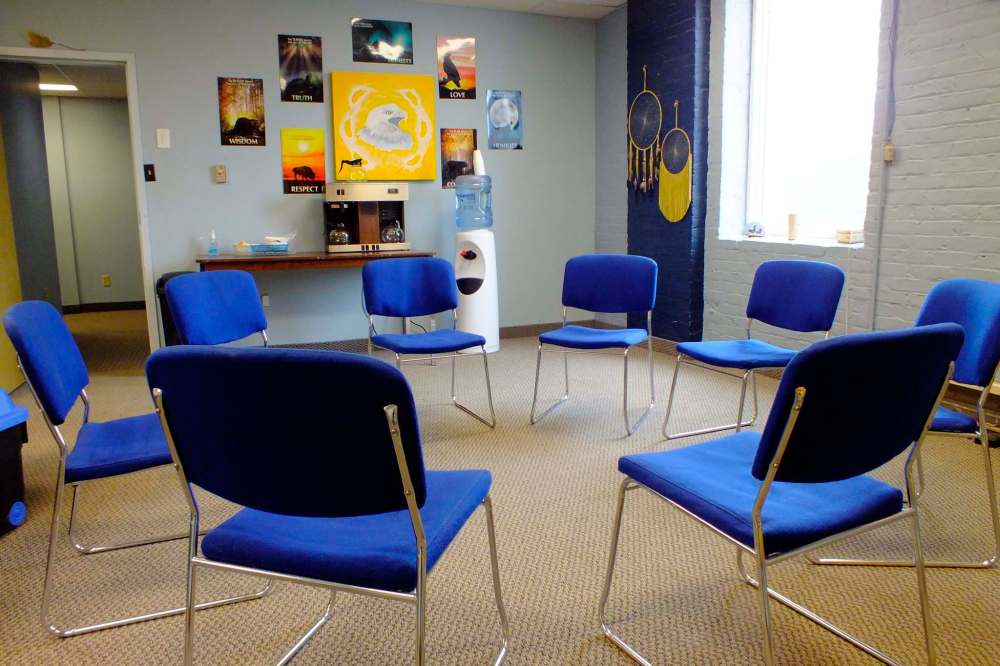
Unlike other programs geared toward men who are incarcerated or otherwise involved with the criminal justice system, this one is open to any adult man who wants to find ways to cope with past abuse. Many who’ve participated so far have said societal pressures and ideas of what it means to be a man have hindered their healing and led them to drug abuse or other unhealthy ways of coping, program caseworker Melissa Nolin said.
“Society portrays this view of men — this is what a man is. But when we talk about it in group, they talk about, ‘Well, I’ve never been allowed to cry… you know, you’re not supposed to talk about this stuff,’” she said. “And having this group and allowing them the opportunity to share whatever they choose to share, I think that’s pretty empowering for them… to just allow them that voice.
“From the participants, it sounds like the need is for the sharing circle and having the support of other participants who’ve experienced the same type of trauma,” Nolin added. “They’re seeing that, ‘I’m not the only one who’s gone through this’ and there are other people, other men, who have gone through this and that it’s OK to talk about these types of things. And that, being in the sharing circle, is a form of healing on its own.”
The John Howard Society received $229,000 in federal funding from the Department of Justice Canada to run the program, which includes the expertise of elders and Indigenous cultural traditions. Programs manager Sharon Perrault applied for the funding after years spent working with people who experienced childhood sexual trauma. A common theme she saw was Indigenous men’s sexual abuse often went unaddressed.

“It’s been a well-kept secret. You know, it’s not something that’s easily disclosed for a person,” she said. “In my years, I’ve not seen a lot of calls for proposals (for men’s programs). It’s been mainly targeted towards women, but not too much for men.”
The fact the federal government approved the funding, following the Truth and Reconciliation Commission’s calls to action, is a sign the stigma is starting to fall away, Perrault said.
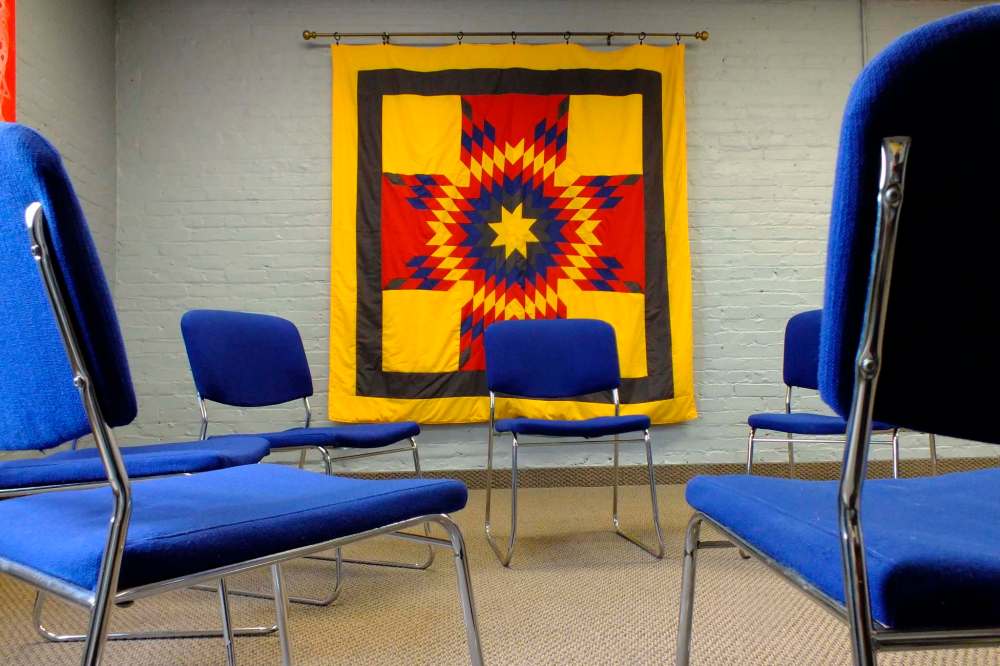
“I don’t believe 20 years ago we would have been successful in doing this,” she said. “My hope is that other people across Canada are going to be able to learn from our experiences and from the work that we’re doing.”
John Howard Society will produce a report to the federal government about what the program accomplished. Perrault said it hopes to create a manual for other organizations in the country who want to offer a similar program.
katie.may@freepress.mb.ca Twitter: @thatkatiemay
Katie May is a multimedia producer for the Free Press.
Our newsroom depends on a growing audience of readers to power our journalism. If you are not a paid reader, please consider becoming a subscriber.
Our newsroom depends on its audience of readers to power our journalism. Thank you for your support.
Katie May is a multimedia producer for the Free Press.
Our newsroom depends on a growing audience of readers to power our journalism. If you are not a paid reader, please consider becoming a subscriber.
Our newsroom depends on its audience of readers to power our journalism. Thank you for your support.
Advertisement Advertise With Us
Advertisement Advertise With Us
History
Updated on Thursday, July 12, 2018 6:07 AM CDT: Final