

Polishing railway’s ‘crown jewel’
Feds pledge $5.6M to upgrade Cando rail line
Advertisement
Read this article for free:
or
Already have an account? Log in here »
To continue reading, please subscribe:
Digital Subscription
One year of digital access for only $1.44 a week*
- Enjoy unlimited reading on winnipegfreepress.com
- Read the E-Edition, our digital replica newspaper
- Access News Break, our award-winning app
- Play interactive puzzles
*Billed as $5.77 plus GST every four weeks. After 52 weeks, price increases to the regular rate of $19.95 plus GST every four weeks. Offer available to new and qualified returning subscribers only. Cancel any time.
To continue reading, please subscribe:
Add Free Press access to your Brandon Sun subscription for only an additional
$1 for the first 4 weeks*
- Enjoy unlimited reading on winnipegfreepress.com
- Read the E-Edition, our digital replica newspaper
- Access News Break, our award-winning app
- Play interactive puzzles
*Your next Brandon Sun subscription payment will increase by $1.00 and you will be charged $17.95 plus GST for four weeks. After four weeks, your payment will increase to $24.95 plus GST every four weeks.
Read unlimited articles for free today:
or
Already have an account? Log in here »
Hey there, time traveller!
This article was published 31/07/2018 (2867 days ago), so information in it may no longer be current.
EAST ST. PAUL — Federal funding will keep alive a rail line that has been hauling oil through East St. Paul since 1951.
MP MaryAnn Mihychuk (Kildonan-St. Paul) announced $5.6 million in funding for the Central Manitoba Railway (CEMR), whose biggest client is the Imperial Oil terminal on Henderson Highway northeast of Winnipeg.
CEMR, a 108-kilometre short line running from East Selkirk north of Winnipeg to Carman south of Winnipeg owned by Cando Rail Services, which will match the grant money.
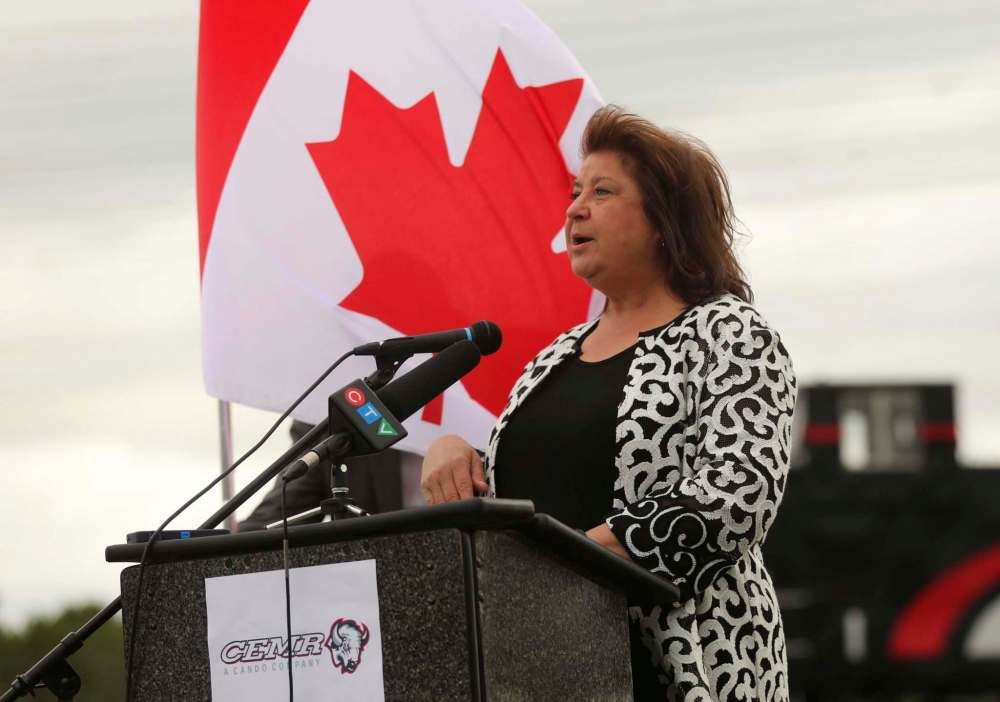
“This will upgrade more than 14 kilometres of short line track from Symington Yard to the Imperial Oil terminal,” Mihychuk said at an outdoor press conference, in front of a Canadian flag and pole fastened to the ground with railway spikes.
The Imperial Oil terminal represents 20 to 25 per cent of business carried by CEMR. A train of 10 to 15 tanker cars runs daily to and from Imperial Oil, carrying from one million to 1.5 million litres of oil.
The upgrades mean safer movement of goods, as well as the ability to load cars fuller and move them faster.
For example, the current line is only rated to handle 263,000 pounds per railcar, whereas the industry standard is 286,000 pounds.
The upgrades will mean customers like Imperial Oil will be able to fill cars to 286,000 pounds. CEMR then moves those cars at the heavier weight to a Winnipeg switching yard where the cars are picked up by transcontinental railways to ship elsewhere in Canada or the United States.
“It’s a huge efficiency benefit to our customers,” Jay Crannery, general manager of Cando Rail Service said.
“It doesn’t make CEMR more money, but it allows us to save money because we’re handling fewer cars and it positions us for the future.”
CEMR also handles products like lumber, steel, potash, and other industrial materials over a short stretch for interchange with the major railways, or transloading. Transloading is transferring freight from one mode of transportation, like rail, to another, like truck, or vice versa.
About 50 to 100 cars are moved daily to CNR and CPR interchanges. The short line railway also hauls farm inputs to its Carman subdivision to the south, and farm production from it.
Cando owns three short line railways but CEMR is by far the busiest.
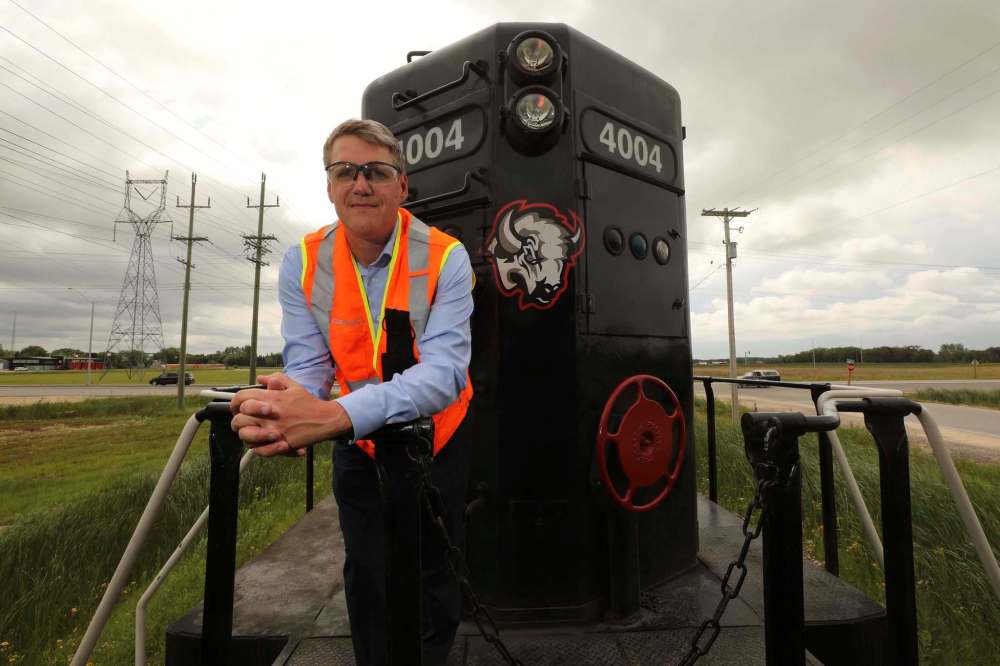
“(CEMR) is probably our crown jewel. It’s our biggest single operation,” said Cando vice-president Lee Jebb. CEMR employs 75 people, he said.
The infrastructure spending also secures the short line railway’s future, he said.
The upgrades will include installing new railway ties and track, as well as grade, ballast, and drainage improvements. New line switches and crossing improvements are also planned.
Construction on the rail line will start in summer of 2019 and be completed by spring of 2020, creating 100 construction jobs.
East St. Paul Mayor Shelly Hart said the railway won’t be moving any more oil than it does now but it will do so more safely and efficiently.
“This is about safety,” Hart said. “It will give a measure of comfort to residents knowing the upgrade provides that larger measure of safety.”
The rail line has been ferrying oil since Imperial Oil opened a refinery in East St. Paul in 1951. In 1975, Imperial Oil shut the refining operation and became a storage facility and distribution centre. Cando took over the Pine Falls subdivision that serves Imperial Oil in 1999, as well as the Carman subdivision, from CN Rail.
The Imperial Oil yard is a cash cow for the municipality, paying about $500,000 per year in property taxes. It is one of the few commercial properties in East St. Paul that helps offset the tax load on residential property owners.
The federal dollars come out of the National Trade Corridor Fund set up last year, which is mandated to allocate $2 billion over 11 years to increase Canadian trade through upgrades to ports, airports, roads, railways, intermodal facilities, bridges and border crossings.
“(Cando) won a competitive review. There were hundreds of bids across the country. It was one of the best projects,” Mihychuk said. “Infrastructure is very important and this is a case of a partnership between the private sector and government.”
Cando, based in Brandon, is a major Manitoba success story. It was started by Gord Peters and Rick Hammond in 1978 as salvage company after it won a contract to rip up two Manitoba branch lines. Art Peters, Gord’s father, and brother Doug were also part of the company’s early success.
Today, Cando has many rail-related operations and employs more than 400 people across North America.

Among Cando assets are a switching yard, a railcar repair facility, a transloading centre, as well as a railcar storage facility, where it keeps up to 2,000 potash cars during that sector’s offseason.
“We do the stuff CP and CN don’t like to do,” said vice-president Jebb.
It also builds and operates fuel terminals, like one it has in Ontario, as well as rail yards.
bill.redekop@freepress.mb.ca