

Futuristic gardening takes root
Aeroponic farm grows crops indoors, vertically without soil
Advertisement
Read this article for free:
or
Already have an account? Log in here »
To continue reading, please subscribe:
Monthly Digital Subscription
$1 per week for 24 weeks*
- Enjoy unlimited reading on winnipegfreepress.com
- Read the E-Edition, our digital replica newspaper
- Access News Break, our award-winning app
- Play interactive puzzles
*Billed as $4.00 plus GST every four weeks. After 24 weeks, price increases to the regular rate of $19.95 plus GST every four weeks. Offer available to new and qualified returning subscribers only. Cancel any time.
Monthly Digital Subscription
$4.99/week*
- Enjoy unlimited reading on winnipegfreepress.com
- Read the E-Edition, our digital replica newspaper
- Access News Break, our award-winning app
- Play interactive puzzles
*Billed as $19.95 plus GST every four weeks. Cancel any time.
To continue reading, please subscribe:
Add Free Press access to your Brandon Sun subscription for only an additional
$1 for the first 4 weeks*
*Your next subscription payment will increase by $1.00 and you will be charged $16.99 plus GST for four weeks. After four weeks, your payment will increase to $23.99 plus GST every four weeks.
Read unlimited articles for free today:
or
Already have an account? Log in here »
Hey there, time traveller!
This article was published 03/08/2018 (2803 days ago), so information in it may no longer be current.
OAK BLUFF — It doesn’t seem right to grow crops and not get a little dirt under your fingernails.
But these herbs and leafy greens are grown indoors, without soil, in the sides of walls using solar-powered grow lights.
Vertical Air Farms sounds more like a basketball term, but it’s the first aeroponic farm in Manitoba and possibly only the second in the country, its owners say.
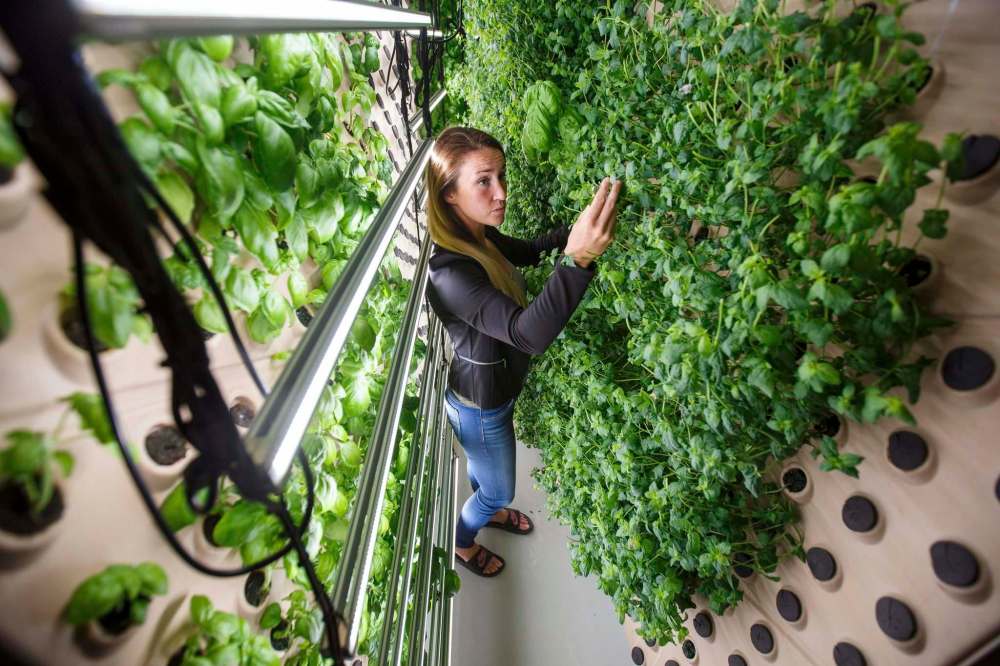
The vertical part is the panels in which the crops grow. They stand upright, instead of horizontal like in a greenhouse, and so they require far less space to grow.
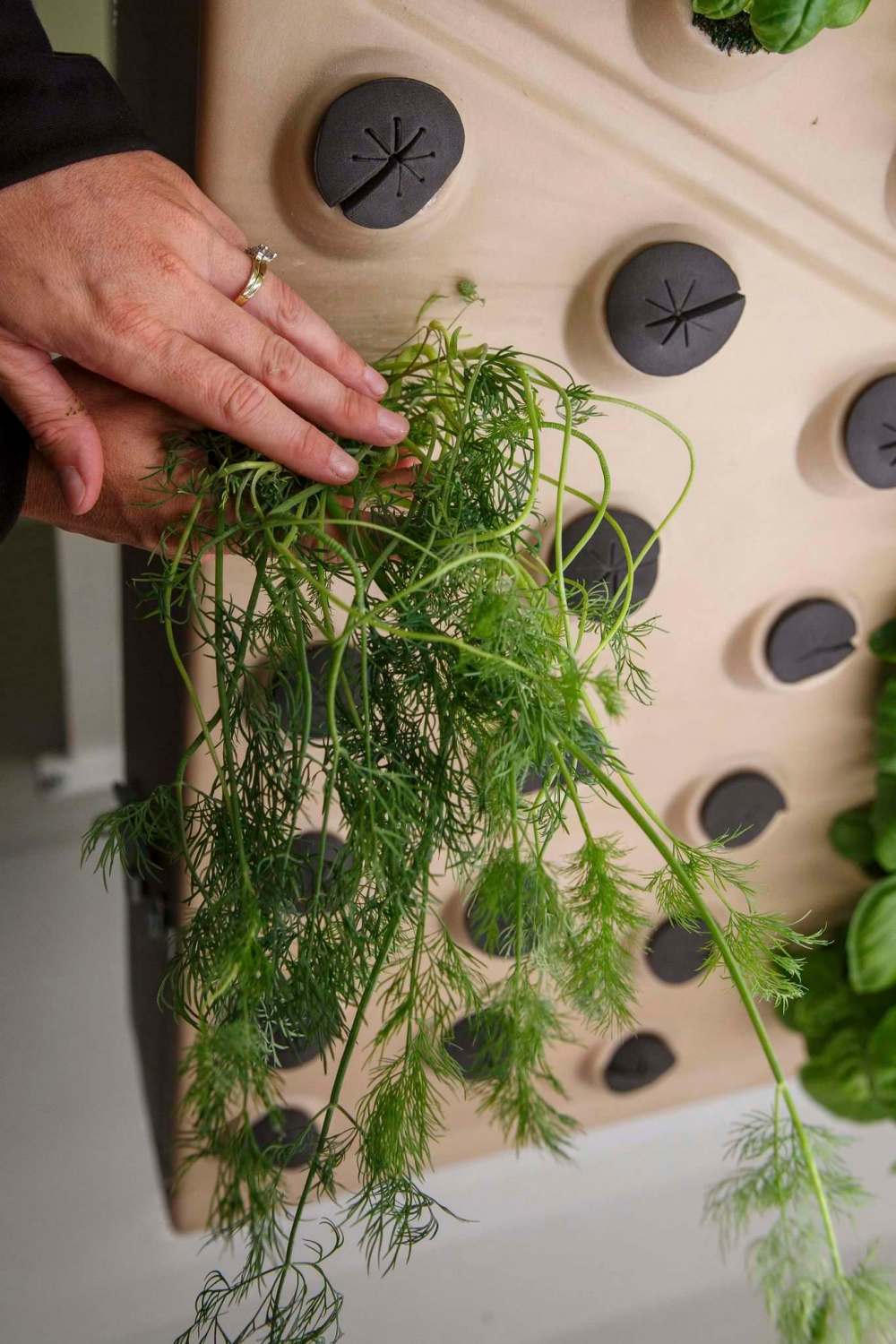
The plants grow out of slots in the sides of the vertical panels. When empty, the panels are full of holes, like a cliff burrowed by swallows. Once the plants poke their heads out, they’re like happy, leafy faces.
The panels are on tracks, like a pull-out closet, and can be wheeled around into different positions.
It’s a futuristic kind of farming which began with the United States’ space program many years ago, said Kale Rempel, part of the youthful group that runs Vertical Air. It means their current selection of greens — parsley, dill, basil, arugula and mint — are super fresh because they don’t make a 10-day trek from farms in California and Mexico to Winnipeg.
“The taste is unbelievable,” Rempel said.
It’s ridiculously clean. You don’t get dirt under your fingernails because no soil whatsoever is involved. The building is spotless.
“Soil carries disease and pests. This is the cleanest way to grow plants,” Rempel said. No herbicide or pesticides are used because they aren’t required.
Seeds are started in a cork-shaped sponge and are plugged into the panels once they germinate. Plant roots are then automatically misted with a nutrient-enriched water every six minutes for five-to-eight seconds, depending on the stage of the plant.
The water circulates with help from a sump pump and is used over and over again. A monitoring system ensures the right minerals and nutrients are automatically added to the water as required.
There’s virtually no carbon footprint. The system uses just five gallons of water per day — about five percent of the requirement of conventional crops. The entire system is powered by a bank of 320 solar panels.
“The plants are basically on vacation their whole lives where they’re getting the maximum nutrient levels and are in the best environment,” Rempel said.
It’s an interesting metaphor: plants labouring in soils are the working stiffs fighting off diseases and insects, while plants grown aeroponically are in lounge chairs sipping umbrella drinks around a pool.
Aeroponics doubles and triples production — plants are harvested every 18 to 30 days, depending on the crop — and Vertical Air grows crops year round. The plants have no competition and can’t be erased by a storm. Vertical Air operates from a 40-acre parcel of land just outside the Perimeter Highway near Oak Bluff.
The three 30-and-under members of the ownership group are from the city and never imagined becoming farmers. A year ago, manager Joel Alvestad was a fishing guide on Lake of the Woods; Kale Rempel, in charge of sales and marketing, and his sister, Kacee Laninga, who helps grow and harvest the crops, were repairing and reselling used vehicles.
Then, Alvestad got a call from his uncle, Mike Sorobey, in Las Vegas. Sorobey, originally from Winnipeg, runs trade shows in Las Vegas and had seen aeroponic systems in operation. He thought they would make a good business venture in Manitoba.
Sorobey, Alvestad, Kale Rempel and his father Larry are all investors, while Kacee and her husband provide the land and building space on their rural residential property.
It cost about $500,000 to convert an old barn on the property into an aeroponics operation, with much volunteer labour led by Larry Rempel, a retired master carpenter. The bank of 320 solar panels cost $317,000, but a Manitoba Hydro energy incentive program knocked off $117,000. The farm has already sold $3,000 worth of power back into the electric grid since starting in January.
Stella’s Café and Bakery was the first restaurant approached because Vertical Air fits Stella’s mantra to buy local and organic when possible, plus Kale Rempel eats there regularly. So, he invited Stella’s vice-president Grant Anderson to their farm.
“It’s unlike anything I’ve tasted before,” Anderson said.
“The products I’m most impressed with are basil, parsley and the arugula, which are all outstanding.”
For example, the arugula, used in salads and sauce mixes, “tastes like arugula is supposed to taste. It’s fiery and peppery and has all the elements of something that bursts with extreme flavour.”
Vertical Air’s Laninga says the taste of the parsley is also an awakening. “It’s usually just a piece of rotten stem on the side of a dish that you ignore,” Laninga said. “You’ll want to taste this. It’s the freshest parsley you’ll ever eat.”
Stella’s is in the process of incorporating the Vertical Air greens into its menu. Vertical Air is in the very early stages, so the local restaurant chain can’t make a complete conversion. Vertical Air’s 2,600-square-foot barn has five bays, only one of which is in use so far, growing about 7,000 plants. Vertical Air only started marketing its crops about a month ago.
“The realities involved in transporting fresh product across the continent are very difficult,” Anderson said. “Having this operation 25 kilometres away, providing fresh product 365 days a year, is fantastic.”
It is not lost on the entrepreneurs that aeroponics would be an ideal way for northern communities, like Churchill, to grow fresh vegetables. Vertical Air grows mostly salad greens right now because it’s the most economical.
“We can beat or match any price out there,” Kale said.
But for more remote communities where transportation equates exorbitant food costs, aeroponics can make everyday vegetables like carrots and lettuce very viable. Tomatoes can also be grown by throwing a net in front of the panels and letting the plants grow into it.

The only other aeroponic operation in Canada that Vertical Farms knows about is one in Yellowknife in the Northwest Territories. There are many in the United States.
The aeroponic system operates seven days per week, but turns off for six hours every night so plants can sleep, which is a necessary part of their development.
“That’s when the plants go through a different phase (necessary for their development). That’s when they give off carbon dioxide,” Sorobey said.
Bill.Redekop@freepress.mb.ca