

Big ambition for wildlife rescue’s new digs
Move-in day nears for Wildlife Haven Rehabilitation Centre
Advertisement
Read this article for free:
or
Already have an account? Log in here »
To continue reading, please subscribe:

Digital Subscription
One year of digital access for only $205*
- Enjoy unlimited reading on winnipegfreepress.com
- Read the E-Edition, our digital replica newspaper
- Access News Break, our award-winning app
- Play interactive puzzles
*First annual payment billed as $205.00 + GST for one year. This annual subscription will automatically renew at $233.00 + GST every 52 weeks (10% off the regular annual price of $259.35). Offer available to new and qualified returning subscribers only. Cancel any time.
To continue reading, please subscribe:
Add Free Press access to your Brandon Sun subscription for only an additional
$1 for the first 4 weeks*
- Enjoy unlimited reading on winnipegfreepress.com
- Read the E-Edition, our digital replica newspaper
- Access News Break, our award-winning app
- Play interactive puzzles
*Your next Brandon Sun subscription payment will increase by $1.00 and you will be charged $17.95 plus GST for four weeks. After four weeks, your payment will increase to $24.95 plus GST every four weeks.
Read unlimited articles for free today:
or
Already have an account? Log in here »
Hey there, time traveller!
This article was published 11/08/2018 (2958 days ago), so information in it may no longer be current.
ÎLE-DES-CHÊNES — The porta-potty will soon be gone.
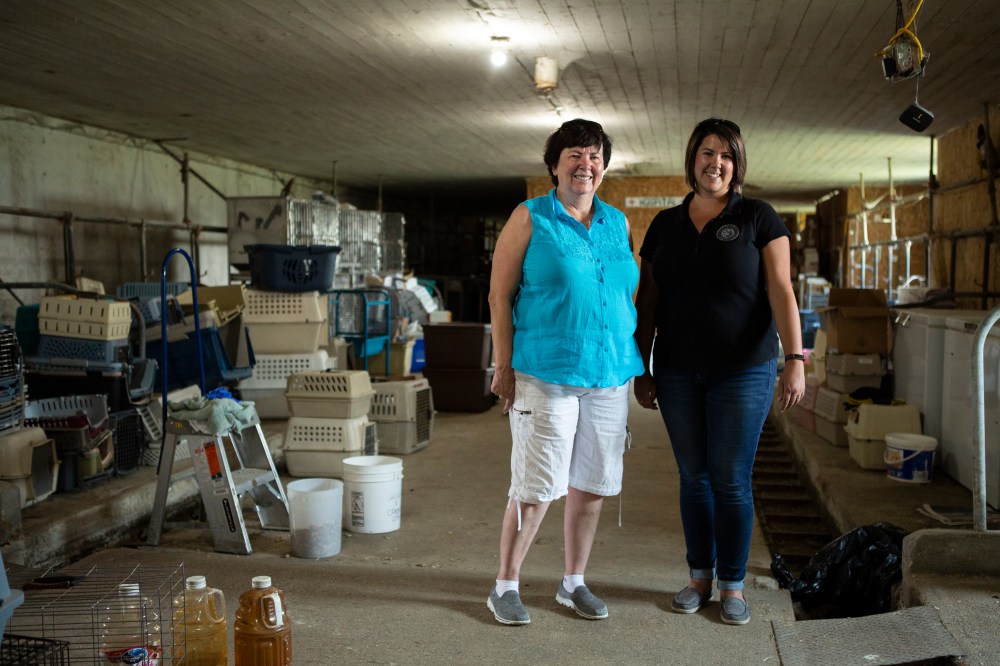
It is what the Wildlife Haven Rehabilitation Centre has used as its only washroom — unheated — for the past eight years.
Also gone will be the abandoned dairy barn and its concrete floor, cow stalls and poop troughs, which were all repurposed into an animal hospital and rehab centre.
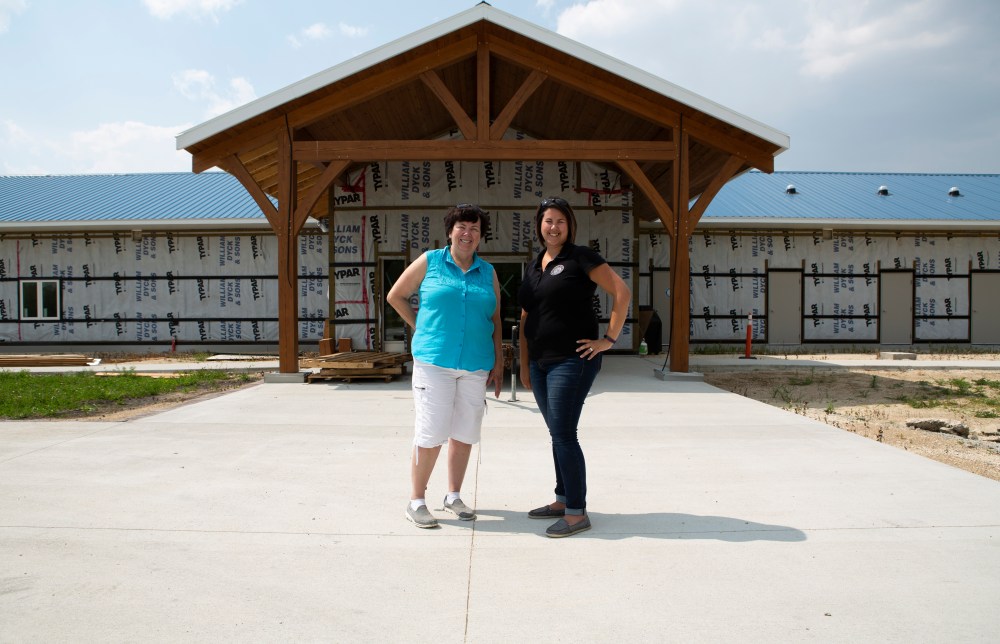
The new wildlife haven will be a palace by comparison. The rehab centre is getting set to move into $3-million, state-of-the-art digs.
“It will be one of the best in the country,” vice-president Judy Robertson said. “We’ve been told by other centres that with a new, modern facility, our caseload is going to double, and then triple.”
It receives from 1,300 to 1,600 animals per year.
But it’s not quite a rags-to-riches story yet. After 34 years of having to scrape, scrounge and scrimp to get by, the centre has run short of cash again. Construction stopped three weeks ago when the centre ran out of money. Fundraising has stalled at $2.3 million.
However, executive director Zoe Nakata said it’s more a blip than a crisis and there are some irons in the fire. There are still some naming rights to be awarded. She hopes construction can restart in a couple weeks and the animals can move in this fall.
None of it would be possible without corporate sponsors such as TransCanada Corp., the energy infrastructure company that runs a natural gas pipeline through southern Manitoba. Pipeline companies are controversial with environmental activists these days, but not at the wildlife centre. TransCanada has contributed $500,000 to the new facility.
It also donated a walk-in freezer to store animal food — often small rodents such as rats and mice — and provided the 18-acre parcel of land for the facility. The centre pays a nominal rent on consecutive 25-year leases on the land, which is across from the TransCanada pumping station near Île-des-Chênes, about 10 kilometres south of Winnipeg. The land was originally a small housing development for TransCanada staff.
The Richardson Foundation is another big supporter, ponying up $250,000. Money has come from as far away as British Columbia, Chicago and Toronto. The Winnipeg Foundation made two grants of $25,000 each. No government money is involved.
A tour of the new 10,000-square-foot facility shows the rehab centre has done its homework. The walls of all animal enclosures are made of the same material as car washes, so they can be pressure-washed. Rubber floor matting protects animal claws.
There are aluminum light tunnels in the animal rooms, instead of electric lights.
They funnel and magnify natural light from outside so effectively, most people think they are electric lights.
“It allows for animals to stay in touch with the natural rhythms of the day and season,” Robertson said.
There are also giant flyways in the centre’s yard. A giant birdcage is nearly 7,000 square feet. A second, smaller one is 1,500 square feet. It’s where birds practise flying and have to prove themselves before they are set free. About 70 per cent of the centre’s patients are avian.
There’s even a year-round, geothermal-heated indoor pool for waterfowl.
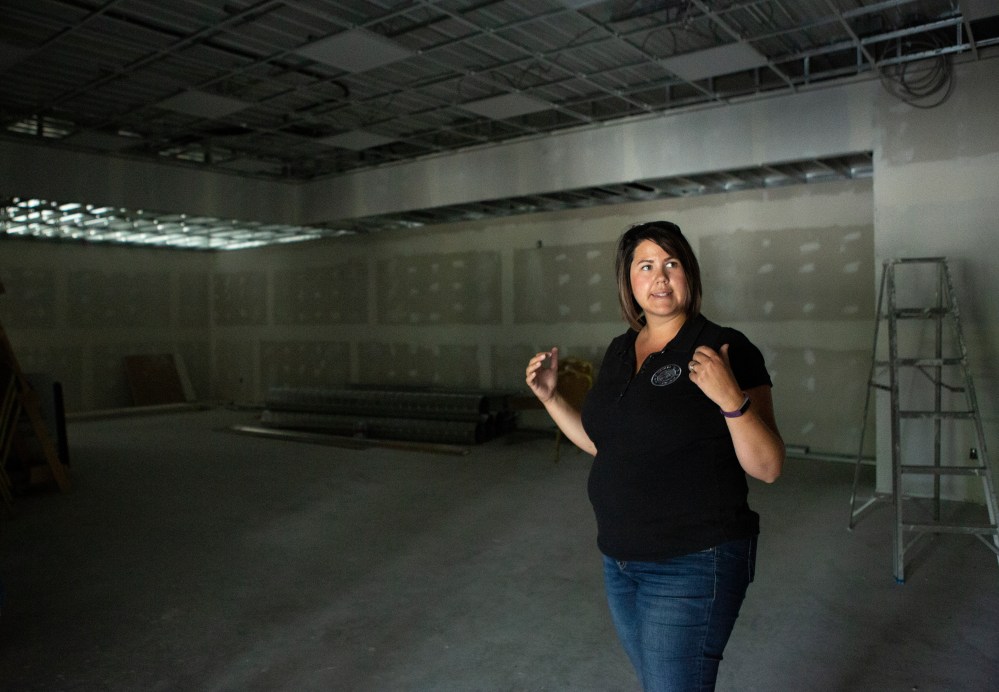
The centre operates on a shoestring budget of just $200,000 as it is. There are only two paid full-time staff and one part-timer — and 90 volunteers. That’s wildlife health care.
The new centre — a couple kilometres away from the old yard site of the Van Gorp family farm, which is slated to be sold — will be set up as a bit of a tourist attraction, with a naturalized wetland (with wheelchair accessibility), a tall grass prairie, live video feeds to watch the animals and education programs.
More than half of patients are orphaned, rather than sick or injured. The centre released three foxes last weekend who came in separately at ages six, eight and 10 weeks old, respectively. (However, the wildlife haven cautions people against being too quick to assume young ones are orphaned and requests people call ahead to discuss a situation.)
Less than 10 per cent of wildlife patients see a veterinarian. Most are handled by trained staff or volunteers who manage things such as splints, walking boots (for curled or sprained feet) or wing wraps to immobilize a broken wing while it heals, or administer medicines.
Five local veterinarians donate their time to help the rest of the patients. An orthopedic vet recently put a titanium plate in a fox’s leg — a $2,000 operation — and only charged for the $150 part.

Trucking company Gardewine will transport recovered wildlife back to the wilderness free of charge, so long as the animals are boxed. Similar services are provided by small airlines such as Calm Air, Bearskin Airlines and Perimeter Aviation.
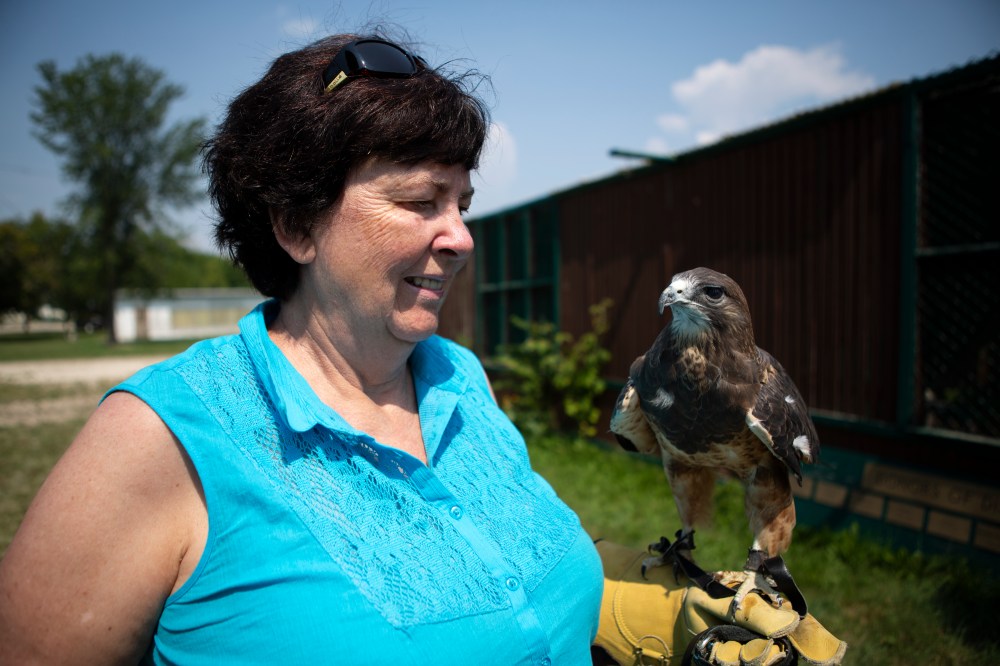
Those are the stories the public needs to hear, Robertson said. The centre saved a group of chimney swift chicks last year that had to be fed every 20 minutes. Volunteers set up feeding vigils to keep them alive until their successful release.
The centre has handled everything from bobcats to woodchucks. But it also gets a lot of squirrels, rabbits and other common small animals. It has received more than 50 crows so far this year that are suspected of having West Nile fever. Antibiotics get them up on their wings again. Two foxes with mange will also recover, thanks to antibiotics.
Last year, the wildlife haven took in 17 snowy owls, and 21 the year before, most of them struck by cars. It managed to rehabilitate two of the 17, and seven of the 21.
bill.redekop@freepress.mb.ca
Related Articles
Wildlife haven straining to care for high number of hurt animals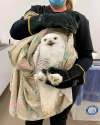
Advertisement Advertise With Us
Advertisement Advertise With Us
History
Updated on Sunday, August 12, 2018 10:57 AM CDT: Photos added