Crozier’s dense deity prose poems commanding
Advertisement
Read this article for free:
or
Already have an account? Log in here »
To continue reading, please subscribe:
Digital Subscription
One year of digital access for only $1.44 a week*
- Enjoy unlimited reading on winnipegfreepress.com
- Read the E-Edition, our digital replica newspaper
- Access News Break, our award-winning app
- Play interactive puzzles
*Billed as $5.77 plus GST every four weeks. After 52 weeks, price increases to the regular rate of $19.95 plus GST every four weeks. Offer available to new and qualified returning subscribers only. Cancel any time.
To continue reading, please subscribe:
Add Free Press access to your Brandon Sun subscription for only an additional
$1 for the first 4 weeks*
- Enjoy unlimited reading on winnipegfreepress.com
- Read the E-Edition, our digital replica newspaper
- Access News Break, our award-winning app
- Play interactive puzzles
*Your next Brandon Sun subscription payment will increase by $1.00 and you will be charged $17.95 plus GST for four weeks. After four weeks, your payment will increase to $24.95 plus GST every four weeks.
Read unlimited articles for free today:
or
Already have an account? Log in here »
Hey there, time traveller!
This article was published 25/08/2018 (2976 days ago), so information in it may no longer be current.
Lorna Crozier’s God of Shadows (McClelland & Stewart, 80 pages, $25) offers prose poems about the various “gods” of disparate items or concepts, invoking gods of arithmetic, stones, fire, sex, birds, wind, noses, forgetting, hateful things and so on.
A prologue poem states that “any god can only say so much. Whichever one, her own name is what she utters when she utters you. His own name // is what he utters when he pushes you from his nothing-womb into the ruinous noun-thick world.”
That passage serves as a good summary of the book: noun-thick, dense poems wrapped in the idea that we fashion the world as we view it, remake all things in our own dim image.
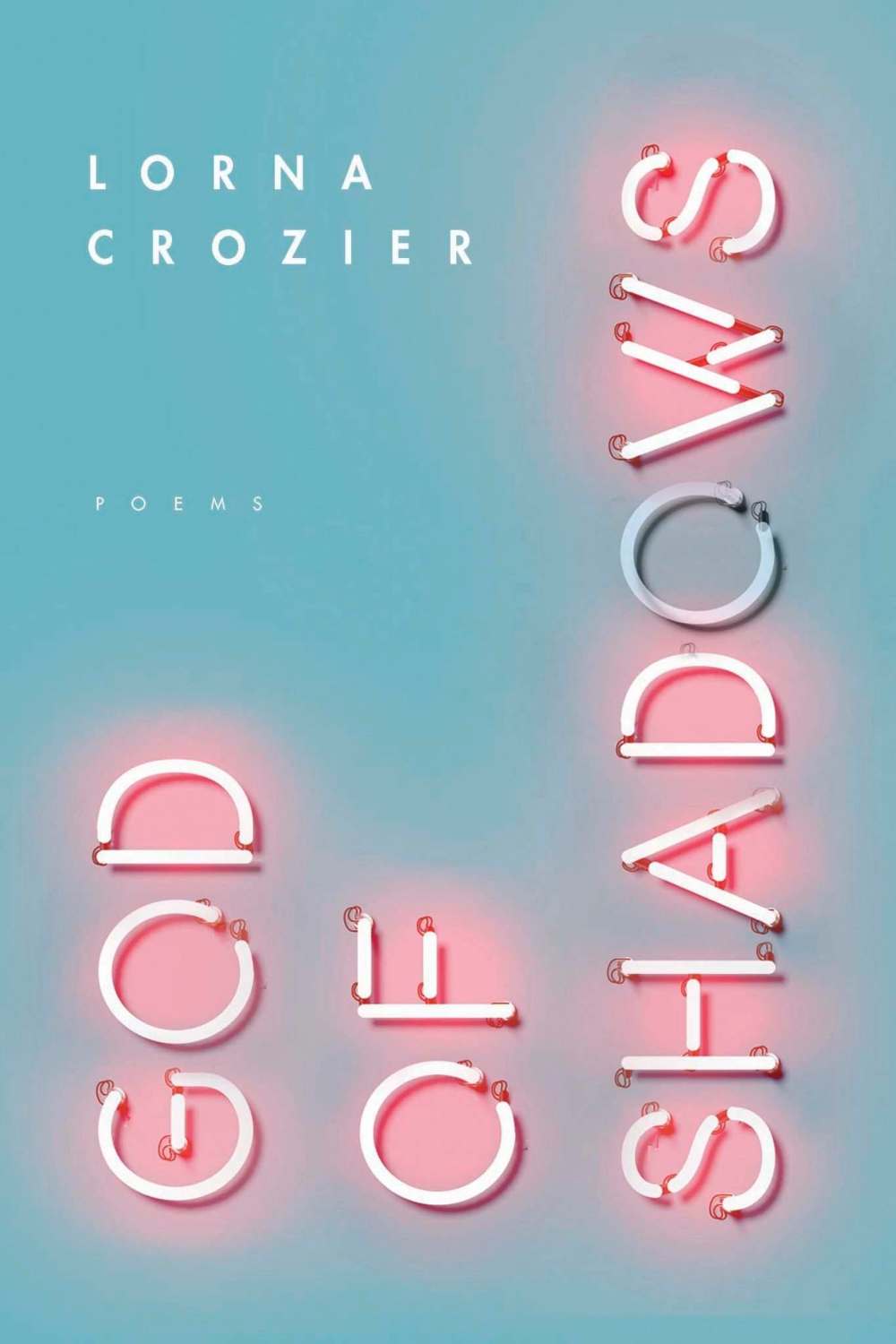
Strongly recalling her other recent collection of prose poems, The Book of Marvels, but exceeding its artistry, God of Shadows is sure to please the god of books.
● ● ●
Han Kang’s The White Book (Portobello, 162 pages, $16), translated from the Korean by Deborah Smith, is a startling, stunning achievement from the Man Booker Prize-winning author.
Prose poems begin from the simple, minimalist concept that the author will describe white things: snow, a door, blank paper, rice. As the book progresses, it becomes a crushing exploration of the complicated emotions she feels about the infant death of an older sister.
How to deal with her mother mourning the death of the child whose life would have erased her own? “If only you hadn’t stopped breathing. And had therefore been granted all this life in my stead, I who would then never have been born. If it had been granted to you to go firmly forwards, with your own eyes and your own body, your back to that dark mirror.”
How to live in the shadow of that death, without anger, with love? An exceptional work, extraordinarily beautiful.
● ● ●
Pier Giorgio Di Cicco’s Wishipedia (Mansfield, 126 pages, $17) meditates on the soulless space of the virtual world and its strange spiritual capacities.
Drawing connections between how we move in the world and how our minds move above it, Wishipedia explores how technologies have connected us but disembodied us all the same. The book begins by considering the technology of the book itself.
“You have picked up this book. / I was expecting you. (…) You are alone. That’s comforting. / Clearly, you want to escape your body, / Or you wouldn’t have picked up this book.”

The poems work best when they delve deep into these concepts, while remaining casual and conversational on the surface. A startling, strange collection well worth your disconnected life.
● ● ●
Brenda Sciberras’s Starland (Turnstone, 118 pages, $17) finds the Winnipegger reflecting on the wages of fame, which, like the wages of sin, take their toll. Although ours is a media-saturated world where celebrities are celebrities for being celebrities, Sciberras looks further back to its roots.
The highlight of the collection is a series of poems about Marilyn Monroe, which strike the perfect sad pitch: “I loved children & animals / I loved life / until I realized life didn’t love me.”
Winnipeg English professor Jonathan Ball (@jonathanballcom) lives online at JonathanBall.com, where he writes about writing the wrong way.