

Police union attack ad not founded in fact

Advertisement
Read this article for free:
or
Already have an account? Log in here »
To continue reading, please subscribe:

Digital Subscription
One year of digital access for only $205*
- Enjoy unlimited reading on winnipegfreepress.com
- Read the E-Edition, our digital replica newspaper
- Access News Break, our award-winning app
- Play interactive puzzles
*First annual payment billed as $205.00 + GST for one year. This annual subscription will automatically renew at $233.00 + GST every 52 weeks (10% off the regular annual price of $259.35). Offer available to new and qualified returning subscribers only. Cancel any time.
To continue reading, please subscribe:
Add Free Press access to your Brandon Sun subscription for only an additional
$1 for the first 4 weeks*
- Enjoy unlimited reading on winnipegfreepress.com
- Read the E-Edition, our digital replica newspaper
- Access News Break, our award-winning app
- Play interactive puzzles
*Your next Brandon Sun subscription payment will increase by $1.00 and you will be charged $17.95 plus GST for four weeks. After four weeks, your payment will increase to $24.95 plus GST every four weeks.
Read unlimited articles for free today:
or
Already have an account? Log in here »
Hey there, time traveller!
This article was published 09/09/2018 (2952 days ago), so information in it may no longer be current.
The Winnipeg Police Association is mad as hell and it’s not going to take it anymore.
Last week, the association unveiled a 30-second television commercial that takes aim directly at Winnipeg Mayor Brian Bowman, who is seeking a second term this October, for what the union claims is a lack of funding and attention to policing.
“We’re not here to endorse a particular candidate,” said Maurice Sabourin, the well-respected head of the association. “But we’re not happy with (Bowman).”
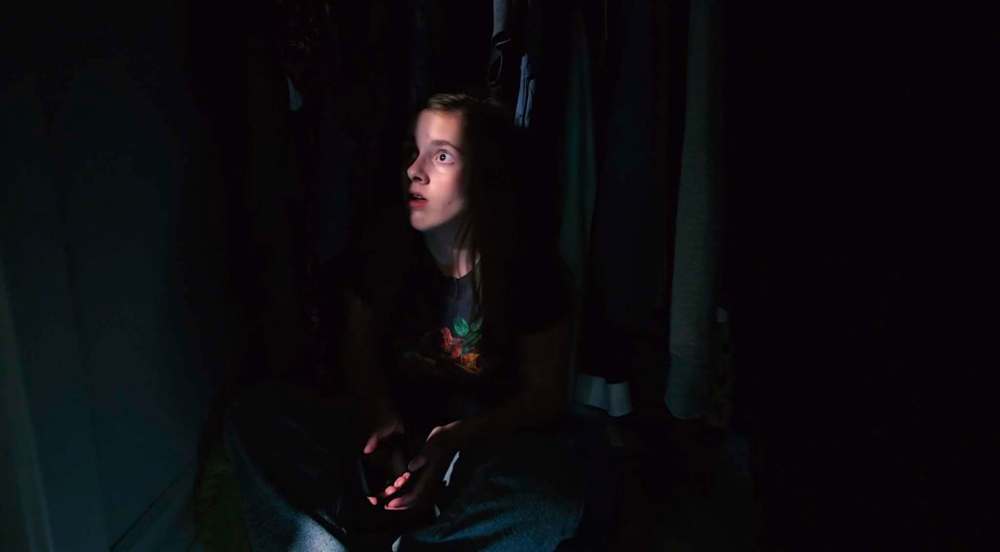
Although Sabourin denied it, the television spot is a classic example of the political attack genus — alarming imagery, scary music and melodramatic voice-over.
A teenage girl, still in braces, retreats into a closet as the sound of breaking glass can be heard in the background. She dials 911 and an automated message tells her that to stay on the line and her call will be answered “shortly.”
And then she is put on hold.
A female narrator asks: “Why is Winnipeg 911 not fully staffed? Ask Mayor Bowman. When you dial 911 — every. Second. Counts.” As the narrator finishes, we see the shadow of the intruder creeping closer to the terrified girl, her eyes wide with Wes-Cravenesque horror.
Despite the fact this ad is a bit of an outlier in a Winnipeg civic election campaign, it deserves to be noted the WPA is legally and even morally entitled to this form of expression.
Although Canadians tend to be squeamish about third-party political advertising, there is absolutely nothing nefarious about a public sector union or a non-governmental lobby group participating in an election campaign.
Third-party advertising is a pretty transparent phenomenon in Canada. Here, voters generally know who is behind the ads, and who stands to benefit from them. Things are much different in the United States, where shadowy organizations fuelled by gobs of special-interest money try to limit the outcome of elections at various levels of government.
The only caveat on third-party advertising is that it should meet fairly rigorous factual standards. As is so often noted in political debates, everyone is entitled to their opinion, but not to their own facts.
On that basis, the association’s ad is a bit lacking.
The Winnipeg Police Service confirmed last week there are only three vacant positions right now. And while no one can deny that 911 callers are regularly put on hold, when you look at all the calls coming in, and using national standards for 911 response times, Winnipeg is doing pretty well.
The police service reports that 93 per cent of all calls to the 911 service are answered within 10 seconds. There are people waiting longer but, on the whole, Winnipeg meets national and international standards for the performance of its 911 system.
It all means the police union does not have the raw data to prove that its scenario (unattended home invasion) or its central assertion (that the 911 centre is not fully staffed) are factually solid. What it does do effectively is spark a debate about overall police funding.
It wasn’t mentioned in this attack ad, but at a time when both population is growing and certain kinds of crime are on the rise, annual increases to the police budget have shrunk.
From 2010 to 2014, the police received an average annual funding increase of just more than eight per cent. In the past four years since Bowman and the current council came to office, however, annual increases have averaged just 3.3 per cent. That is still among the largest budget line increases in the city’s budget, but much less than the police service had received in previous years.
One of the results of this moderation of funding increases has been fewer police officers. Although Winnipeg continues to enjoy the second-largest number of police officers per 100,000 population (192), the total number of police and the rate per capita are both dropping.
According to the most recent Statistics Canada report for 2017, Winnipeg has 54 fewer police officers than it did in 2013. That is part of a national trend which has seen the size of police forces drop in each of the last six years as cities of all sizes try to wrestle police budgets under control.
Currently, the Winnipeg Police Service receives $295 million a year from the city’s $1.081-billion budget, making it by far and away the largest department in the civic government. It’s safe to say the pace of budget increases enjoyed before Bowman came to office would be hard to sustain. It’s also fair to say that previous efforts to make the police service more cost effective have been largely unsuccessful.
In the past decade, several studies were done to identify unrealized efficiencies, with little in the way of results. Some progress was made in contract talks with an agreement to use lower-paid civilians to fill some roles held by actual officers. But for the most part, the police service operates much the way it always has.
That means to realize the police union’s demands, money would have to be reallocated from other areas of spending. When asked what cuts could be made, Sabourin said the association would like see an end to things such as free WiFi on buses, bus rapid transit, active transportation and — of course — the re-opening of Portage and Main to pedestrians.
“There’s a lot of wasteful spending that could create more money to go to things like policing,” he said

Perhaps, but in making that argument, the association is demonstrating how its interests are not always in the best interest of the city on the whole.
In the past, cities relied too heavily on policing to solve all of its street-level social problems. The result was that as policing costs went up, things such as mental health and addictions treatment, and social services — all critical components in a crime prevention strategy — were ignored.
Policing is an essential service, and the police association should be commended for encouraging candidates in this civic election to discuss issues like crime and public safety.
But voters would be wrong to accept the nightmarish images summoned in the association’s television spot as an accurate reflection of the current state of our police services, or a vision for what we need to make the city safer.
dan.lett@freepress.mb.ca
Dan Lett is a columnist for the Free Press, providing opinion and commentary on politics in Winnipeg and beyond. Born and raised in Toronto, Dan joined the Free Press in 1986. Read more about Dan.
Dan’s columns are built on facts and reactions, but offer his personal views through arguments and analysis. The Free Press’ editing team reviews Dan’s columns before they are posted online or published in print — part of the our tradition, since 1872, of producing reliable independent journalism. Read more about Free Press’s history and mandate, and learn how our newsroom operates.
Our newsroom depends on a growing audience of readers to power our journalism. If you are not a paid reader, please consider becoming a subscriber.
Our newsroom depends on its audience of readers to power our journalism. Thank you for your support.
Dan Lett is a columnist for the Free Press, providing opinion and commentary on politics in Winnipeg and beyond. Born and raised in Toronto, Dan joined the Free Press in 1986. Read more about Dan.
Dan’s columns are built on facts and reactions, but offer his personal views through arguments and analysis. The Free Press’ editing team reviews Dan’s columns before they are posted online or published in print — part of the our tradition, since 1872, of producing reliable independent journalism. Read more about Free Press’s history and mandate, and learn how our newsroom operates.
Our newsroom depends on a growing audience of readers to power our journalism. If you are not a paid reader, please consider becoming a subscriber.
Our newsroom depends on its audience of readers to power our journalism. Thank you for your support.
Related Articles
Police chief rejects claims in union 911 ad

Advertisement Advertise With Us
Advertisement Advertise With Us
History
Updated on Monday, September 10, 2018 2:12 PM CDT: Adds video, related item