System failure
Book dismisses notion Brian Sinclair's death was a 'one-off' due to 'perfect storm' of factors
Advertisement
Read this article for free:
or
Already have an account? Log in here »
To continue reading, please subscribe:

Digital Subscription
One year of digital access for only $205*
- Enjoy unlimited reading on winnipegfreepress.com
- Read the E-Edition, our digital replica newspaper
- Access News Break, our award-winning app
- Play interactive puzzles
*First annual payment billed as $205.00 + GST for one year. This annual subscription will automatically renew at $233.00 + GST every 52 weeks (10% off the regular annual price of $259.35). Offer available to new and qualified returning subscribers only. Cancel any time.
To continue reading, please subscribe:
Add Free Press access to your Brandon Sun subscription for only an additional
$1 for the first 4 weeks*
- Enjoy unlimited reading on winnipegfreepress.com
- Read the E-Edition, our digital replica newspaper
- Access News Break, our award-winning app
- Play interactive puzzles
*Your next Brandon Sun subscription payment will increase by $1.00 and you will be charged $17.95 plus GST for four weeks. After four weeks, your payment will increase to $24.95 plus GST every four weeks.
Read unlimited articles for free today:
or
Already have an account? Log in here »
Hey there, time traveller!
This article was published 21/09/2018 (2904 days ago), so information in it may no longer be current.
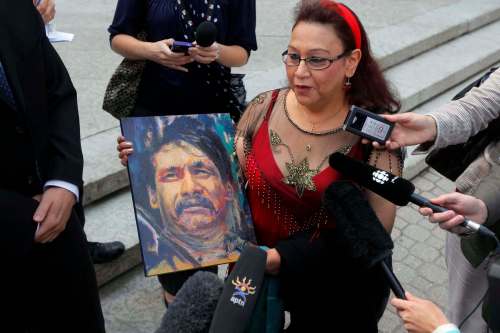
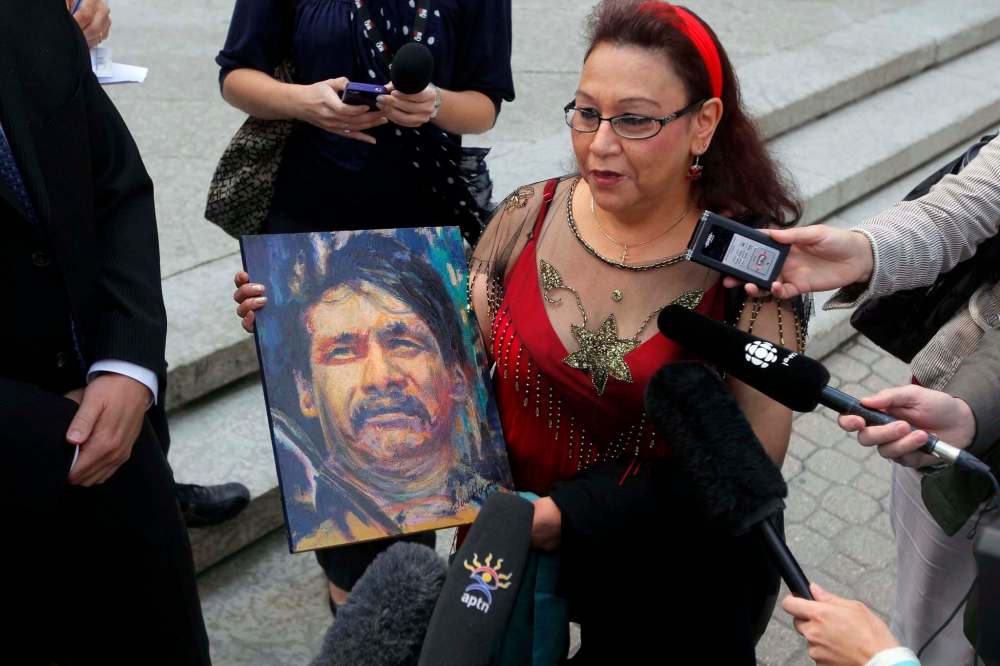
It has been ten years since Brian Sinclair died in the waiting room of Winnipeg’s Health Sciences Centre ER. In that time, Sinclair’s family and the Indigenous community in Winnipeg, Manitoba, and Canada have worked to ensure that his death would not be forgotten and have fought for necessary reforms. The inquest into Sinclair’s death is evidence of their advocacy and persistence and also of the limits of these sorts of inquiries. As in the inquests into the deaths of two young Anishinaabeg men in Kashechewan studied by Carmela Murdocca, we might read the inquest into Brian Sinclair’s death as a moment when the colonial state strains “to find ways to capture evidence and demarcate the boundaries of legal, governmental and political responsibility and failure.”
Throughout the inquest, the official narrative was that Sinclair’s death was a “one-off.” In his opening address, the Winnipeg Regional Health Authority’s lawyer explained that “a perfect storm occurred whereby the weaknesses and deficiencies in the system and the staff employed at the HSC, collectively, were causative of this tragedy.” Judge Timothy Preston, in his final report, expressed his support for this metaphor. The metaphor of the storm works to associate the events of September 2008 with the natural world, a proverbial act of God, well outside human causality. Two key corollaries accompany the “perfect storm” argument. The first is that no single person could be “responsible” for what happened, and, simultaneously, that Sinclair himself, soft-spoken, hard to understand, and with cognitive challenges, also contributed to this perfect storm. His very presence and being were, in part, to blame; that is, he just simply should not have been there, or perhaps simply should not have been at all. The second corollary is the assertion that this coincidental mass collision of multiple errors could have happened to anyone. Indeed, in his testimony, the Chief Medical Examiner of Manitoba, Thambirajah Balachandra, argued that “even if Snow White came in the wheelchair on that day, this situation, she would have died.” The gendered, racialized, and physical dimensions of the choice of metaphor here are not incidental.
Within the logic of the “perfect storm,” the systems and processes of the hospital came under scrutiny rather than the ways Sinclair was repeatedly misrecognized by medical and support staff, and how misrecognitions justified the many times that Sinclair was ignored or dismissed. Behind these misrecognitions is the belief that Sinclair was not really in need of or deserving of care, that his presence in a hospital was at its core illegitimate and things were bound to go awry. And yet Sinclair’s death was linked instead primarily to multiple failures in the policies and procedures of processing patients in the ER.
The system of triage was examined with particular care. Normally in ER protocol a triage nurse obtains details about a medical complaint and decides how to prioritize the patient and where they are to go by talking to and visually examining the patient and taking vital signs. The triage process identifies urgent, life-threatening conditions, initiates tests and treatments, and determines the most appropriate treatment site or area for patients. It involves the ongoing assessment of waiting room patients and the relaying of information to patients and families regarding services, expected care, and wait times. The argument here follows that because Sinclair was not triaged and registered as a patient of the ER, he was not treated. Because the cause of his death was attributed to his not being triaged, it followed that fixing the triage process would prevent this kind of tragedy from happening in the future.
Triage and the “perfect storm” became red herrings in Sinclair’s case, ways of diverting attention from issues of racism and colonialism. Triage is referred to about 350 times in the final report of the inquest; race or racism is mentioned only thirteen times. The report represents triage as being outside of racism (which is inherently another sorting project), as a scientific, colour-blind process that assesses bodies devoid of cultural, social, intellectual, and racial meaning. For example, Balachandra testified that he had “never come across a nurse, attendant, doctor, anybody discriminating on the basis of anything other than the disease itself,” insisting that staff put aside their own opinions. This sentiment was repeated by a nurse who had been on duty when Sinclair spent his last thirty-four hours in the waiting room. She explained that “it wouldn’t matter what race he was.” In their testimony before the inquest, many witnesses indicated that the idea that racism might have played into the events of September 2008 was absurd, even unimaginable. They suggested that racism was an impossibility, since the majority of HSC patients were Indigenous — as if racism was more or less an act of discrimination or bigotry against a distinct and literal minority. The more layered and complex framings of structural racism and its effects in the particular context of Winnipeg that witnesses and participants like Leslie Spillett provided, ultimately, had a modest role in the inquest and an even smaller one in the report.
Sinclair was indeed subject to a very real process of triage. He was, in fact, triaged in a way that is implicit in our health care system in highly racialized practices that are systemic, structural, primary, and invisible. Here we want to centre Indigenous people in an understanding of the everyday ways triage is racialized in Manitoba, in Canada, and in other settler colonial contexts. Drawing on the work of scholars in Indigenous history and other fields, we can put the HSC ER in a broader historical context: we know that in settler colonial contexts, the lives of Indigenous people are valued less than those of non-Indigenous people, and in these contexts Indigenous health declines and inequities develop. We also know that, historically and still today, Canadian governments believe health care for Indigenous people should always be cheaper than it is for others and that health care is not only, and sometimes not even primarily, about biomedicine — it is also about assimilation and integration into the Canadian nation state and the annulment of treaty rights and responsibilities, as well as erasure of Indigenous autonomy, identity, and ways of life.
A body of work on racism in health care confirms that Indigenous patients are often concerned that they will be treated differently, which leads them to strategize how they might deal with anticipated racism before they go to the hospital or even to avoid care if possible. We need to see health care as a terrain of racism and colonialism, one that costs lives. As Metis physician and researcher Janet Smylie explains, the impact of racism in health care is neither abstract nor subtle: “people are dying unnecessarily or experiencing disability.” There is good reason that health plays a significant role in the TRC’s Calls to Action. Calls 18 through 24 address the role that health care has played in colonialism and call on federal and provincial governments to make serious and far-reaching changes: to “acknowledge that the current state of Aboriginal health in Canada is a direct result of previous Canadian government policies”; to work towards identifying and closing the gaps in health outcomes between Indigenous and non-Indigenous people; to recognize the distinct health needs of Metis, Inuit, and off-reserve Indigenous people; for the federal government to fund Aboriginal healing centres; to recognize the value of indigenous healing practices; to increase the number of Indigenous professionals in health care and provide “cultural competency training for all health care professionals”; and for medical and nursing schools to require students to take a wide-ranging course on Indigenous health issues. Some of these are directions that have been taken in and around Winnipeg for some time. The TRC’s Calls to Action make clear that more robust and thorough-going change is required — change, that is, to the structure of health care, and of Canada.
The structures of indifference that Sinclair encountered at the HSC ER had lethal consequences. They were not natural, or accidental, or without precedence. The structures of indifference continued in the inquest that investigated what went wrong in the ER over those thirty-four hours. In a way, the Brian Sinclair inquest is characteristic of the ways Canadian hospitals address racism. If patients are racialized as Indigenous by appearance, assumptions will be made not only about their state of health but also about whether or not they belong in a hospital or even if they deserve care at all. This can lead directly to under-treatment of Indigenous people in the health care system. Tania Dick, a nurse from the Dzawada’enuxw First Nation of Kingcome Inlet and president of the Association of Registered Nurses of British Columbia, agrees: “My family has a Brian Sinclair story… I have the privilege and opportunity with the role I’m in to travel throughout different communities and everywhere I went they had a Brian Sinclair story.” In this context, the experiences of Brian Sinclair and those of other Indigenous families with their own “Brian Sinclair story” are not anomalous, but reflect the ways that Indigenous people have been constructed as being beyond or outside health care, often with tragic results for Indigenous people who do find themselves in hospitals.
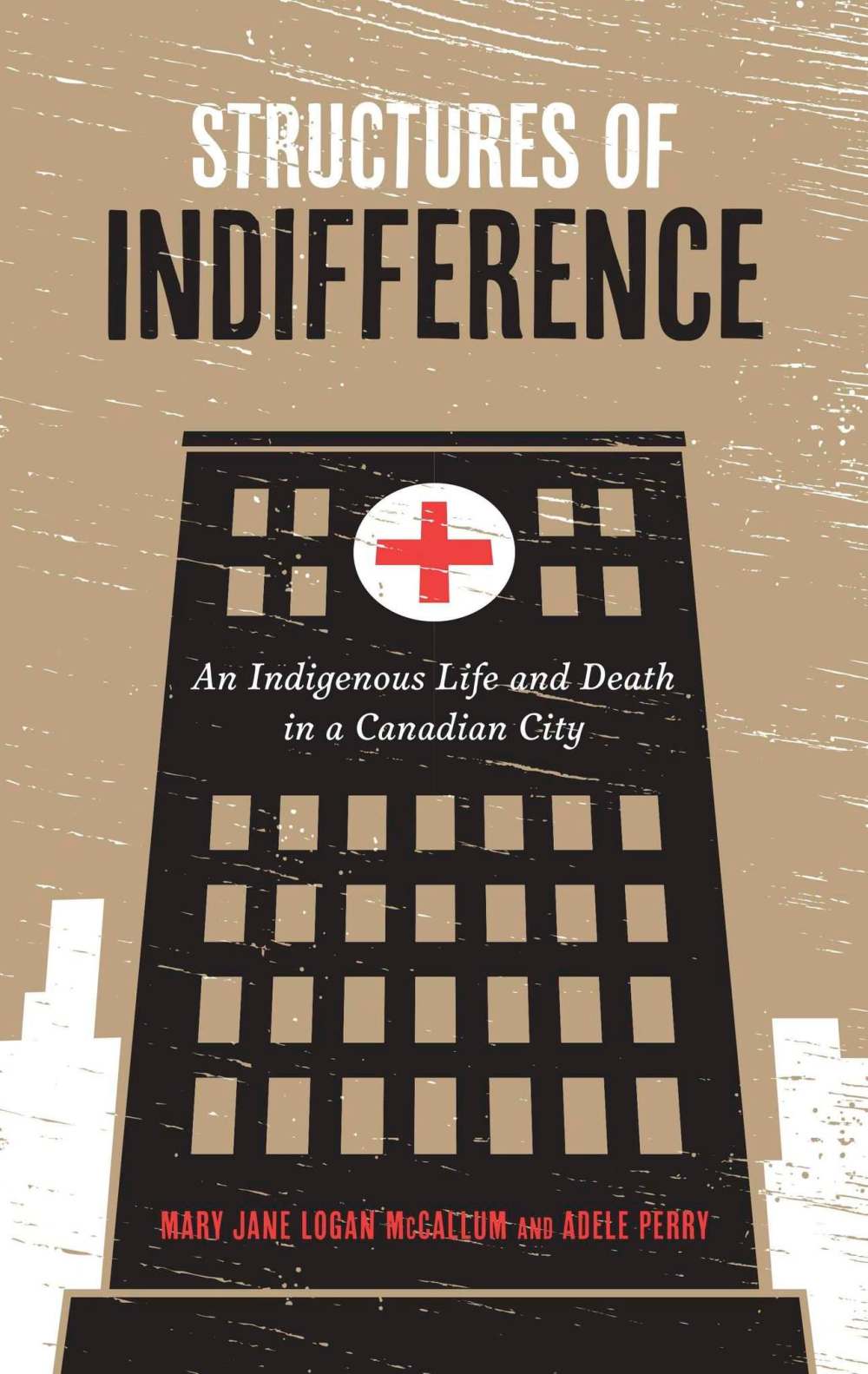
Excerpt from Structures of Indifference, University of Manitoba Press

Advertisement Advertise With Us
Advertisement Advertise With Us