

Documentary celebrates the cassette
Nostalgic rewind down music's memory lane

Advertisement
Read this article for free:
or
Already have an account? Log in here »
To continue reading, please subscribe:
Monthly Digital Subscription
$1 per week for 24 weeks*
- Enjoy unlimited reading on winnipegfreepress.com
- Read the E-Edition, our digital replica newspaper
- Access News Break, our award-winning app
- Play interactive puzzles
*Billed as $4.00 plus GST every four weeks. After 24 weeks, price increases to the regular rate of $19.95 plus GST every four weeks. Offer available to new and qualified returning subscribers only. Cancel any time.
Monthly Digital Subscription
$4.99/week*
- Enjoy unlimited reading on winnipegfreepress.com
- Read the E-Edition, our digital replica newspaper
- Access News Break, our award-winning app
- Play interactive puzzles
*Billed as $19.95 plus GST every four weeks. Cancel any time.
To continue reading, please subscribe:
Add Free Press access to your Brandon Sun subscription for only an additional
$1 for the first 4 weeks*
*Your next subscription payment will increase by $1.00 and you will be charged $16.99 plus GST for four weeks. After four weeks, your payment will increase to $23.99 plus GST every four weeks.
Read unlimited articles for free today:
or
Already have an account? Log in here »
Hey there, time traveller!
This article was published 06/10/2018 (2754 days ago), so information in it may no longer be current.
The subtitle of director Zack Taylor’s ode to the cassette — “a documentary mixtape” — accurately captures the disjointed but affectionate approach this passion project takes to its subject.
Like a mixtape made for you by an enthusiastic friend who’s more concerned with cramming in all his favourite songs than making a cohesive work, it flits from topic to topic without delving deeply enough into any one area.
Movie review
Cassette: A Documentary Mixtape
Directed by Zack Taylor
Cinematheque
Subject to classification
92 minutes
★★★ out of five
OTHER VOICES
Cassette: A Documentary Mixtape
Directed by Zack Taylor
Cinematheque
Subject to classification
92 minutes
★★★ out of five
OTHER VOICES
(A) meandering tribute (that) leaves out many such important facts, largely dispensing with historical context in favour of poetic reminiscences about the outmoded format.
— Leor Galil, Chicago Reader
(An) enjoyable trip down memory lane — one that will certainly stir viewers of a certain age and educate young hipsters who are drawn to the world of analogue.
— Jessica Baxter, Hammer to Nail
What emerges is a not uninteresting notion of the hissy format democratizing music culture, allowing fans to actively program their own albums instead of passively accepting whatever the record company provided.
— Sean Burns, Spliced Personality
It touches on technology, design and history, on the cassette’s importance to hip hop and punk, on its recent small but meaningful resurgence, but tries to cram too much into a doc that nonetheless feels too long at 90 minutes (perhaps not coincidentally, the length of a perfectly timed mixtape).
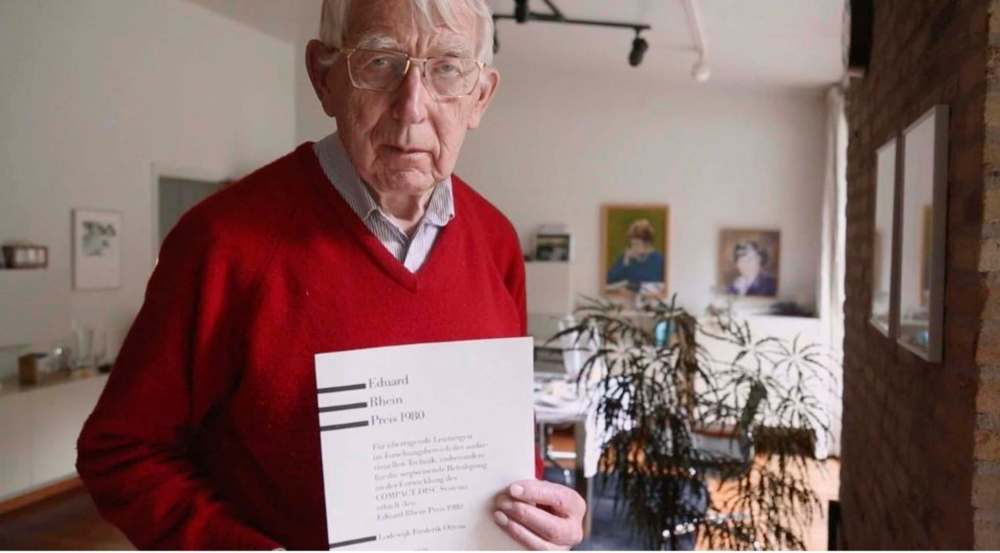
If the film has a focus, it’s Lou Ottens, the Dutch inventor (though he’d rather humbly give credit to his team of engineers) of the “compact cassette” in 1963.
The filmmakers visit the nonagenarian at his home in the Netherlands to get his reaction to his invention’s continuing popularity. Though the format accounts for a mere fraction of new recordings, there are labels dedicated to putting out music on cassette and bands choosing to release albums on tape instead of CDs.
Missouri’s National Audio Company is one of the last manufacturers standing of “music’s worst format,” but it cranks out tapes by the millions each year.
Ottens — an utterly charming gentleman; it’s impossible not to call him “spry” — is undeniably bemused by the resurgence of a technology he believes should have become obsolete years ago.
In fact, as one of the men behind the compact disc, he actively worked for the cassette’s obsolescence.
“People prefer a worse quality of sound out of nostalgia,” he says, admitting that he prefers to look to the future than to dwell in the past.
https://youtu.be/xTMSgSBaPHw
Nostalgia is inescapable in any discussion of the cassette, and the filmmakers play it up by including lots of old voice recordings — answering-machine messages, letters on tape, kids goofing around — that feel like ghostly missives from the past.
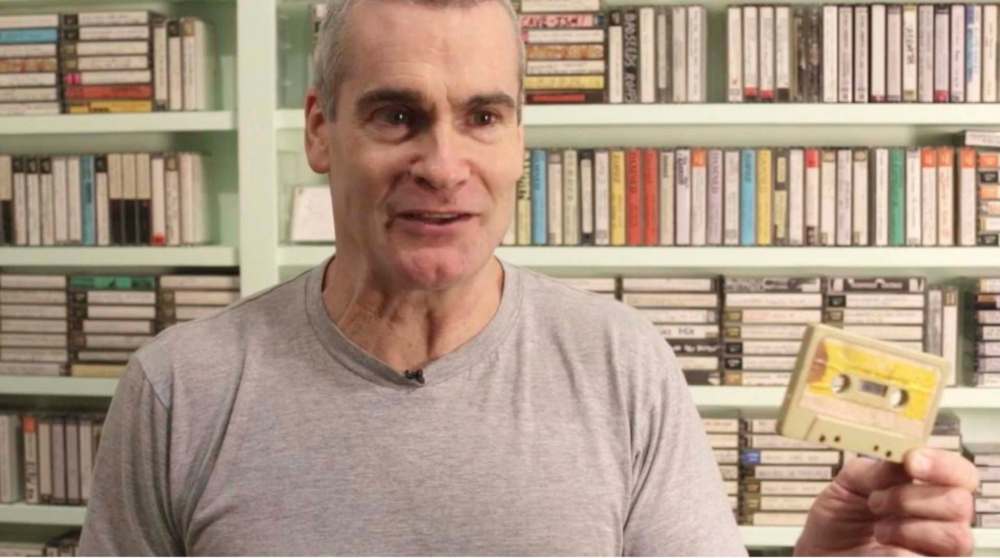
And though we’re introduced to plenty of bright-eyed youngsters (and some hilariously glassy-eyed dudes) who are freshly dedicated to the format, it’s crusty old punk Henry Rollins and indie singer-songwriter Damien Jurado getting misty-eyed over the mixtapes of their youth that carries the most weight.
Others wax poetic about the democratization cassettes provided: fledgling bands without the budget for a recording studio could get their music into fans’ hands thanks to tapes; hip hop, some argue, literally would not exist without them.
However, all these ideas are dropped into the mix without much followup or exploration beyond a talking head’s romantic assertion.
The film also crams in notions about the physicality of the medium, the way it captures a particular moment in time that you can hold in your hand, as opposed to zeroes and ones streaming into your headphones from the cloud — not to mention the tangible delight of a cover and liner notes that MPs just can’t mimic.
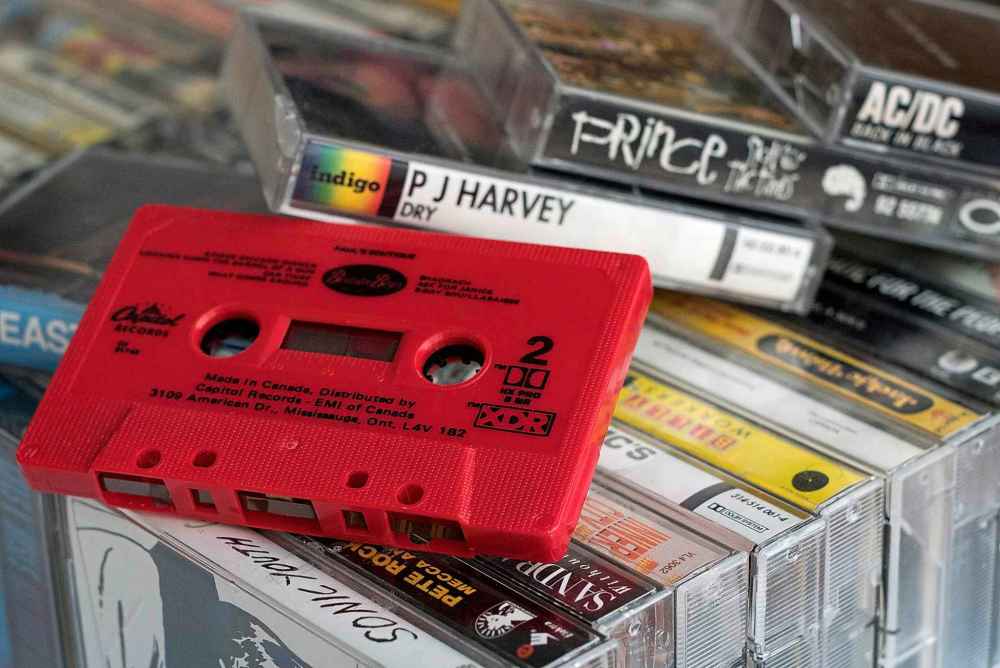
Of course, CDs and LPs provide that physical essence, but maybe nothing beats the fat spine of a cassette for instant recognition. Anyone who came of musical age in the 1980s and ’90s likely has a box of cassettes with lovingly hand-lettered J-cards stashed somewhere — and as Taylor’s camera pans over shelves full of tapes, those people will experience a pleasurable jolt of recognition.
It’s that niche audience — as well as an audience with an appreciation for the mostly niche musicians interviewed — who will get the most out of the doc, despite its shotgun approach.
“The people who use it nowadays, they are special people,” Ottens says. “They have a hobby, they love their cassettes — it’s not really rational, hmm? It’s a rather irrational activity. I like that.”
jill.wilson@freepress.mb.ca
Twitter: @dedaumier
Jill Wilson is the editor of the Arts & Life section. A born and bred Winnipegger, she graduated from the University of Winnipeg and worked at Stylus magazine, the Winnipeg Sun and Uptown before joining the Free Press in 2003. Read more about Jill.
Jill oversees the team that publishes news and analysis about art, entertainment and culture in Manitoba. It’s part of the Free Press‘s tradition, since 1872, of producing reliable independent journalism. Read more about Free Press’s history and mandate, and learn how our newsroom operates.
Our newsroom depends on a growing audience of readers to power our journalism. If you are not a paid reader, please consider becoming a subscriber.
Our newsroom depends on its audience of readers to power our journalism. Thank you for your support.
Jill Wilson is the editor of the Arts & Life section. A born and bred Winnipegger, she graduated from the University of Winnipeg and worked at Stylus magazine, the Winnipeg Sun and Uptown before joining the Free Press in 2003. Read more about Jill.
Jill oversees the team that publishes news and analysis about art, entertainment and culture in Manitoba. It’s part of the Free Press‘s tradition, since 1872, of producing reliable independent journalism. Read more about Free Press’s history and mandate, and learn how our newsroom operates.
Our newsroom depends on a growing audience of readers to power our journalism. If you are not a paid reader, please consider becoming a subscriber.
Our newsroom depends on its audience of readers to power our journalism. Thank you for your support.
Advertisement Advertise With Us
Advertisement Advertise With Us